The most famous of Rafale's weapons is the METEOR - beyond visual range air-to-air missile - which is widely recognised as a game-changer for air combat, writes Anil Bhat for South Asia Monitor


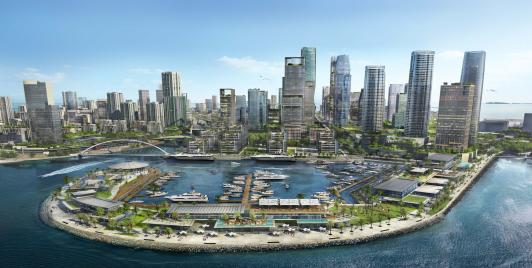
When a Chinese company won the contract to establish hybrid wind and solar energy projects on three islands off the northern Jaffna peninsula—just 45 km from Rameswaram in Tamil Nadu—the security implications extended far beyond economics. Against this backdrop, India’s concerns are entirely justifiable. Sri Lanka faces a pressing question: how will the nation confront the infiltration of Chinese global criminal networks? Since Mahinda Rajapaksa’s tenure, Chinese presence in Colombo has steadily increased, with Sri Lanka positioned as a partner state in Beijing’s Belt and Road Initiative.
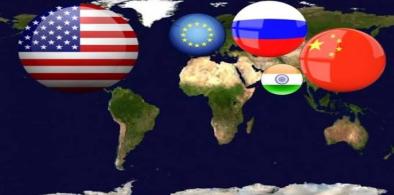
The growing role of middle powers adds another layer of complexity. Yet the term itself remains imprecise. Not every country outside the United States and China qualifies as a middle power, and many reject the label altogether. India, for example, increasingly sees itself as a leading power pursuing strategic autonomy rather than as a middle power seeking alignment with one bloc or another.
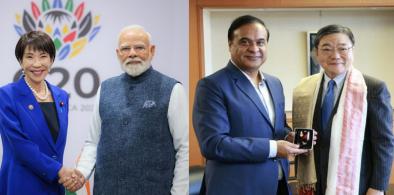
If India and Japan genuinely envision Northeast India as the gateway connecting South Asia with the Bay of Bengal and the Indo-Pacific, then the next chapter of the partnership cannot remain confined to New Delhi and Tokyo. It must also be written in Guwahati, Shillong, Aizawl, Imphal, Agartala, Kohima, Gangtok and Itanagar
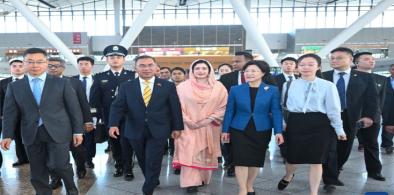
In several neighbouring countries, including Bangladesh, Sri Lanka and Nepal, China has demonstrated an ability to move from agreements to implementation far more rapidly than many competitors. India, despite enjoying unmatched geographic and cultural advantages, has often struggled with delays

The most famous of Rafale's weapons is the METEOR - beyond visual range air-to-air missile - which is widely recognised as a game-changer for air combat, writes Anil Bhat for South Asia Monitor

The Narerri Lagoon along the coast of the Arabian Sea, in the extreme south of district Badin in Sindh province, has been one of the few famous natural lakes of the province which is a recognized Ramsar wetland site since 2001, writes Muhammad Abbas Khaskheli for South Asia Monitor
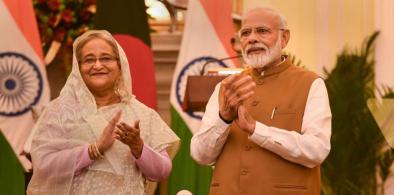
Hasina's government has also been very distressed with provisions in the Indian Citizenship Amendment Act, which singles out Bangladesh, along with Pakistan and Afghanistan, as nations which persecute their minorities, writes Nilova Roy Chaudhury for South Asia Monitor
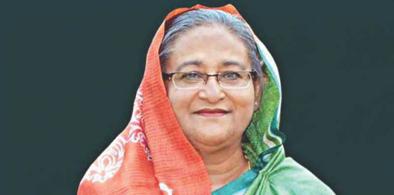
Hasina has some of the finest diplomats and public faces to handle the initial take-off of a South Asian peace process, if she were to push it, though much depends on how India and Pakistan respond, writes Subir Bhaumik for South Asia Monitor
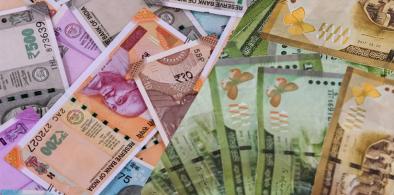
While countries of the South Asian region are taking individual steps to battle COVID-19, currency swaps have emerged as an important tool of economic cooperation in the region, writes Partha Pratim Mitra for South Asia Monitor

The media and newspaper industry in Bangladesh face two major challenges: First, economical challenges, and second, the repression by the government that has stifled the freedom of expression and has made various attempts to silence critical coverage, writes Aashish Kiphayet for South Asia Monitor
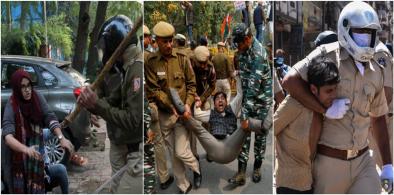
The colonial legacy of the Indian police highlights how the use of force is endemic to policing in India, manifest in the organizational structure and the professional culture which often tolerates and even promotes abuse, write Subhranil Ghosh and Sreemoyee Majumder for South Asia Monitor
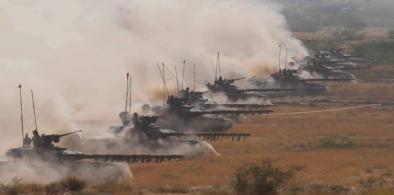
Deterrence requires a national strategy that integrates diplomatic, informational, military, and economic powers. India must develop strategies, plans, and operations that are tailored to the perceptions, values, and interests of specific adversaries, writes Lt Gen P R Kumar (retd) for South Asia Monitor
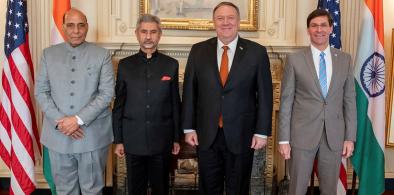
In the event of any hostility with China, India will have to fight two-front war because Pakistan also has assembled a sizeable number of troops and military assets in Pakistan Occupied Kashmir, writes Susmit Kumar for South Asia Monitor
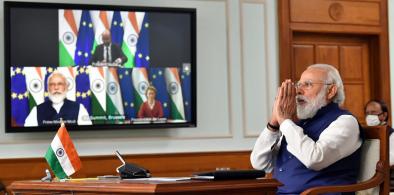
India under PM Modi is charting new territory in a clear break from the past. Indian foreign policy has shifted its goalposts, both in style and substance, writes Amb Bhaswati Mukherjee (retd) for South Asia Monitor
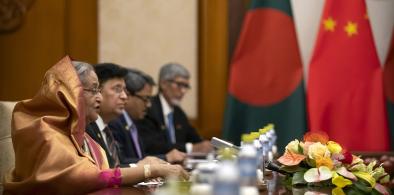
Bangladesh is strategically important to China for dominating the Bay of Bengal in conjunction with Myanmar, writes Lt Gen P. C. Katoch (Retd) for South Asia Monitor
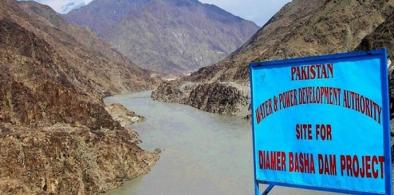
The Pakistan government claims that the Diamer-Bhasha dam project will generate 4,500 megawatts of electricity which will be much cheaper in cost. But the reality is that the world has much better, environmental-friendly, cheaper, and sustainable solutions to generate electricity, writes Muhammad Abbas Khaskheli for South Asia Monitor
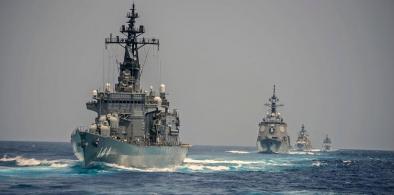
Despite the US raising the ante with China over South China Sea and prioritizing freedom of the oceans, New Delhi remains wary of entering into a formal alliance with Washington, writes C Uday Bhaskar for South Asia Monitor

Ershad may have gone, but his shadow can still be seen in the political theatre of Bangladesh, writes Aashish Kiphayet for South Asia Monitor
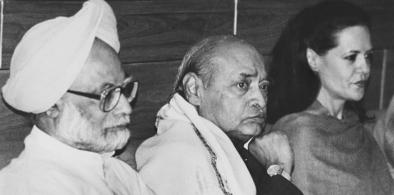
It is to Rao's credit that within a short period of time he not only arrested the decline of his party but was able to unite the country on the most productive political platforms since the freedom movement - the pursuit of prosperity, writes Tarun Basu for South Asia Monitor