
Colombo Port City

China’s Criminal Footprint in Sri Lanka has Regional Security Implications

When a Chinese company won the contract to establish hybrid wind and solar energy projects on three islands off the northern Jaffna peninsula—just 45 km from Rameswaram in Tamil Nadu—the security implications extended far beyond economics. Against this backdrop, India’s concerns are entirely justifiable. Sri Lanka faces a pressing question: how will the nation confront the infiltration of Chinese global criminal networks? Since Mahinda Rajapaksa’s tenure, Chinese presence in Colombo has steadily increased, with Sri Lanka positioned as a partner state in Beijing’s Belt and Road Initiative.

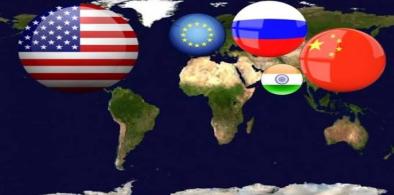
Wolf World or a Multipolar World? How Major Powers Exercise Power Will Determine Emerging International Order

The growing role of middle powers adds another layer of complexity. Yet the term itself remains imprecise. Not every country outside the United States and China qualifies as a middle power, and many reject the label altogether. India, for example, increasingly sees itself as a leading power pursuing strategic autonomy rather than as a middle power seeking alignment with one bloc or another.

Is Northeast India's Permit System Inhibiting India-Japan Paradiplomacy? Colonial-Era System may be Stumbling Block to Subnational Exchanges

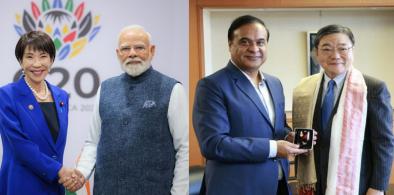
If India and Japan genuinely envision Northeast India as the gateway connecting South Asia with the Bay of Bengal and the Indo-Pacific, then the next chapter of the partnership cannot remain confined to New Delhi and Tokyo. It must also be written in Guwahati, Shillong, Aizawl, Imphal, Agartala, Kohima, Gangtok and Itanagar 

Bangladesh's Strategic Balancing and India's Neighbourhood Challenge: China Will Consolidate Influence if New Delhi Fails to Deliver

In several neighbouring countries, including Bangladesh, Sri Lanka and Nepal, China has demonstrated an ability to move from agreements to implementation far more rapidly than many competitors. India, despite enjoying unmatched geographic and cultural advantages, has often struggled with delays 

More on Geopolitics, Security and Strategic Affairs

Need to embrace telemedicine to fix critical gaps in healthcare delivery

Given the doctor-dependent, top-heavy nature of our healthcare system, creating a functional telemedicine network in rural areas by leveraging the vast spread of Community Health Centre (CHC) and PHCs will help increase access to quality medical care, writes Vikram Thaploo for South Asia Monitor


Coronavirus waste: A new form of pollution, putting marine environment at risk

The COVID-19 crisis has slowly generated a new kind of waste made up of disposable masks, gloves and other personal protective equipment (PPE) items, writes Mahmuda Amir Eva for South Asia Monitor

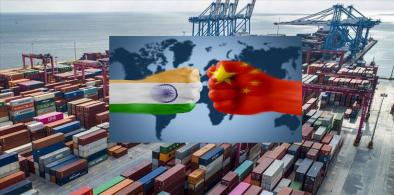
Can India shake off the dragon's growing tentacles in South Asia?

The dragon’s shadow has lengthened over the South Asian region as it has rapidly developed port and transport infrastructure, some of it as part of its Belt and Road Initiative, writes N Chandra Mohan for South Asia Monitor

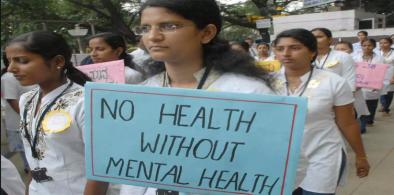
Pandemic is a wake-up call to build India’s mental healthcare infrastructure

India has been dubbed by the World Health Organisation (WHO) as the most depressed country in the world. The numbers themselves are pretty frightening,  writes Dr. Lovleen Malhotra for South Asia Monitor

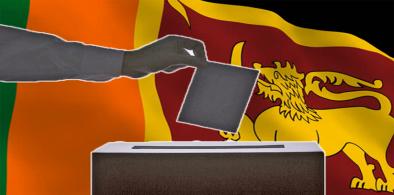
A corona-clouded election in Sri Lanka sets a new welcome trend

President Gotabaya Rajapaksa set a fine example of neutrality of the public service in the forthcoming general elections by instructing that no public official serving in the security forces, government service, corporations, boards, and statutory bodies should engage in political activities, writes Sugeeswara Senadhira for South Asia Monitor

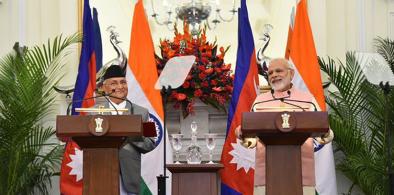
Structural shifts in Nepal’s India policy: New Delhi should continue to engage more

The use of anti-India sentiment is an old stratagem used by Nepalese politicians to assert their own relevance and divert attention away from the real problems facing Nepal, writes Shakti Sinha for South Asia Monitor

Easing of India-China standoff: Can China be trusted?

China’s fresh illegal claims on Bhutanese territory could lead to PLA intrusions to pressure India and orchestrate another standoff, writes Lt Gen P. C. Katoch (retd) for South Asia Monitor 

US-India strategic consultations: Delhi treads cautiously on Chinese 'threats'

India has been careful to maintain that its closer ties with the US and its Indo-Pacific partners were not directed against anyone – diplomaticspeak that they weren't meant to be anti-China, writes Arul Louis for South Asia Monitor

An India-China truce with a difference: Why the disengagement may work this time

The declaration of truce on July 6, the 85th birthday of exiled Tibetan spiritual leader, Dalai Lama and two days after the Dharma Chakra Day on July 4, reminds of Buddha’s message that was carried by Indians to China, writes Rajendra Shende for South Asia Monitor

South Asia: Fiscal policy as an option for economic revival

The data on the growth rates in Gross Domestic Product between 2015 to 2020 show that South Asia would show the maximum decline in 2020 after growing the fastest between 2015-2019 at an annual average rate of 6.1 percent as compared to 4.8 percent for Southeast Asia and 6.0 percent for East Asia, writes Partha Pratim Mitra for South Asia Monitor

Nepal can choose to go the Bangladesh way or Pakistan way in dispute settlement with India

So, there are two examples in front of Nepal now; one is Pakistan, and another Bangladesh, which one will they choose? writes Swadesh Roy for South Asia Monitor

The irony of President Trump’s H-1B action

Trump needs to be seen as doing something to save the economy and American jobs. H-1B, which has been a bogeyman for the protectionists and economic nationalists, is an easy target during this downturn, writes Frank Islam for South Asia Monitor

Global partnerships will help Bangladesh revive COVID-hit economy

The Bangladesh government is trying its best to restore jobs abroad for the millions of migrant workers so that the large remittance flow continues, writes Dr. Mohammad Rezaul Karim for South Asia Monitor

The flickering beacons of democracy: India and the USA

India needs Modi to rediscover his inner ecumenical soul. To do that, Modi must become the leading proponent of and advocate for a “unifying nationalism,”   writes Tom de Boor and Ed Crego for South Asia Monitor

Re-thinking NAM in a post-COVID-19 century

We are approaching the 65th anniversary of the Bandung Principles this year and 60th anniversary of the NAM in 2021. There is a renewed call in the NAM communique for the revitalization and strengthening of NAM, writes Sayantan Bandyopadhyay for South Asia Monitor