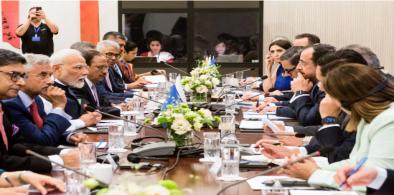
NATO Headquarters in Brussels (NATO photo)

Why the NATO summit in Ankara matters for South Asia

The NATO summit can indirectly transform India from a regional power into a West Asia stakeholder by integrating India into maritime security frameworks, supporting connectivity projects, strengthening intelligence ties, reinforcing India’s role as an alternative to China. The long-term outcome is that India could emerge as a pillar of stability linking Europe, the Gulf, and the Indo-Pacific

India–Japan Summit: Strategic Convergence in a Changing Indo-Pacific Order

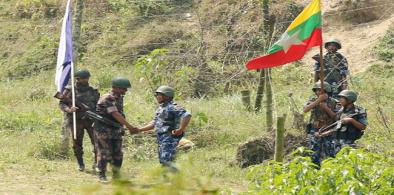
Japan has also proposed developing a Bay of Bengal–Northeast India Industrial Value Chain aimed at transforming the region into an integrated industrial zone. As part of the Free and Open Indo-Pacific vision, this includes strengthening cross-border connectivity with Bangladesh, Myanmar, Nepal and Bhutan. 

China and the Emerging Scenario in the Bay of Bengal

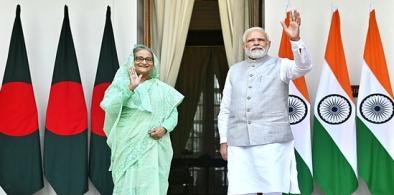
China's expressed interest in modernising and upgrading both Chattogram and Mongla ports suggests the emergence of an interconnected infrastructure network linking the Bay of Bengal with southwestern China through Myanmar. If realised, such connectivity would enhance trade flows, improve regional logistics and deepen China's economic footprint across the Bay of Bengal littoral, while simultaneously increasing Bangladesh's importance as a regional transit and connectivity hub.

Colombo to Kathmandu, China Seeks to Counteract US Moves Across South Asia

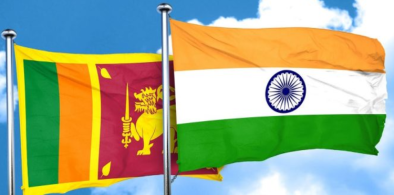
While Washington and New Delhi seek to strengthen bilateral ties with Colombo, Beijing has strategically engaged with the political forces that control the government. By engaging directly with actors at the core of Sri Lanka’s governance, Beijing appears to be signalling its strategic intent—projecting influence and reinforcing ideological ties. 

More on Geopolitics and Strategic Affairs

India must take corrective measures to control hatred, divisiveness

In view of the growing trade and cultural ties between India and the Arab world, it will be disastrous if differences aggravate and no remedial and timely actions are taken, writes Asif Rameez Daudi for South Asia Monitor

India’s devotional politics; and its immunity to criticism

Beginning with Mahatma Gandhi and Jawaharlal Nehru till Narendra Modi, we have a tendency to associate divine qualities to a political leader, writes Dr. Suparna Banerjee for South Asia Monitor

Bangladesh's help to Sri Lanka underlines need for SAARC revival

Covid-19 pandemic and Sri Lanka's crisis are the best examples for all member states to try their level best to revitalize SAARC, writes Dr Shakuntala Bhabani for South Asia Monitor

Religion is another name for love; hate is part of divisive politics

The major political parties in India need to oppose the gross violations of the Constitution, the bulldozer (in)justice and beating of accused in custody, writes Dr Ram Puniyani for South Asia Monitor

Are Hindus being persecuted in Bangladesh? Facts belie prevailing narratives

Unlike Myanmar and India, Bangladesh has never, particularly since 1991, promoted any discriminatory policy against minorities, writes Samina Akhter for South Asia Monitor

Will warming ties with the US be a lifeline for Pakistan?

A number of factors in Pakistan such as the alarming economic situation, continued grey-listing by the FATF, growing terrorism challenges created the exigency for a reset in its ties with Washington, writes Shraddha Nand Bhatnagar for South Asia Monitor 

Afghanistan: The failure of democracy, the US and the free world

But the democratic world, mainly the US, already lost its battle for democracy in South and Central Asia by allowing the collapse of the the Afghan Republic, writes Fahim Sadat for South Asia Monitor

India’s outreach to the Taliban: An opening with limited expectations

The Taliban, on the other hand, assiduously tried to exert themselves as an independent sovereign authority in Afghanistan, which was also reflected in the series of interviews that the group’s senior leaders gave to Indian media just before Singh’s visit. They also assured, on multiple occasions, that if New Delhi decided to re-open its embassy, they will be provided security, India’s prime concern, writes Shraddha Nand Bhatnagar for South Asia Monitor

Global economic prospects and challenges for South Asia: Cooperation is the key

The policy dilemmas which the economies of South Asia face call for collective thinking, although each country may have to pursue its own strategy, writes Partha Pratim Mitra for South Asia Monitor 

Saffron bigotry stumps the BJP in the Muslim world: Will the party change tack?

Now the BJP may begin to have second thoughts about aggressive pro-Hindu tactics. Even if it has won over large sections of the communal-minded Hindus at home, it will be wary of an Arab boycott of Indian products abroad, writes Amulya Ganguli for South Asia Monitor

Why Bangladesh should be seen as a South Asian economic miracle

Bangladesh is a South Asian miracle. Dislodging India, Bangladesh has quietly made its way to the top spot of the South Asian economic wheel, writes Shuvo Das for South Asia Monitor  

World must not forget the Rohingya refugees of Bangladesh

The Afghan and Ukraine crises have worsened the situation. But the world must remember that Rohingyas are also refugees, writes Parvej Siddique Bhuiyan for South Asia Monitor 

Defining moment for earth: South Asia faces grave environmental concerns

South Asia alone produces around 300 million tonnes of solid waste annually and 70–80 percent of these ends up in water bodies or in oceans, write George Cheriyan and Simi T.B. for South Asia Monitor 

Indian food aid to Sri Lanka; Are there any lessons from 1987?

Sri Lanka should also remember the adage ‘there are no free lunches’ and bilateral relations will depend on a give-and-take policy, writes Suggeeswara Senadhira for South Asia Monitor

Men who fight together must pray together: The hallowed tradition of secularism in India's armed forces

As officers in the armed forces, their religion is that of their soldiers, sailors and airmen and all religious festivals of India are attended and taken part by all officers and families, writes Col Anil Bhat (retd) for South Asia Monitor