
The US has now become important for India’s energy security as is the United Arab Emirates, Saudi Arabia and Iraq, writes N. Chandra Mohan for South Asia Monitor
The NATO summit can indirectly transform India from a regional power into a West Asia stakeholder by integrating India into maritime security frameworks, supporting connectivity projects, strengthening intelligence ties, reinforcing India’s role as an alternative to China. The long-term outcome is that India could emerge as a pillar of stability linking Europe, the Gulf, and the Indo-Pacific
Japan has also proposed developing a Bay of Bengal–Northeast India Industrial Value Chain aimed at transforming the region into an integrated industrial zone. As part of the Free and Open Indo-Pacific vision, this includes strengthening cross-border connectivity with Bangladesh, Myanmar, Nepal and Bhutan.
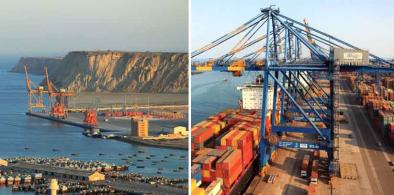
China's expressed interest in modernising and upgrading both Chattogram and Mongla ports suggests the emergence of an interconnected infrastructure network linking the Bay of Bengal with southwestern China through Myanmar. If realised, such connectivity would enhance trade flows, improve regional logistics and deepen China's economic footprint across the Bay of Bengal littoral, while simultaneously increasing Bangladesh's importance as a regional transit and connectivity hub.
While Washington and New Delhi seek to strengthen bilateral ties with Colombo, Beijing has strategically engaged with the political forces that control the government. By engaging directly with actors at the core of Sri Lanka’s governance, Beijing appears to be signalling its strategic intent—projecting influence and reinforcing ideological ties.
The US has now become important for India’s energy security as is the United Arab Emirates, Saudi Arabia and Iraq, writes N. Chandra Mohan for South Asia Monitor
The 1991 act was aimed at focussing social energies on building the future while preserving the integrative aspects of Indian syncretism, what Jawaharlal Nehru underlined as "Ganga-Jamuna tehjeeb", writes Dr Ram Puniyani for South Asia Monitor
His traditional urban backers grudgingly accept Prime Minister Ranil Wickremesinghe’s confession that they have to bear more for a few weeks more before pressing the recovery button. The same cannot be said of the rural poor, writes N. Sathiya Moorthy for South Asia Monitor
The US plans to sign two defense agreements with Bangladesh: GSOMIA and ACSA and, through these, the US hopes to strengthen military ties by enhancing intelligence sharing and exchanging logistical and technological support, writes Fumiko Yamada for South Asia Monitor
India prioritizing neighbouring countries in its foreign policy objectives, particularly by assisting Sri Lanka and Afghanistan amid crises, shows its commitment to 'Neighbourhood First' policy, writes John Rozario for South Asia Monitor
A mix of Indo-Pakistani enmity and a twisted, politically motivated interpretation of the subcontinent’s past, have helped the BJP to depict the Muslims as demons against whom the Hindus have to wage a relentless battle, writes Amulya Ganguli for South Asia Monitor
Domestically and in the neighbourhood, too, India’s ban only creates fresh uncertainties despite the government’s assurance that government-to- government contracts will be honoured, writes N. Chandra Mohan for South Asia Monitor
Bangladesh has a long experience in facing natural disasters and managing risks and has been utilizing the learning to cope with Covid-19 too, writes Dr Mohammad Rezaul Karim for South Asia Monitor
The path ahead in Sri Lanka will not be easy – for anyone. But the situation – widespread shortages of all essentials including medicines, food and fuel – have left many Sinhalese wondering if they were right in ignoring what tens of thousands of Tamils underwent for long years, writes M R Narayan Swamy for South Asia Monitor
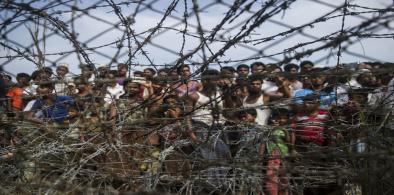
Bangladesh continues to generously host the world’s largest and growing refugee settlement despite the huge burden on economy, food management, limited resources and other circumstances, writes John Rozario for South Asia Monitor
Today, in the 75th year of Independence, both India and Pakistan must honour their 2012 agreement and allow at least the elderly to meet relatives across the divide, writes Tridivesh Singh Maini for South Asia Monitor
Overall, the changes proposed in the country's education system are in tune with the concept of nationalism and culture that sectarian nationalists want to impose on the country, writes Dr Ram Puniyani for South Asia Monitor
Though Russia has agreed to accept spent fuel, it is unclear how safe the procedures for removing it from reactors and transporting it from Bangladesh will be, writes Aashish Kiphayet for South Asia Monitor
To expect that in a possible future armed conflict with a neighbor, India can rely on the Russian army is lunacy. The Russian army itself demonstrated in Ukraine what actually it represents, write Prof (Dr) Vesselin Popovski, Prof Abhinav Mehrotra and Surabhi Bhandari for South Asia Monitor
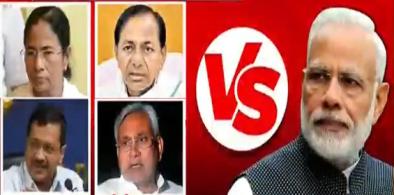
By using religion and nationalism in tandem, the BJP has taken giant strides forward in the electoral field so much so that its opponents – the so-called secular parties – are at their wit’s end, writes Amulya Ganguli for South Asia Monitor