
Beginning with Mahatma Gandhi and Jawaharlal Nehru till Narendra Modi, we have a tendency to associate divine qualities to a political leader, writes Dr. Suparna Banerjee for South Asia Monitor
Neither Bangladesh nor India — including West Bengal — is likely to fully concede its position. The future instead lies in pragmatic compromise, where domestic political constraints are balanced against the imperatives of regional cooperation. Ultimately, the trajectory of India–Bangladesh relations will depend less on identity politics and more on whether both sides can align economic necessity with political will.
The broader reality is that even if a political understanding emerges, restoring confidence in the Strait may take far longer than restoring a ceasefire. Shipping markets operate as much on perception of risk as on military realities. Tanker operators, insurers, charterers, and energy traders require predictability — and that predictability is currently absent.
New Delhi now occupies an awkward middle space: not fully trusted by the West, yet no longer fully aligned with the broader Global South consensus either. That ambiguity becomes riskier if Washington and Beijing move into even a temporary phase of strategic stabilisation.
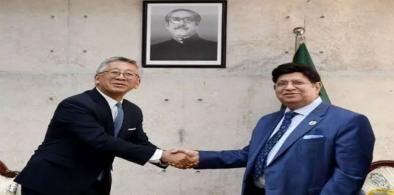
The major bilateral issue is border security and management. While India claims that millions of Bangladeshis enter India illegally, reside and work here, Bangladesh dismisses that contention outright, saying that as their per capita income was higher than India’s, there was no reason for economic migration from Bangladesh to India.
Beginning with Mahatma Gandhi and Jawaharlal Nehru till Narendra Modi, we have a tendency to associate divine qualities to a political leader, writes Dr. Suparna Banerjee for South Asia Monitor
Covid-19 pandemic and Sri Lanka's crisis are the best examples for all member states to try their level best to revitalize SAARC, writes Dr Shakuntala Bhabani for South Asia Monitor
The major political parties in India need to oppose the gross violations of the Constitution, the bulldozer (in)justice and beating of accused in custody, writes Dr Ram Puniyani for South Asia Monitor
Unlike Myanmar and India, Bangladesh has never, particularly since 1991, promoted any discriminatory policy against minorities, writes Samina Akhter for South Asia Monitor
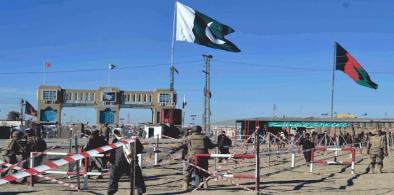
A number of factors in Pakistan such as the alarming economic situation, continued grey-listing by the FATF, growing terrorism challenges created the exigency for a reset in its ties with Washington, writes Shraddha Nand Bhatnagar for South Asia Monitor
But the democratic world, mainly the US, already lost its battle for democracy in South and Central Asia by allowing the collapse of the the Afghan Republic, writes Fahim Sadat for South Asia Monitor
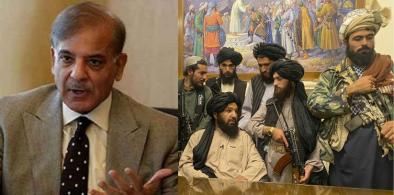
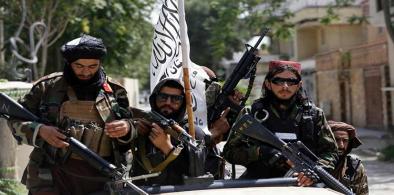
The Taliban, on the other hand, assiduously tried to exert themselves as an independent sovereign authority in Afghanistan, which was also reflected in the series of interviews that the group’s senior leaders gave to Indian media just before Singh’s visit. They also assured, on multiple occasions, that if New Delhi decided to re-open its embassy, they will be provided security, India’s prime concern, writes Shraddha Nand Bhatnagar for South Asia Monitor
The policy dilemmas which the economies of South Asia face call for collective thinking, although each country may have to pursue its own strategy, writes Partha Pratim Mitra for South Asia Monitor
Now the BJP may begin to have second thoughts about aggressive pro-Hindu tactics. Even if it has won over large sections of the communal-minded Hindus at home, it will be wary of an Arab boycott of Indian products abroad, writes Amulya Ganguli for South Asia Monitor
Bangladesh is a South Asian miracle. Dislodging India, Bangladesh has quietly made its way to the top spot of the South Asian economic wheel, writes Shuvo Das for South Asia Monitor
The Afghan and Ukraine crises have worsened the situation. But the world must remember that Rohingyas are also refugees, writes Parvej Siddique Bhuiyan for South Asia Monitor
South Asia alone produces around 300 million tonnes of solid waste annually and 70–80 percent of these ends up in water bodies or in oceans, write George Cheriyan and Simi T.B. for South Asia Monitor
Sri Lanka should also remember the adage ‘there are no free lunches’ and bilateral relations will depend on a give-and-take policy, writes Suggeeswara Senadhira for South Asia Monitor
As officers in the armed forces, their religion is that of their soldiers, sailors and airmen and all religious festivals of India are attended and taken part by all officers and families, writes Col Anil Bhat (retd) for South Asia Monitor
The US has now become important for India’s energy security as is the United Arab Emirates, Saudi Arabia and Iraq, writes N. Chandra Mohan for South Asia Monitor