Women have to take risks at every step while walking down the streets. In the vast area of Bangladesh, there is hardly any place where a woman can breathe safely. Hatred towards women is being spread at every level of society.
Neither Bangladesh nor India — including West Bengal — is likely to fully concede its position. The future instead lies in pragmatic compromise, where domestic political constraints are balanced against the imperatives of regional cooperation. Ultimately, the trajectory of India–Bangladesh relations will depend less on identity politics and more on whether both sides can align economic necessity with political will.
The broader reality is that even if a political understanding emerges, restoring confidence in the Strait may take far longer than restoring a ceasefire. Shipping markets operate as much on perception of risk as on military realities. Tanker operators, insurers, charterers, and energy traders require predictability — and that predictability is currently absent.
New Delhi now occupies an awkward middle space: not fully trusted by the West, yet no longer fully aligned with the broader Global South consensus either. That ambiguity becomes riskier if Washington and Beijing move into even a temporary phase of strategic stabilisation.
The major bilateral issue is border security and management. While India claims that millions of Bangladeshis enter India illegally, reside and work here, Bangladesh dismisses that contention outright, saying that as their per capita income was higher than India’s, there was no reason for economic migration from Bangladesh to India.
Women have to take risks at every step while walking down the streets. In the vast area of Bangladesh, there is hardly any place where a woman can breathe safely. Hatred towards women is being spread at every level of society.
The two major reforms in labor and land policies being politically sensitive will be a dampener if not implemented. These are political decisions much like the aborted advantageous farm reforms.
Building trust within our societies and institutions is paramount, as evidenced by the correlation between trust levels and resilience during crises such as the COVID-19 pandemic.
What is of significance and runs parallel in both the above verdicts is the Supreme Court's innate concern for upholding democratic values in the Indian polity.
The United States wants to keep the South Asian region stable, seeking to neutralize the overdependence of any nation on China. Bangladesh, because of its geostrategic position, is being lured to align Dhaka with Washington’s strategic objective for a free and open Indo-Pacific.
While the contentious Durand Line has become one of the main reasons for cross-border skirmishes between Afghanistan and Pakistan, the Taliban has turned from being seen as an ideological ally that can give Pakistan 'strategic depth' against India, to a troublesome neighbour that is now viewed with deep suspicion.
Since 2019, China has been building 628 dual-use military villages (termed ‘Xiaokang’ or ‘well-off’ villages) along the southern border of the Tibet Autonomous Region (TAR), including inside Bhutan and in Arunachal Pradesh, India.
Diplomatic efforts must be intensified to address the ongoing border situation with China and safeguard Bhutan's sovereignty. It is also imperative to address the unresolved Bhutanese refugee issue and protracted family separation among Bhutanese Americans.
The time has come to drastically curb the unchecked and ultra-constitutional powers of the army chief, subject the intelligence agencies to public scrutiny and accountability, and limit their influence over domestic and foreign policy.
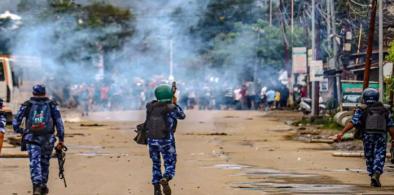
Much more violence could be expected in Manipur, with Meitei radicals waging all-out war against the Kuki-Zo, with Nagas fearing they would be the next target since the Arambai Tenggol alone outnumbers the tribals of Manipur hugely.
The Maldives has undergone a radical transformation. To see this as playing the India or China card would be a miscalculation. Indeed, the strategic narrative of what is going on is very different.
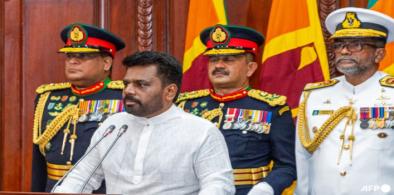
While the NPP’s visit to India exemplifies changes in its political understanding, it has an important dimension in Sri Lanka's domestic politics. New Delhi appears to have judged that the NPP coalition has the potential to play a decisive role in the upcoming presidential election.
The Pakistani military went all out to deliver this vote. Its idea to have direct control of the political situation to what it comprehends will bring stability to Pakistan’s crisis may be a pipe dream with a fractured verdict leaving Pakistan open to elements that will only compound its instability.
Rakhine's lack of effective government structure and civil order will continue to be a significant source of worry for the region, particularly in terms of humanitarian, security, economic, and political issues.
If the Nagas are drawn into the already raging ethnic conflict in Manipur, it would be catastrophic for the border state and have repercussions in the entire northeast of India. The decision to fence the entire India-Myanmar border and cancel the FMR could potentially lead to discontent in Nagaland and Mizoram.