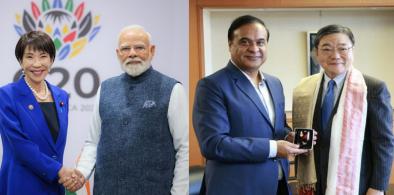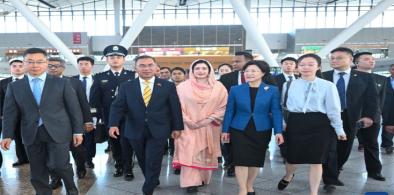

Japanese Prime Minister Sanae Takaichi arrived in New Delhi

India–Japan Summit: Strategic Convergence in a Changing Indo-Pacific Order

Japan has also proposed developing a Bay of Bengal–Northeast India Industrial Value Chain aimed at transforming the region into an integrated industrial zone. As part of the Free and Open Indo-Pacific vision, this includes strengthening cross-border connectivity with Bangladesh, Myanmar, Nepal and Bhutan. 

China and the Emerging Scenario in the Bay of Bengal

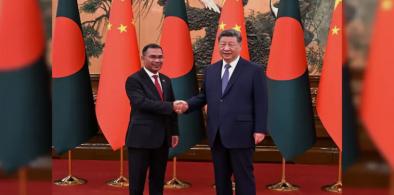
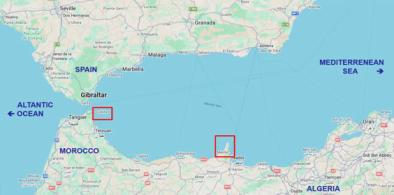
China's expressed interest in modernising and upgrading both Chattogram and Mongla ports suggests the emergence of an interconnected infrastructure network linking the Bay of Bengal with southwestern China through Myanmar. If realised, such connectivity would enhance trade flows, improve regional logistics and deepen China's economic footprint across the Bay of Bengal littoral, while simultaneously increasing Bangladesh's importance as a regional transit and connectivity hub.

Colombo to Kathmandu, China Seeks to Counteract US Moves Across South Asia

While Washington and New Delhi seek to strengthen bilateral ties with Colombo, Beijing has strategically engaged with the political forces that control the government. By engaging directly with actors at the core of Sri Lanka’s governance, Beijing appears to be signalling its strategic intent—projecting influence and reinforcing ideological ties. 

A Divided EU Faces Growing Scrutiny Over Taliban Contacts

Some analysts accuse the EU of double-standards arguing  that the EU has been condemning Taliban policies since they assumed power, but were now holding direct discussions with them. Such meetings undermine the EU's credibility as a defender of human rights and democratic values.

More on Geopolitics and Strategic Affairs

Renewing Ties with Bangladesh: An Agenda for the new Indian High Commissioner

The major bilateral issue is border security and management. While India claims that millions of Bangladeshis enter India illegally, reside and work here, Bangladesh dismisses that contention outright, saying that as their per capita income was higher than India’s, there was no reason for economic migration from Bangladesh to India. 

Two Visits and Strategic Signalling: Sri Lanka at Focal Point of Indian Ocean diplomacy

Nearly 80% of Asia’s energy imports and a large portion of global container traffic move through the Indian Ocean. With conflicts in the Middle East, disruptions in the Red Sea, and increasing great-power competition, freight security has become a strategic economic issue. Sri Lanka is positioning itself not merely as a recipient of investment, but as a regional connector between South Asia, Southeast Asia, and island maritime states.

One Year of Operation Sindoor: India’s Message of Strength and a New Normal

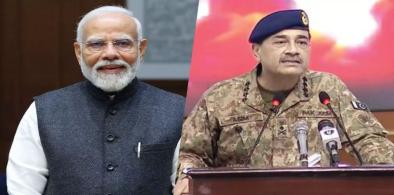
Military analyst Cooper argued that beyond battlefield outcomes, the operation exposed Pakistan’s inability to deter Indian strikes or mount a damaging counter‑response. He suggested the psychological impact of India’s operations triggered panic within Pakistan’s leadership, eventually driving Islamabad to seek international intervention.

Pakistan Needs Integrated Maritime Strategy: Fragmentation Carries Strategic Costs

Pakistan’s maritime domain offers multiple avenues for economic and strategic expansion. However, these remain underdeveloped. Coastal tourism has potential but lacks infrastructure and regulation. Offshore energy, including wind and tidal sources, remains largely unexplored. Marine biotechnology is another emerging sector with minimal investment. These gaps reflect a broader issue: the absence of long-term strategic planning

West Bengal Elections, Dhaka’s Dilemma: Will the Rise of Hardline Nationalist Politics Increase Diplomatic Uncertainty in Bangladesh-India Ties?

Even with a strong central government in India, West Bengal is likely to retain strategic importance for Bangladesh due to its geographic proximity, shared cultural identity, and direct influence over key bilateral issues such as river water sharing and border management. While Dhaka must formally prioritise engagement with New Delhi for any binding agreements, the practical success of many policies often depends on West Bengal’s political stance and cooperation.

Rethinking Electoral Governance: Making Indian Democracy Manipulation Free

Institutionalising mandatory constituency-level debates, organised by neutral academic or media institutions, can address this gap. These forums would require candidates to engage directly on employment, infrastructure, welfare delivery,  governance performance, and manifesto vision.

Stopping Iran's Nuclear Path not Merely a Western Security Interest: It is a Humanitarian Imperative

By repeatedly threatening to close the Strait of Hormuz — the artery through which a significant portion of the world's energy supply flows — it has shown it is willing to inflict suffering on billions of people across India, China, and Africa simply to extract political leverage. A government willing to hold the world's energy supply hostage today will hold the world's existence hostage tomorrow if given the means to do so.

India’s Great Ideological Shift and Rise of a New National Identity

India stands at a historic crossroads. The older frameworks of left-wing politics and the secular-liberal consensus are gradually receding into history. The nation is moving forward on the pillars of development, identity, and global leadership. This is not a temporary wave but a structural transformation. 

India's Solar Moment: The Blazing Sun Presents an Energy Opportunity of Historic Proportions

The current crisis in West Asia offers us a window.  In a world where oil routes can be disrupted overnight by wars India did not start, energy independence becomes a sovereign necessity. Every gigawatt of solar power installed is one step away from the Strait of Hormuz. Every electric vehicle on the road is a barrel of oil India does not have to import. Every rooftop panel is a small act of national self-reliance.

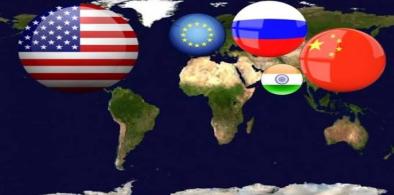
In Fragmenting Global Order, South Asia Needs Strategic Balancing, Regional Cooperation

South Asia’s problem is not that it lacks importance. Its problem is that it lacks collective strategy. Each country is trying to survive the new order separately. India seeks global-power status. Pakistan seeks strategic relevance and economic stability. Bangladesh seeks balanced partnerships and export security. Sri Lanka seeks recovery. Nepal seeks space between two giants. The Maldives seeks bargaining power. Bhutan seeks quiet sovereignty. Afghanistan seeks recognition and survival.

Engineering Threat Perceptions: TTP, ISI and Bangladesh’s Security Narrative

The sudden amplification of TTP-related narratives in Bangladesh appears strategically timed. Observers note that between August 2024 and February 2026, there were credible concerns regarding the facilitation—both overt and covert—of visits by Pakistan-linked militant actors into Bangladesh. Yet, these developments did not receive comparable international attention.

The Tragic Loop of Bangladesh Politics: Did the People Vote for Change or Replacement?

Bangladesh’s political future depends on whether the BNP can discipline its own networks before citizens conclude that elections only rotate predators. It must act against extortion, land grabbing, political violence, campus capture, and intimidation, not as public relations damage, but as regime-defining threats.

When Fish was on the Ballot: Elections 2026 Saw Spicy Debate Over Bengal's Plate, Pride and Palate

In the run-up to the Bengal elections, 2026, the fish debate did exactly that. Banerjee stitched fish to language, secularism and regional pride, painting the BJP as a Hindi-heartland force that would impose vegetarian norms. The BJP countered by showcasing its own non-vegetarian leaders from Assam and elsewhere, eating “macher jhol” on camera, and promising “Bengal’s way of life will not change.”

Lessons from a Downed Aircraft: What Iran Did to America's AWACS Fleet at Saudi Air Base

Iran did not defeat U.S. airpower in this conflict. It demonstrated, with one strike against one aircraft, what happens when force architecture built around high-value irreplaceable platforms meets an adversary that has spent years studying exactly which targets to hit. The E-3 destroyed at Prince Sultan is not primarily a story about one aircraft. 

Sri Lanka-Pakistan Ties in a New Era: Focus on Security Coordination, Military Education

The newest symbol of Pakistan-Sri Lanka defence cooperation is Exercise Shake Hands-II, launched on April 27, 2026, in Tarbela, Pakistan. The two-week exercise brings together Pakistan Army’s elite Special Services Group (SSG) and Sri Lankan Special Forces. The purpose of the drill is to enhance interoperability, exchange operational experience and improve professional capabilities in counter-terrorism scenarios.