

NATO Headquarters in Brussels (NATO photo)

Why the NATO summit in Ankara matters for South Asia

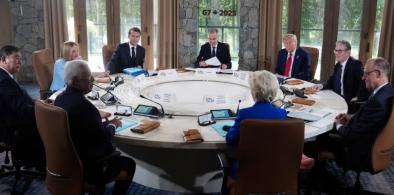
The NATO summit can indirectly transform India from a regional power into a West Asia stakeholder by integrating India into maritime security frameworks, supporting connectivity projects, strengthening intelligence ties, reinforcing India’s role as an alternative to China. The long-term outcome is that India could emerge as a pillar of stability linking Europe, the Gulf, and the Indo-Pacific

India–Japan Summit: Strategic Convergence in a Changing Indo-Pacific Order

Japan has also proposed developing a Bay of Bengal–Northeast India Industrial Value Chain aimed at transforming the region into an integrated industrial zone. As part of the Free and Open Indo-Pacific vision, this includes strengthening cross-border connectivity with Bangladesh, Myanmar, Nepal and Bhutan. 

China and the Emerging Scenario in the Bay of Bengal

China's expressed interest in modernising and upgrading both Chattogram and Mongla ports suggests the emergence of an interconnected infrastructure network linking the Bay of Bengal with southwestern China through Myanmar. If realised, such connectivity would enhance trade flows, improve regional logistics and deepen China's economic footprint across the Bay of Bengal littoral, while simultaneously increasing Bangladesh's importance as a regional transit and connectivity hub.

Colombo to Kathmandu, China Seeks to Counteract US Moves Across South Asia

While Washington and New Delhi seek to strengthen bilateral ties with Colombo, Beijing has strategically engaged with the political forces that control the government. By engaging directly with actors at the core of Sri Lanka’s governance, Beijing appears to be signalling its strategic intent—projecting influence and reinforcing ideological ties. 

More on Geopolitics and Strategic Affairs

Chinese checkers - weaving a string of pearls around India

Viewing the Chinese projects in Nepal’s Terai region, and close to the strategic Chicken’s Neck in Bangladesh, together with the one in the waters of Maldives, one can see that China's calculated moves seek to slowly encircle India. 

EU's 'new strategic agenda' with India: Crisis in US ties compels Brussels to seek closer partnership with New Delhi

The transatlantic alliance, considered to be a pillar of geopolitical stability, now faces an uncertain future and the realism that Europe can no longer depend on its security on the US has begun to creep in the minds of policymakers in Brussels.

Can Pakistan sustain its bold policy reforms?

Another critical reform is ensuring that at least 33% of government board members are women. This move is more than just a symbolic gesture; it marks a tangible shift toward inclusivity in decision-making. Women have historically been underrepresented in governance structures, and this policy sends a strong message that their voices are not just welcome but necessary for Pakistan’s progress.

Beyond the 2024 elections: Sustaining democracy and development in Jammu & Kashmir

While the BJP began on the backfoot as the party of Hindutva (political Hinduism) inspiring little confidence among Kashmiri Muslims, the elections provided vindication to the Modi government's Kashmir policy even in his party's defeat. It was a feat in itself to hold peaceful elections with all political parties contesting under the post-2019 arrangement with a 63.88% turnout to show.

The next pandemic will not wait for policy debates: Shun anthropocentric mindset to One Health in South Asia

Take, for instance, the recent rise in antibiotic-resistant bacterial infections across Nepal, India, and Bangladesh. Governments have started cracking down on antibiotic overuse in human medicine, yet the uncontrolled use of antibiotics in livestock and aquaculture remains largely unchecked. The result? Resistant bacteria continue to grow, eventually finding their way into human populations

South Asian refugee crisis: Political scapegoating and interstate conflicts hinder institutional mitigation

South Asian states have steered clear of accepting formal responsibilities in addressing refugees, with only Afghanistan being a curious signatory to the 1951 Refugee Convention. South Asian states have sought a more voluntary approach to taking in refugees, with geopolitical considerations driving the select acceptability of refugee communities.

Transacting with Trump: Can Modi turn Trump's climate denialism into an opportunity?

Modi can invoke Trump’s language and highlight business and economic opportunities along with market mechanisms that are available almost on platter while pursuing a non-fossil fuel future.  Particularly,  Modi could showcase employment generation by promoting solar energy through the International Solar Alliance. He and Trump can strike bilateral and multilateral ventures as well as research programmes with BRICS on solar energy, modular nuclear plants, windmills, biofuels and green, grey and blue hydrogen.

How India is drawing inspiration from its ancient treatise to strategise national security

On October 21, 2023, India launched ‘Project Udhbav’ during the inauguration of the Indian Military Heritage Festival to synthesize ancient wisdom with contemporary military practices, forging a unique and holistic approach to address modern security challenges. It is tempting to draw a correspondence between India’s and China’s initiatives just 17 days apart.

Nuclear is the way to go: A transformative shift in India's energy landscape

India has 24 nuclear reactors in operation in 8 nuclear power plants with a total installed capacity of 8,180 MW nuclear power produced a total of 48 TWh in 2023, contributing around 3% of total power generation in India.  Due to earlier trade bans and lack of indigenous uranium, India has uniquely been developing a nuclear fuel cycle to exploit its reserves of thorium. India is actively pursuing the development of nuclear energy using thorium as its primary fuel source

South Asian countries must adopt Colombo Process to safeguard migrant labour interest

Since the Colombo Process Ministerial Consultation in Bali, 2005, member states have taken concrete steps to improve the management of labour migration. There has been significant progress in areas of revised policies and regulations. There is greater cooperation between Colombo Process countries and key destination countries. Several initiatives are now in place including awareness-raising campaigns, orientation training, recruitment drives, remittance investment and welfare programmes.

India’s rise a force for good in the Indo Pacific region

India’s rise provides positive ripple impact to the region and the world, from economic and trade spillover effects to the larger equation of helping to secure and preserve the rules-based order that has been the main bedrock of global trade and maritime capacity, maintaining the sanctity of international law and global norms, and in securing the freedom of navigation and overflight in international waters

Value-neutral journalism a threatened ideal in South Asia

Economic considerations surrounding media ownership in South Asia amplify the difficulties of conducting value-neutral journalism. People and businesses with a strong desire to keep things amicable between governments and public institutions own a lot of big media outlets. Journalists are unable to objectively critique powerful entities due to their reliance on advertising, government contracts, or political patronage. 

India In a challenging neighbourhood: Need to reach non-confrontational equilibrium with China

China’s pervasive and growing economic (finance, infrastructure, trade, and energy sectors), diplomatic, and overt/covert military influence, in Pakistan, Nepal, Bhutan, India’s northeastern states, Bangladesh, Myanmar, Sri Lanka and Maldives, and back to Gwadar in Pakistan is amply evident. The recent bonhomie between Bangladesh and Pakistan, both under China’s influence, raises fresh challenges for India’s security.

Hidden hand behind opposition to Adani wind power project in Sri Lanka?

While a Chinese-backed coal power project in Sri Lanka is being carried out without opposition, Adani’s eco-friendly energy project, which the world is looking to as the energy of the future, is being opposed.

What Trump 2.0 means for Asia: Need to balance national priorities with collaborative efforts

South Asia, home to nearly two billion people, stands at a crossroads as Trump’s policies reshape regional dynamics. India’s growing prominence within the QUAD strengthens its strategic position, but smaller economies like Bangladesh face vulnerabilities.