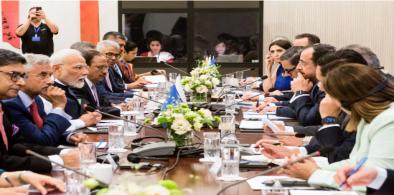

NATO Headquarters in Brussels (NATO photo)

Why the NATO summit in Ankara matters for South Asia

The NATO summit can indirectly transform India from a regional power into a West Asia stakeholder by integrating India into maritime security frameworks, supporting connectivity projects, strengthening intelligence ties, reinforcing India’s role as an alternative to China. The long-term outcome is that India could emerge as a pillar of stability linking Europe, the Gulf, and the Indo-Pacific

India–Japan Summit: Strategic Convergence in a Changing Indo-Pacific Order

Japan has also proposed developing a Bay of Bengal–Northeast India Industrial Value Chain aimed at transforming the region into an integrated industrial zone. As part of the Free and Open Indo-Pacific vision, this includes strengthening cross-border connectivity with Bangladesh, Myanmar, Nepal and Bhutan. 

China and the Emerging Scenario in the Bay of Bengal

China's expressed interest in modernising and upgrading both Chattogram and Mongla ports suggests the emergence of an interconnected infrastructure network linking the Bay of Bengal with southwestern China through Myanmar. If realised, such connectivity would enhance trade flows, improve regional logistics and deepen China's economic footprint across the Bay of Bengal littoral, while simultaneously increasing Bangladesh's importance as a regional transit and connectivity hub.

Colombo to Kathmandu, China Seeks to Counteract US Moves Across South Asia

While Washington and New Delhi seek to strengthen bilateral ties with Colombo, Beijing has strategically engaged with the political forces that control the government. By engaging directly with actors at the core of Sri Lanka’s governance, Beijing appears to be signalling its strategic intent—projecting influence and reinforcing ideological ties. 

More on Geopolitics and Strategic Affairs

Climate change action: Can legal recourse work in goading governments in South Asia?

South Asian countries have reported multiple litigations related to climate change.There are 14 such cases in India, six in Pakistan, four in Nepal and one in Sri Lanka. These include the landmark Asghar Leghari v. Federation of Pakistan case where a farmer sued the Pakistan government for not implementing the National Climate Change Policy of 2012 and the Framework for Implementation of Climate Change Policy (2014-2030). 

India can play a larger role in reducing US-Iran tensions

Prime Minister Narendra Modi has invested personal time and effort to rework India’s ties with every country in the Middle East/West Asia. And the results are showing -- India's relations with the United Arab Emirates, Saudi Arabia, Qatar, Kuwait and others have improved dramatically. Cooperation on counter terrorism – once an irritant between India and countries in the region – is now remarkably smooth

Rare Earths and the new Great Game: Is South Asia the new battleground?

The competition for rare earths in South-Central Asia is not just a story of mining—it is a story of power, politics, and people. Pakistan and Afghanistan sit on mineral treasure troves, but their benefit will depend on governance, peace, and equitable development. For India, the rare earth race presents both a challenge and an opportunity. It cannot afford to be a passive observer

India's transshipment cancellation: Steps towards ending Dhaka's economic reliance?

The cancellation has far-reaching implications. Bangladesh is now exploring alternative markets and trade routes. Imports of raw materials from countries like China, Pakistan, Türkiye, and Uzbekistan are likely to increase. Meanwhile, export costs to the Middle East and Western countries have already risen due to longer, more expensive transport routes.

BIMSTEC: Structural and political challenges hobble greater regional integration

India’s active role in BIMSTEC aligns with its broader strategic objectives under the Neighborhood First and Act East policies. The organization’s goals—connecting South and Southeast Asia, enhancing trade and connectivity, and boosting cooperation in maritime and non-traditional security sectors—complement India’s own regional priorities

Chill in India-Bangladesh ties taking heavy toll on cross-border trade and infrastructure

Bangladeshi authorities have noted that Matarbari Port  will also support feeder vessel services from India’s Kolkata and Haldia ports. This transshipment framework could facilitate efficient trade not only for India but also for landlocked neighbors like Nepal and Bhutan. However, much of this potential remains unrealized, and may continue to do so, amid Bangladesh’s current domestic challenges and diplomatic tensions with India

The rot within: Police assault on army officer highlights crying need for systemic reforms

While there is no debate that soldiers must be treated with dignity, civilians too are equally deserving of such respectful treatment. India is a democratic nation governed by the rule of law, which must apply uniformly—whether to a uniformed individual or a civilian. There should be no space for such high-handed behavior by the police or any other government agency that represents state authority.

Can a fish market and a temple co-exist? Fishy politics in an Indian capital corner tells a larger story

An eclectic faith with no supreme authority, that accommodate diverse centres of belief and practice, can always be susceptible to manipulation and misinterpretation. A tendency to arrogate theological authority to a self-serving stream of thought and negation of other religio-cultural practices is alien to the spirit of Sanatan Dharma, which is inherently inclusive in character and sees no basis for excluding any belief.

Tahawwur Hussain Rana, extradited to India, can potentially throw light on Pakistan’s intelligence-terrorist nexus

Rana’s extradition is a legal victory for India, but it is symbolic considering that he was only one of the plotters of the Mumbai attacks. Headley, who was often described as a double agent working as an informant for the U.S. Drug Enforcement Agency (DEA) at one point, was the man on the ground. For reasons which have remained a mystery he managed to strike a deal with the U.S. law enforcement under which both his extradition to India and potential death sentence were taken off the table in return for lifelong cooperation.

Financing Sustainable Development: South Asia’s Struggles Amid Global Shifts

South Asia faces mounting challenges in financing sustainable development due to global funding gaps, debt pressures, and shifting U.S. policies. Explore the latest trends, data, and implications.

Time is running out: Bangladesh must intensify diplomatic engagement on Rohingya repatriation

During his recent visit to China, Chief Adviser Dr. Muhammad Yunus urged Beijing to take a more proactive stance on Rohingya repatriation. In response, President Xi Jinping assured that China would raise the issue with Myanmar. Days later, Myanmar’s announcement signaled the potential influence of international stakeholders. The more pressure China exerts, the more likely Myanmar will cooperate

Modi visit to Sri Lanka: Religious diplomacy to boost ties

Most analysts believe that India changed Modi’s programme to appease the majority Buddhist community, which will be happy to see the Indian leader pay homage to Sri Maha Bodhi in Anuradhapura rather than visit the Tamil minority in Sampur in the east.

Can BIMSTEC succeed where SAARC failed?

The biggest problem of SAARC was the political rivalry between India and Pakistan, which has become a huge obstacle to effective regional policy making. BIMSTEC does not have that problem. Here, the goal is not competition, but cooperation to achieve economic prosperity. As a result, member countries are able to reach consensus and take practical development initiatives.

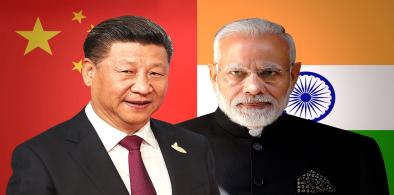
Beyond borders: Time to rekindle the bond between India and China, forge selective alliances

The diplomacy of restraint, recently practiced by both nations, can be a powerful asset in achieving ambitious climate targets. By working as complementary partners rather than competitors, India and China can manage growth and societal well-being in a more inclusive and sustainable manner, thereby mitigating the planet-wide existential threat of climate change.

Expedite the bridge to Singalatheevu: Open Letter to Indian Prime Minister Narendra Modi

A bridge between India and Sri Lanka is more than just an infrastructure project; it is a symbol of the enduring historic bond between two nations. As you pointed out, both countries "do not have a land boundary." The bridge shall represent our shared histories, mutual aspirations, and a commitment to a future of prosperity and cooperation between two neighbours.