The dragon’s shadow has lengthened over the South Asian region as it has rapidly developed port and transport infrastructure, some of it as part of its Belt and Road Initiative, writes N Chandra Mohan for South Asia Monitor


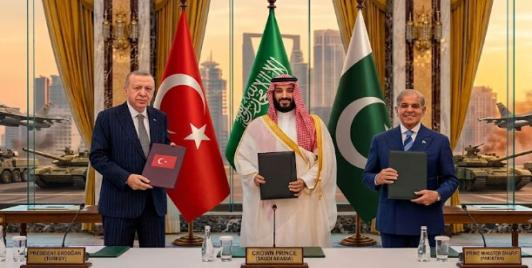
It would also explain why Pakistan is trying to preserve a distinction between supporting Saudi Arabia and fighting the Houthis. Pakistan has every reason to avoid another open-ended conflict in the Middle East. Its military is heavily committed to its own security challenges. Its economy cannot easily absorb the political and financial consequences
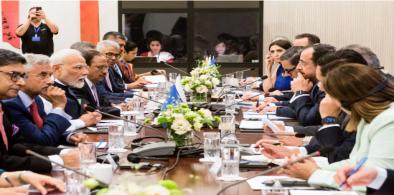
EU and India could establish a regular EU–India-Middle East Consultative Mechanism involving foreign-policy officials and experts. Its purpose would be to coordinate positions before major international gatherings and meetings.

For Sri Lankan politics, this is more than diplomatic sightseeing. It raises a fundamental question whether the JVP is developing a sophisticated strategy of balancing relations with India and China or is it gradually adapting itself to the organisational models of powerful one-party or dominant-party systems in China and India respectively?

The ongoing civil war in Myanmar has caused an influx of armed cadres (Meitei, Naga and Kuki) into Manipur's border tracts like Kamjong district, further squeezing finite land resources and aggravating historical territorial disputes. What began as a localized dispute under the state's newly elected government in February 2026 has escalated into intense, multi-district armed warfare.
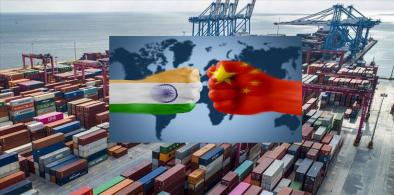
The dragon’s shadow has lengthened over the South Asian region as it has rapidly developed port and transport infrastructure, some of it as part of its Belt and Road Initiative, writes N Chandra Mohan for South Asia Monitor
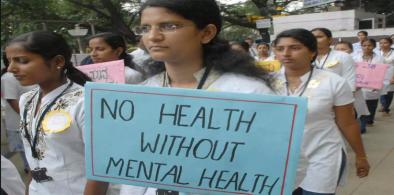
India has been dubbed by the World Health Organisation (WHO) as the most depressed country in the world. The numbers themselves are pretty frightening, writes Dr. Lovleen Malhotra for South Asia Monitor

President Gotabaya Rajapaksa set a fine example of neutrality of the public service in the forthcoming general elections by instructing that no public official serving in the security forces, government service, corporations, boards, and statutory bodies should engage in political activities, writes Sugeeswara Senadhira for South Asia Monitor
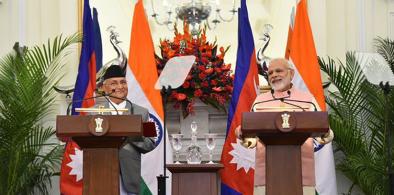
The use of anti-India sentiment is an old stratagem used by Nepalese politicians to assert their own relevance and divert attention away from the real problems facing Nepal, writes Shakti Sinha for South Asia Monitor
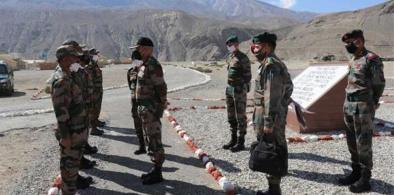
China’s fresh illegal claims on Bhutanese territory could lead to PLA intrusions to pressure India and orchestrate another standoff, writes Lt Gen P. C. Katoch (retd) for South Asia Monitor
India has been careful to maintain that its closer ties with the US and its Indo-Pacific partners were not directed against anyone – diplomaticspeak that they weren't meant to be anti-China, writes Arul Louis for South Asia Monitor
The declaration of truce on July 6, the 85th birthday of exiled Tibetan spiritual leader, Dalai Lama and two days after the Dharma Chakra Day on July 4, reminds of Buddha’s message that was carried by Indians to China, writes Rajendra Shende for South Asia Monitor

The data on the growth rates in Gross Domestic Product between 2015 to 2020 show that South Asia would show the maximum decline in 2020 after growing the fastest between 2015-2019 at an annual average rate of 6.1 percent as compared to 4.8 percent for Southeast Asia and 6.0 percent for East Asia, writes Partha Pratim Mitra for South Asia Monitor
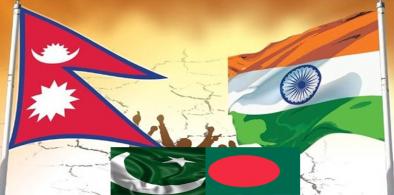
So, there are two examples in front of Nepal now; one is Pakistan, and another Bangladesh, which one will they choose? writes Swadesh Roy for South Asia Monitor

Trump needs to be seen as doing something to save the economy and American jobs. H-1B, which has been a bogeyman for the protectionists and economic nationalists, is an easy target during this downturn, writes Frank Islam for South Asia Monitor
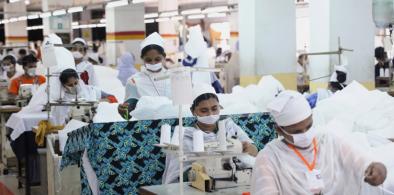
The Bangladesh government is trying its best to restore jobs abroad for the millions of migrant workers so that the large remittance flow continues, writes Dr. Mohammad Rezaul Karim for South Asia Monitor

India needs Modi to rediscover his inner ecumenical soul. To do that, Modi must become the leading proponent of and advocate for a “unifying nationalism,” writes Tom de Boor and Ed Crego for South Asia Monitor

We are approaching the 65th anniversary of the Bandung Principles this year and 60th anniversary of the NAM in 2021. There is a renewed call in the NAM communique for the revitalization and strengthening of NAM, writes Sayantan Bandyopadhyay for South Asia Monitor
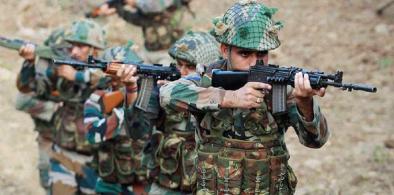
This is a defining moment in the history of India and its actions could well dictate its standing in the world, writes Lt Gen PR Kumar (retd) for South Asia Monitor
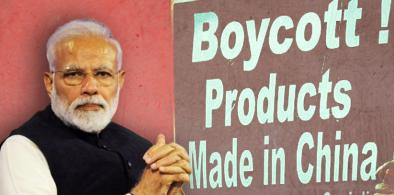
Can orchestrated symbolism of smashing Chinese TVs create a mass movement when no domestic alternatives are available to our extremely price-sensitive consumers? writes Brig Deepak Sethi (retd) for South Asia Monitor