Nepal has endorsed China's new national security law for Hong Kong even as the Western block led by the US have jointly called Beijing's move a direct violation of international treaties


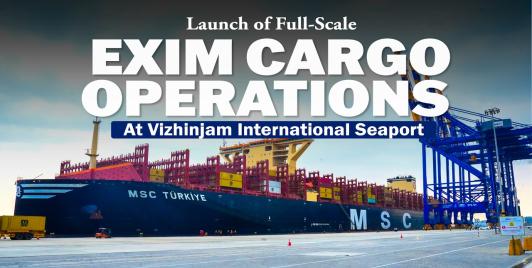
Another asset remains underutilised: the global Malayali diaspora. Few Indian states possess such an extensive international network. For decades, remittances have sustained Kerala's economy. The challenge now is to transform that relationship from remittance to investment.
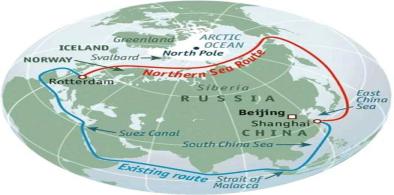
As Arctic ice retreats, geography itself is being rewritten. The Northern Sea Route illustrates how environmental change, technological innovation, commercial strategy, and geopolitics are converging to reshape international trade.
South Asia remains one of the least integrated regions in the world despite geographical proximity and complementary economic structures. Greater regional trade, improved transport connectivity, cross-border electricity markets, digital payment systems and investment partnerships could substantially reduce external vulnerabilities.
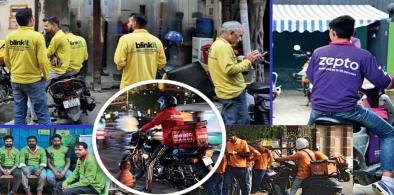
Between 2004 and 2023, India produced roughly five million graduates every year, but graduate employment increased by only around 2.8 million annually. Even fewer obtained salaried employment. Millions are either unemployed or working below their qualifications or in the waiting room for the elusive government job.
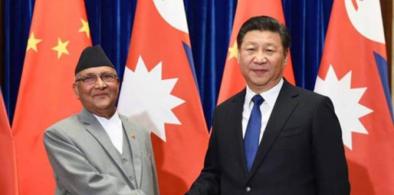
Nepal has endorsed China's new national security law for Hong Kong even as the Western block led by the US have jointly called Beijing's move a direct violation of international treaties
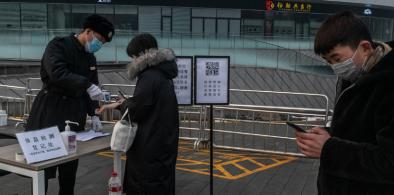
Chinese President Xi Jinping is a troubled man who appears to be going berserk with mounting external and internal challenges
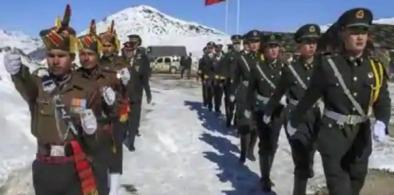
Talks between India and China's military representatives on Tuesday to resolve the ongoing face-off in eastern Ladakh between the two countries remained inconclusive, government sources said
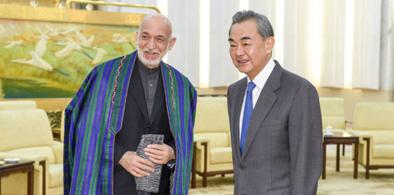
Former Afghan President Hamid Karzai expressed support for China's efforts to safeguard national unity and security in a meeting with Chinese Ambassador to Afghanistan Wang Yu
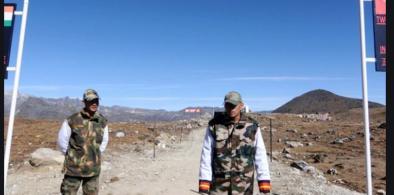
As India and China have enhanced the diplomatic and military engagement to resolve the tension at Line of Actual Control (LAC) in Ladakh, a different kind of perception war in the digital landscape has started between the social media users of the two countries
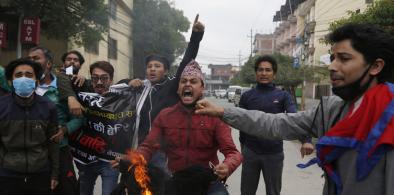
Thamel police have taken Chinese national Chen Xi, 21, into custody after some locals caught a few Chinese men for allegedly misbehaving with some local girls in Chhetrapati area near Thamel, Kathmandu, yesterday
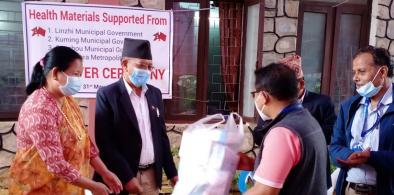
Various cities of China have helped Pokhara metropolis with health materials worth 79,000 USD. Mayor Man Bahadur GC said the metropolis had established relationship of brotherhood with different cities of China
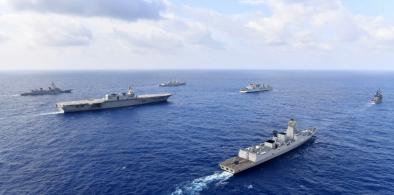
As it looks both China and the US are mutually preparing to face each other into a possible confrontation due to Beijing’s persisting forcible capture over the entire South China Sea, despite losing this claim in the International Court of Arbitration just a few years back
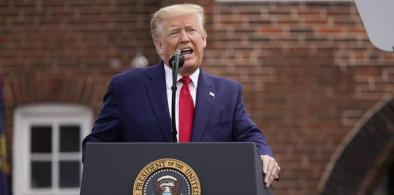
US President Donald Trump has claimed that Prime Minister Narendra Modi is not pleased with the Xi Jinping regime over the ongoing border conflict while reiterating his offer of mediation between India and China. Responding to a media query related to the border tensions between India and China, President Trump on Thursday at his Oval Office said, "They have a big conflict going with India and China
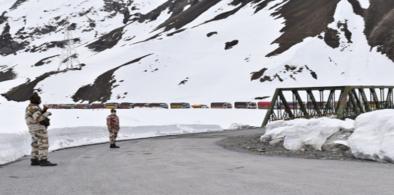
Even as the Indian government has never admitted it, China had occupied 640 sq km of Indian territory in Eastern Ladakh during the second term of the UPA regime under Prime Minister Manmohan Singh
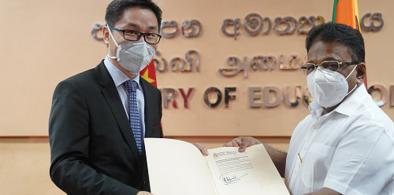
China has donated 125,000 face masks for Sri Lankan school children from low-income families before schools reopen after the COVID-19 pandemic
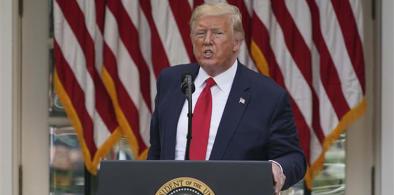
US President Donald Trump is facing rising tensions with China, but he has turned his sights on India offering to mediate “mediate or arbitrate” the border dispute between the two Asian giants
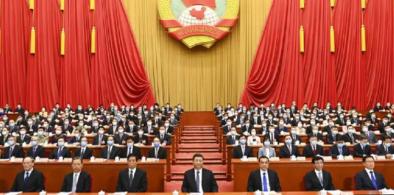
China extended conciliatory messages to India after the US requested for an immediate online UN Security Council meeting to discuss a new legislation for Hong Kong to crush all dissent
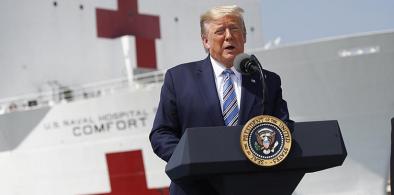
The US on Wednesday revealed that it has offered to mediate in the ongoing standoff between India and China at the Line of Actual Control (LAC) in Ladakh
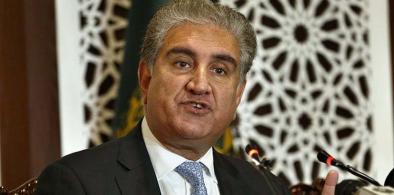
Pakistan's Foreign Minister Shah Mahmood Qureshi said on Wednesday that the recent conflict between China and India was triggered by the latter's "illegal constructions" in Ladakh, Radio Pakistan reported