

Pakistan Prime Minister Imran Khan Tuesday held telephonic talks with Chinese President Xi Xinping when both leaders agreed to “further strengthen bilateral economic and commercial ties”
Neutrality and balance — Colombo’s habitual vocabulary — have yielded little economic benefit. Ultimately, Sri Lanka slid into bankruptcy. Given this background, the land link is not merely a strategic starting point but a necessity. India’s strategic position on Sri Lanka is perennial; whether the bridge is built or not, India’s concerns remain fundamental. As an immediate neighbour and rising global power, India will not allow rivals to use Sri Lanka as a base.
If India and China choose collaboration by setting aside strategic suspicion in the climate domain, they could fundamentally reshape the trajectory of the 21st century, as they have already demonstrated individually through their pursuit of clean energy over the past decade. More importantly, such a coalition could revive the COP28 fossil-fuel phase-down pledge, which stalled at COP29 in Baku and appears to be drifting further at COP30 in Belém.
Increased industrial activity in India could generate demand for raw materials, intermediate goods, and services from countries such as Nepal, Bhutan, Bangladesh, and Sri Lanka. Bangladesh’s textile industry could strengthen its links with Indian manufacturing networks, while Sri Lanka may gain from expanded opportunities in tourism, logistics, and services.
ADB’s role has evolved beyond financing into shaping India’s structural transformation into a high-growth, technology-driven, and climate-conscious economy. Compared to other multilateral institutions, it offers a more agile, implementation-focused, and regionally attuned approach. As India moves toward becoming one of the world’s largest economies, this partnership will play a defining role in shaping not only India’s growth trajectory but also the broader economic future of Asia.
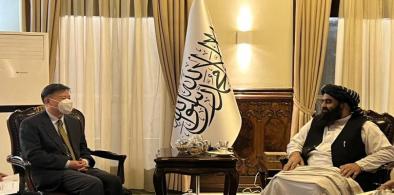
Pakistan Prime Minister Imran Khan Tuesday held telephonic talks with Chinese President Xi Xinping when both leaders agreed to “further strengthen bilateral economic and commercial ties”
Asserting that the sovereignty and territorial integrity of China are “sacred and inviolable”, the country’s national legislature has adopted a new law on the protection and exploitation of the land border areas, which could have bearing on Beijing’s long-standing border dispute with India
China has no authority at all to get involved in choosing the next Dalai Lama, especially since the Chinese government does not believe in religion, and the succession is entirely a spiritual matter for the Tibetan people, the head of the Tawang monastery in Arunachal Pradesh has said
Indian Army has deployed Pinaka and Smerch Multiple Rocket Launcher Systems (MRLS) at forward position near the China border to counter any threat arising across on the Line of Actual Control (LAC) in northeastern India
Asserting with emphasis that peace and tranquillity in the border areas is a "sine qua non" for India and China to work together, India's Foreign Secretary Harsh Vardhan Shringla has said New Delhi hopes that Beijing will work with it to bring a satisfactory resolution to the current issues, keeping in view each other's sensitivities and interests
A foreign policy blunder could lead to the collapse of Chinese Communist rule and severe economic turmoil for the country
A Chinese firm dealing in electrical hardware has been banned by Pakistan from participating in government bidding or tendering process for a month
Bhutan and China on Thursday signed a memorandum of understanding, agreeing on the three-step roadmap for expediting the Bhutan-China boundary negotiations which started in 1984. So far, 24 rounds of negotiations have been conducted without any final agreement
Two days after India and China blamed each other for failing to make headway in talks over the military standoff on the Line of Actual Control in Ladakh, Beijing Wednesday said it “firmly opposed” Indian Vice President M Venkaiah Naidu’s visit to Arunachal Pradesh - in the northeast of India bordering China - last weekend
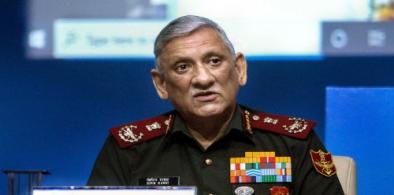
The latest round of talks between Indian and Chinese military commanders over the standoff in Ladakh broke down on Sunday, the Indian Army said, adding that that the Chinese side was not "agreeable" and "could not provide any forward-looking proposals", NDTV reported
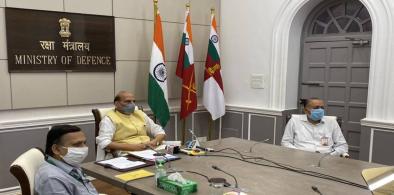
India and China held the 13th round of Corps Commander-level talks on Sunday at Moldo. The meeting, which started around 10.30 am, ended around 7 in the evening, India's Ministry of Defence said
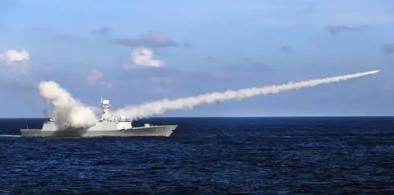
The second phase of the Malabar naval wargaming exercise with the four Quad members – India, US, Japan and Australia – will take place in the Bay of Bengal October 12-15
China's geopolitical aim in Southeast Asia and the Indo-Pacific region is deepening its economic ties with the region to the point where countries are drawn into its orbit by economic gravity
An India-US strategic defence coordination panel has discussed increasing cooperation in the Indo-Pacific region with “like-minded partners” as security ties between the two countries steadily expand, no doubt with China - the unstated adversary - in mind
Ahead of the next round of Corps Commander level talks between India and China, which are supposed to take place in eastern Ladakh, there was a minor altercation between Indian and Chinese troops in the eastern sector of the India-China boundary, The Indian Express reported