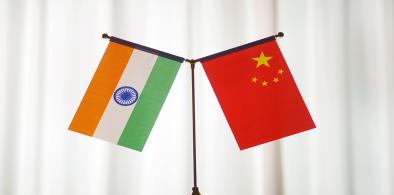

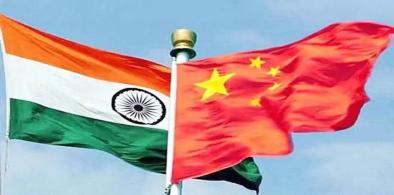
India’s narrative against China must be reviewed and reframed and the appropriate use of India’s military capability must get accepted by the political leadership.
If the twentieth century was shaped by the Atlantic and the early twenty-first century witnessed the rise of the Pacific, the coming decades may well belong to the Bay of Bengal. The foundations of that future will not be built solely through trade agreements or infrastructure projects. They will emerge from a shared commitment to connectivity, cooperation and civilisational understanding.
West Bengal has the resources, talent, culture, and strategic location necessary to become one of India’s most prosperous states. By combining efficient governance, investment-friendly policies, infrastructure development, education, innovation, trade expansion, tourism growth, environmental sustainability, and social inclusion, the state can achieve rapid economic transformation and substantially raise incomes, employment, and overall quality of life.
India possesses immense talent, entrepreneurial capacity, and a large domestic market, yet it still lacks sufficient depth in high-end manufacturing, research and development, semiconductor ecosystems, advanced engineering, and globally dominant product companies.
One of the most striking features of South Asian trade is how little the region trades internally. Intra-regional trade within South Asia remains among the lowest in the world relative to geographic proximity. Political tensions — especially between India and Pakistan — have prevented the emergence of a deeply integrated regional production system comparable to ASEAN or the European Union. This is a major missed opportunity.
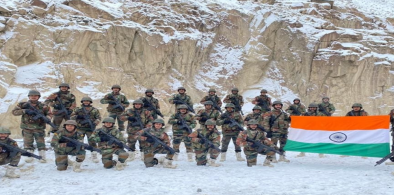
India’s narrative against China must be reviewed and reframed and the appropriate use of India’s military capability must get accepted by the political leadership.
With the declining impact of deterrence measures, including dwindling effectiveness of confidence-building measures and a wide array of dialogue-building processes in trying to mitigate risks of conflicts, the question of a full-blown conflict stemming from the inevitability of Thucydides’ trapping would be a matter of when and where.
When the Security Council’s Counter-Terrorism Committee (CTC) met in Mumbai last month, an audio clip of Sajid Mir directing the 26/11 terrorists at the Chabad House Jewish cultural centre was played to focus on the role of the terrorist under Beijing protection at the UN.
The rise of nationalist sentiments globally and in Europe, as seen in the premiership of Giorgia Meloni in Italy and Rishi Sunak in Britain, are conflating political circumstances for a global pushback against China’s actions where these countries are ready to call out China in a more forthright manner.
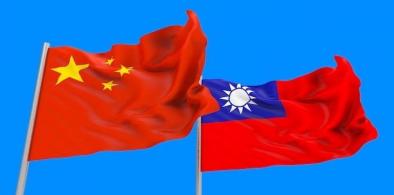
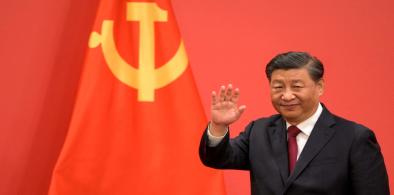
A forceful "unification" of Taiwan has been projected by most analysts as happening within the next five years of Xi’s new third term, as he will need this to cement a history-making legacy that will help him extend his rule for life
Bangladesh negotiated with India for 35 years, but the negotiations did not make any headway due to the river's importance to West Bengal. So Bangladesh has to look for other solutions where advanced Chinese technologies and experiences may have something to offer.
This partnership is also mutually driven by concerns over China’s territorial and naval expansion in its neighbourhood. As India prepares for the Malabar exercise being hosted by Japan this year, the focus should be on providing a stable, secure and prosperous Indo-Pacific.
Taipei needs full regional support for its survival and in its efforts to repel a Chinese invasion; it cannot afford to be distracted by other lingering issues with other neighbours, including Japan, which Beijing is happy to exploit to its advantage.
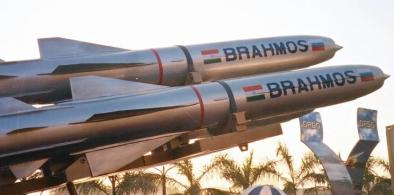
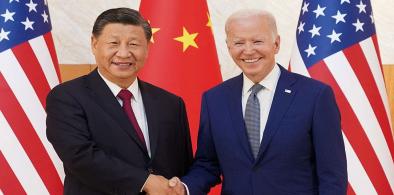
"The National Defense Strategy is really premised on this urgent need to sustain and strengthen deterrence with the focus on the People's Republic of China," the US official said.
Myanmar's military junta is facing fierce resistance from various ethnic minorities. A shadow government, called National Unity Government (NUG), was formed to counter the military government. The shadow government has already appealed to the international community for support, to which the United States, the European Union and ASEAN member states have responded.
Experts have even called for Japan to deepen bilateral security cooperation with India, Britain and France, countries that have shown a new resoluteness towards Chinese actions in the Indo-Pacific.
No country comes close to China’s sophisticated influence-seeking tools and the way it leverages its soft power. The relentless pursuit by Chinese propagandists, out to stake their claim on the global information order, are challenges that the independent global information order needs to meet.
The launching of supply chain resilience in the Indo-Pacific region is another attribute of the rising interest in India. India’s strong leadership in the region evokes new opportunities to reap benefits from its low-cost hub, laden with high IT technology.
Colonna tweeted in French that it was the “launch of a new trilateral format in the #Indo-Pacific zone with India and the Emirates“ with “a common ambition to move forward in 4 areas: #security and #defence, #Climate, #Technologies and people(-to-people) exchanges”.
Professor Thussu says, ”Although New Delhi remains a traditional friend of Dhaka, the growing presence of China in Bangladesh and elsewhere in South Asia, makes it difficult for Hasina to prioritize India over China: the scale and depth of Chinese investment, aid etc. can’t be matched by India.”