Ever since Sri Lanka leased Hambantota port to China, both India and the US have flagged their concerns that this may eventually lead to it becoming a hub for the PLA Navy in the Indian Ocean


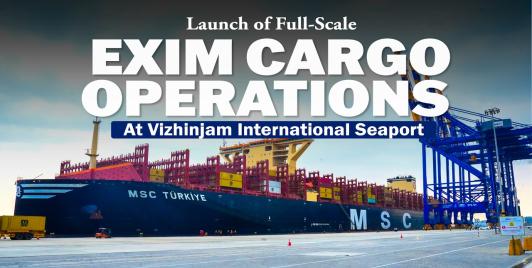
Another asset remains underutilised: the global Malayali diaspora. Few Indian states possess such an extensive international network. For decades, remittances have sustained Kerala's economy. The challenge now is to transform that relationship from remittance to investment.
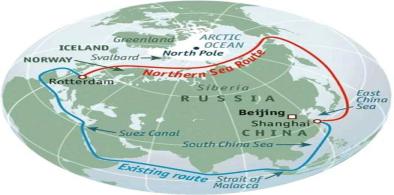
As Arctic ice retreats, geography itself is being rewritten. The Northern Sea Route illustrates how environmental change, technological innovation, commercial strategy, and geopolitics are converging to reshape international trade.
South Asia remains one of the least integrated regions in the world despite geographical proximity and complementary economic structures. Greater regional trade, improved transport connectivity, cross-border electricity markets, digital payment systems and investment partnerships could substantially reduce external vulnerabilities.

Between 2004 and 2023, India produced roughly five million graduates every year, but graduate employment increased by only around 2.8 million annually. Even fewer obtained salaried employment. Millions are either unemployed or working below their qualifications or in the waiting room for the elusive government job.
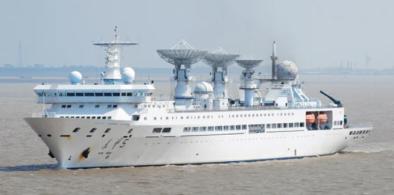
Ever since Sri Lanka leased Hambantota port to China, both India and the US have flagged their concerns that this may eventually lead to it becoming a hub for the PLA Navy in the Indian Ocean
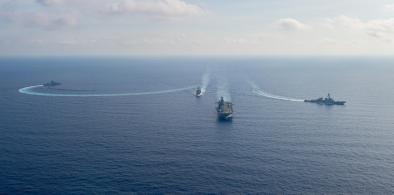
Both Sri Lanka and Bangladesh remain crucial in the eyes of New Delhi and Washington in denying further incursions by Beijing, underscored by the scramble for reassertion of American influence and ties with both nations
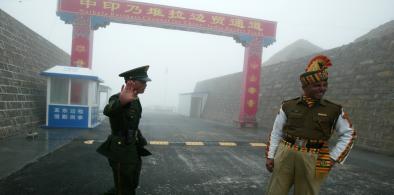
One particular observation that gets highlighted, although not explicitly stated as such by the author, is the huge clout and influence wielded by some key diplomats and political advisers who seem to have literally hijacked the formulation of policy and response to this, complex relationship during the Nehru years
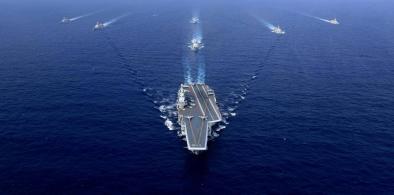
Beijing should be wise enough in realizing the dangerous impact of its using pugnacious responses to Pelosi’s visit that can risk greater backfiring from its strategic adversaries in the future
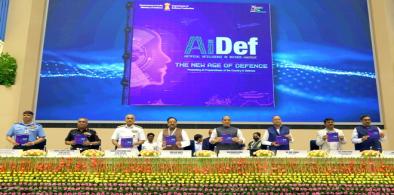
In view of China’s build-up all along the Line of Actual Control (LAC) till Arunachal Pradesh, it is just as well that India is pursuing efforts to equip its armed forces with AI-backed systems

A new spectrum of tactical competition has begun in the Indo Pacific, and it requires more than threats and deterrence to determine the path and pattern of the conflict; it needs wisdom and strategic foresight by all the players in playing both the short and long game with both conventional and new tools of war and diplomacy
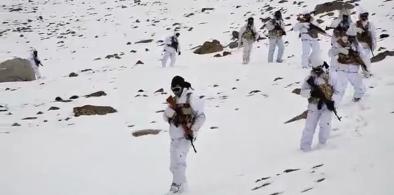
The Indian Army’s notification in July 2022 inviting applications from persons fluent in Mandarin to properly communicate with the Chinese military along the Line of Actual Control (LAC) is a beginning in fulfilling a decades-long important requirement
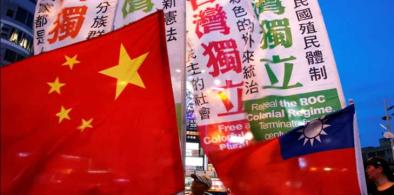
Regardless of future leadership transitions in Washington, the pivot to the Indo-Pacific will be here to stay in safeguarding America’s status quo and primacy, writes Collins Chong Yew Keat for South Asia Monitor

Interestingly, despite gaining significant influence and footprint in Sri Lanka, China’s failure to assist the crisis-hit country has left analysts baffled about Beijing’s thought process. The restructuring of loans, which Colombo sought repeatedly, was ignored by China
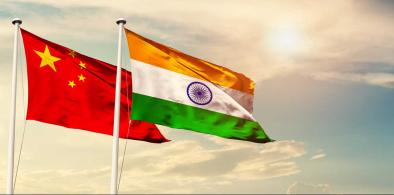
During the military commanders' meeting, the Indian side asked for the PLA to move back from all the “friction points”, which is a euphemism for "intrusions" used by India to avoid acknowledging it has lost control of some 1,000 sq km of territory during the 2020 Chinese aggression. For the same reason, India keeps asking of more military-to-military talks, with each round continuing 12-13 hours without any progress, writes Lt Gen P.C. Katoch (retd) for South Asia Monitor
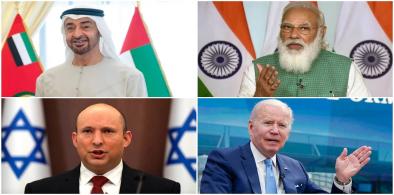
The I2U2 is an attempt to replicate in a different environment the Indo-Pacific Quad of India, the US, Japan and Australia, the goal of which is developing a bulwark of democracies against China

The punitive mood against Chinese firms is not reflected in a diminishing dependence on Chinese goods on the trade front or telecom technology. The dragon remains one of our largest trade partners, writes N. Chandra Mohan for South Asia Monitor
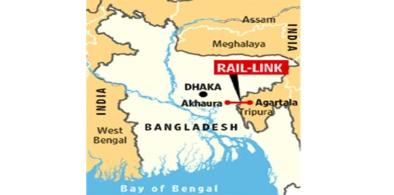
Apart from engaging in projects for upgrading India highways that go all the way till the Bangladesh border, Japan could also collaborate with India in the constantly deferred Agartala (India)-Akhaura (Bangladesh) rail link, something that provides scope for Indo-Japan collaboration under India’s Act East Policy and Japan’s Free and Open Indo-Pacific Strategy, writes Prarthana Sen for South Asia Monitor
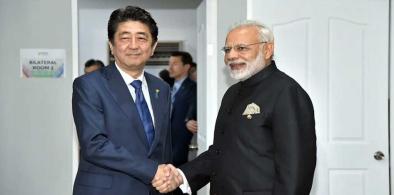
Abe was among the first to envision with then-Prime Minister Manmohan the group of democracies as a potential counterweight to China in the Indo-Pacific taking forward the cooperation of the four countries in providing relief during 2004 tsunami
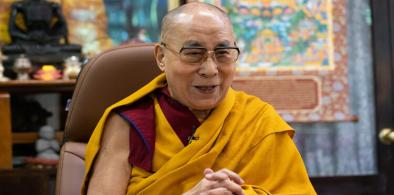
China has harmed Tibet, massacred innocent Tibetans and is occupying Tibet for the last several decades with a vice-like grip and suppressing freedom of the Tibetans