Indian media may do any amount of spin doctoring, including claiming that the bilateral meeting was requested by the Chinese side, but the noteworthy issue is that none of the two Chinese statements mention disengagement and de-escalation.


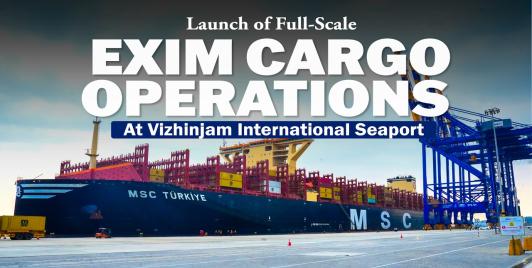
Another asset remains underutilised: the global Malayali diaspora. Few Indian states possess such an extensive international network. For decades, remittances have sustained Kerala's economy. The challenge now is to transform that relationship from remittance to investment.
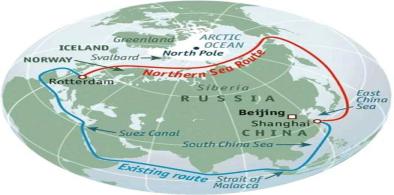
As Arctic ice retreats, geography itself is being rewritten. The Northern Sea Route illustrates how environmental change, technological innovation, commercial strategy, and geopolitics are converging to reshape international trade.

South Asia remains one of the least integrated regions in the world despite geographical proximity and complementary economic structures. Greater regional trade, improved transport connectivity, cross-border electricity markets, digital payment systems and investment partnerships could substantially reduce external vulnerabilities.

Between 2004 and 2023, India produced roughly five million graduates every year, but graduate employment increased by only around 2.8 million annually. Even fewer obtained salaried employment. Millions are either unemployed or working below their qualifications or in the waiting room for the elusive government job.
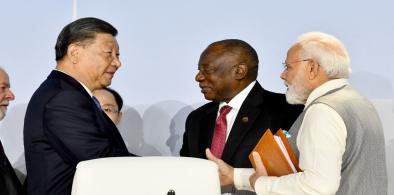
Indian media may do any amount of spin doctoring, including claiming that the bilateral meeting was requested by the Chinese side, but the noteworthy issue is that none of the two Chinese statements mention disengagement and de-escalation.
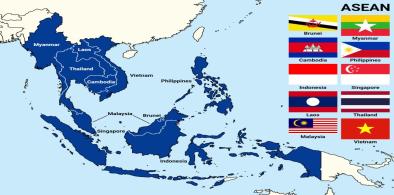
The influence of China and its grip on the region remain a predominant factor that has divided ASEAN. One-sided economic dependence on Beijing and the fear of inciting its potential wrath and economic retaliation and potential hard-power measures have stymied the full capacity of the region in managing regional power parity.

Maritime security and stability remain of utmost importance to both Brunei and Malaysia, and Brunei has enhanced its preparedness in this regard by joining the Cooperation Afloat Readiness and Training (CARAT) maritime exercise with the US.
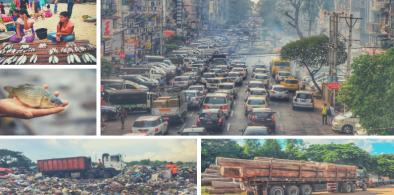
This gradual decline of the environment - with disastrous consequences for the region including northeastern India and Bangladesh - cannot be arrested without the cooperation of the military rulers who are neck-deep in corruption and self-aggrandizement.
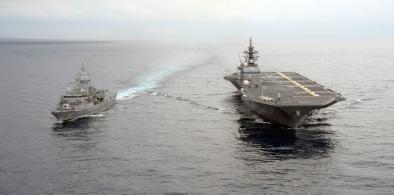
The growing maritime competition between China and Japan along with the West will result in the growing militarization of the Indo-Pacific.
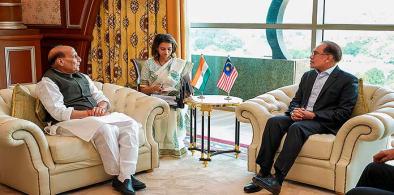
The Indian Navy remains a highly trained, disciplined and proficient force that has stepped up cooperation with other navies in the Indo-Pacific through the annual Malabar exercises. India’s naval modernisation are a strategic response to Beijing’s muscle-flexing in the region, including in the Indian Ocean, especially with Beijing’s strategic penetration into India’s neighbours Sri Lanka, Pakistan and Bangladesh through the 'strings of pearls' encirclement with its wider regional ramifications.
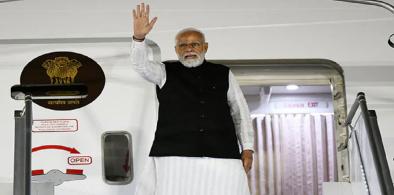
Thus, China views PM Modi’s visit to the US as a gathering storm for its ambitions to dominate Asia in military, economic and technological spheres. That these are due to China’s recent political and strategic choices is ignored.
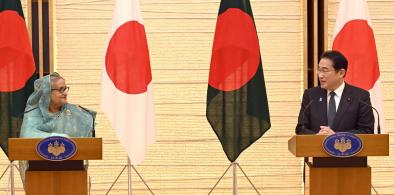
Bangladesh expressed its commitment to walk alongside Japan, a leading creator of the QUAD alliance in the Indo-Pacific strategy, for the sake of a peaceful Indo-Pacific region.

Unlike in the Indo-Pacific region, where China poses a security issue for India and US, the challenge in the Middle East is from Beijing’s subtle economic and political push through its Belt and Road Initiative.
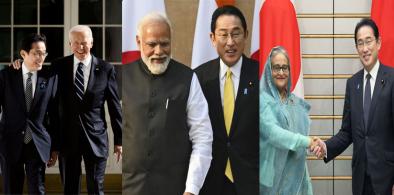
Japan now wants to provide its leadership role in the region for the Western world. Washington, which was so long seeking to counter China through India, has now turned to Japan as it felt that New Delhi was not living up to that role.
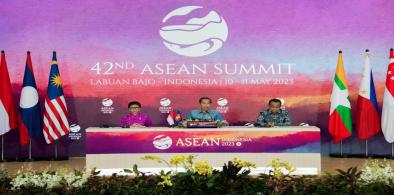
ASEAN remains ill-equipped to handle the fallout from the tensions in the South China Sea or the potentiality of a full-blown Taiwanese conflict.
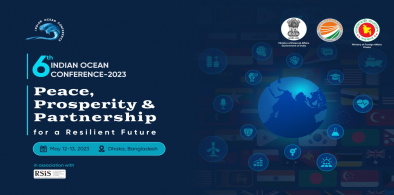
Against this backdrop, India has been promoting the idea of ‘net security provider’ in South Asia and the Indian Ocean Region (IOR).

Following the attack on a mosque in Kunduz, Afghanistan on October 8, 2021, ISK confirmed the recruitment and mobilization of Uyghur fighters. This was the first time that the alliance between IS-K and Uyghurs was affirmed by IS-K on media platforms.
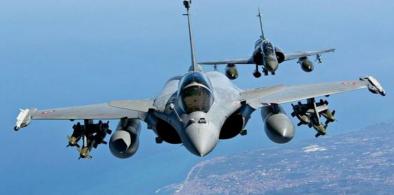
But New Delhi must not be complacent, because a lot more needs to be done in acquisitions and modernisation to match the much larger and more sophisticated Chinese arsenal and to raise India’s politico-diplomatic assertiveness against Beijing's muscle-flexing.
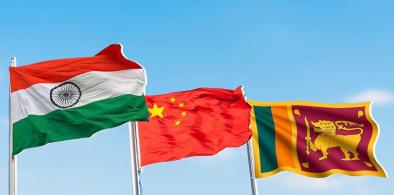
To gain a strong foothold in Sri Lanka, China used the political weakness of the Rajapaksa family to sustain its corrupt and authoritarian regime by funding its electoral campaign in order to gain a strategic advantage in the Indian Ocean Region to marginalize India and other Western countries. especially US influence in the Indo-Pacific region.