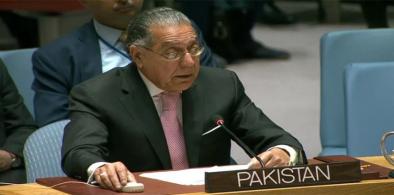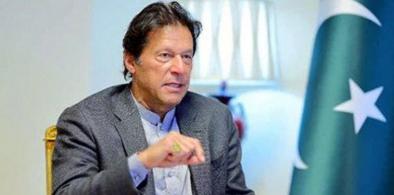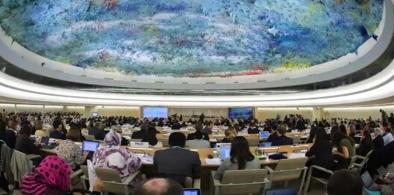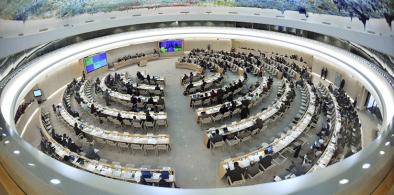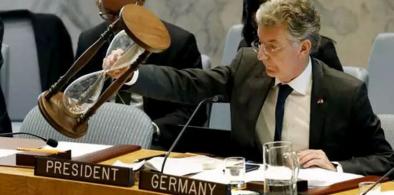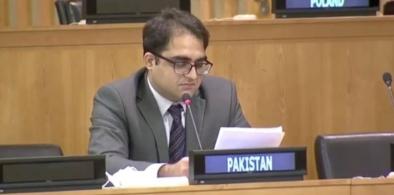

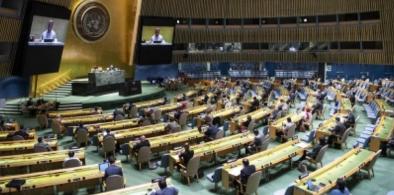
Sri Lanka emphasized that it rejects all the allegations of human rights violations contained in the Annual Report of the United Nations Secretary-General (UNSG) on Sri Lanka submitted to the UN Human Rights Council
The reactor that has now gone critical at Kalpakkam, on the Bay of Bengal coastline in Tamil Nadu, is not the end of that journey. It is, more precisely, the end of the beginning. The real test is whether India can now scale fast breeder capacity rapidly enough to make a material difference to its energy-mix building on the Kalpakkam template, the industrial supply chains it has validated, and the engineering confidence it has earned.
The Indus and the Ganges are dying slowly, and with them disappear species that evolved over thousands of years within these waters. If current patterns continue, future generations may inherit rivers that exist geographically but are biologically empty. South Asia still has an opportunity to reverse this trajectory, but only if environmental protection becomes a shared regional priority rather than an afterthought.
Climate migration isn’t just about the loss of land. It is about the loss of memory, culture and home. When people are driven out of the places where they were born, few things that matter are merely economic. Over the next decades, the world will confront a fundamental dilemma. Can humankind handle the climate crisis in a surer way? Or will the future consist of millions searching for a new place to call home?
The constraint on India’s expansion is fissile inventory, particularly between 2035-2045. At present, the breeder program depends on plutonium from a limited set of eight unsafeguarded reactors. Meanwhile, India has accumulated spent fuel from uranium imported for its safeguarded reactors. This significant plutonium is lying idle because we lack safeguarded reprocessing facilities.
Sri Lanka emphasized that it rejects all the allegations of human rights violations contained in the Annual Report of the United Nations Secretary-General (UNSG) on Sri Lanka submitted to the UN Human Rights Council
President Ibrahim Mohamed Solih on Wednesday declared that Maldives took it climate commitments seriously, while addressing the virtually held United Nations (UN) Biodiversity Summit
Human Rights Watch has urged the Bangladesh government to allow the United Nations (UN) to visit Bhasan Char to assess its condition
The COVID-19 pandemic is a warning to the world against unsustainable food habits and unregulated exploitation of nature, according to Prakash Javadekar, India's minister for environment, forests and climate change
Pakistan Foreign Minister Shah Mahmood Qureshi on Wednesday urged the United Nations General Assembly (UNGA) to declare an 'International Day to combat Islamophobia' and to build a resilient coalition to end the scourge
Bangladesh is "outraged" to witness Myamar's another "blatant demonstration of falsehood and fabrication of facts" in the ongoing UN General Assembly (UNGA), and shared the situation on the ground before the international community
The Maldives has called for necessary reforms to be brought to the United Nations
The United Nations honoured UN peacekeepers, including Nepali nationals in South Sudan, during a function held in Kathmandu
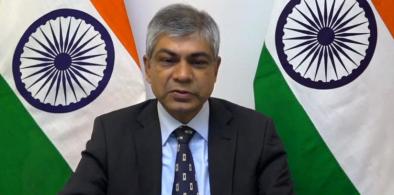
India has urged the international community to redress deficiencies at the global level to ensure that perpetrators of the Mumbai and Pathankot terror attacks are brought to justice
Bhutan's Prime Minister Lotay Tshering has supported G4 countries' bid for United Nations security council reforms (UNSC). G4 countries that have been calling for UNSC reforms include India, Germany, Brazil and Japan
Nepal’s Prime Minister K P Oli and heads of state and governments from over 64 countries have committed to reverse nature loss by the end of the decade to fulfil the United Nation’s Sustainable Development Goals (SDGs)
Modi and Macron are the "Champions of Earth". Now they should join hands to champion the global action through ACE -Alliance for (COVID19) Eradication, writes Rajendra Shende for South Asia Monitor
Pakistan lost Malaysia's public support on its Kashmir stand as Prime Minister Muhyiddin Yassin made no mention of it in his speech on Saturday to the High-Level Meeting of the General Assembly, reversing last year's volatile stand of Mahathir Mohamad
Bangladesh Prime Minister Sheikh Hasina has reminded the international community that the fates of people across the globe were intertwined amid the COVID-19 pandemic, as she called on world leaders to ensure that any proven vaccine is made accessible to all at the same time
India's Prime Minister Narendra Modi's United Nations General Assembly speech on September 26 stands out among the few this year at the virtual talkfest which offered up ideas and approaches as complements to soothe the collective anxiety of a global quarantined audience