
Kalpakkam fast breeder reactor

India's Fast Breeder Reactor: A Civilisational Bet on Nuclear Self-Reliance and Sustainability

The reactor that has now gone critical at Kalpakkam, on the Bay of Bengal coastline in Tamil Nadu, is not the end of that journey. It is, more precisely, the end of the beginning. The real test is whether India can now scale fast breeder capacity rapidly enough to make a material difference to its energy-mix building on the Kalpakkam template, the industrial supply chains it has validated, and the engineering confidence it has earned. 

Dying Rivers, Disappearing Species: Zoological Cost of Pollution in Pakistan and India

The Indus and the Ganges are dying slowly, and with them disappear species that evolved over thousands of years within these waters. If current patterns continue, future generations may inherit rivers that exist geographically but are biologically empty. South Asia still has an opportunity to reverse this trajectory, but only if environmental protection becomes a shared regional priority rather than an afterthought.

Climate Migration: The Next Global Humanitarian Crisis?

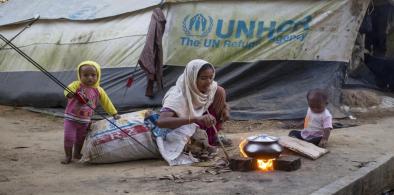
Climate migration isn’t just about the loss of land. It is about the loss of memory, culture and home. When people are driven out of the places where they were born, few things that matter are merely economic. Over the next decades, the world will confront a fundamental dilemma. Can humankind handle the climate crisis in a surer way? Or will the future consist of millions searching for a new place to call home?

India Should Scale up its Fast Breeder Reactor Program to Meet Rising Energy Needs

The constraint on India’s expansion is fissile inventory, particularly between 2035-2045. At present, the breeder program depends on plutonium from a limited set of eight unsafeguarded reactors. Meanwhile, India has accumulated spent fuel from uranium imported for its safeguarded reactors. This significant plutonium is lying idle because we lack safeguarded reprocessing facilities. 

More on Climate, Sustainability and Energy

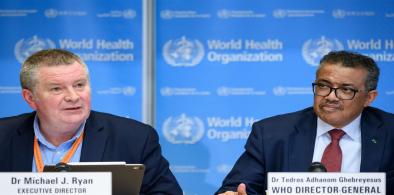
WHO labels India's Covid strain as 'variant of concern'

The World Health Organisation (WHO) on Monday classified India's Covid-19 strain as a "variant of concern" amid a devastaging second wave of the pandamic

Develop post-pandemic development framework: Pakistan to UN

Stressing on the need to involve every region, state and committee in the fight against the Covid 19 pandemic, Pakistan has urged the international community to develop a post-pandemic framework for development to recover from the shocks of the crisis

Japan joins hands with UNDP to boost oxygen supply in Northeast India

As the second wave of the COVID-19 pandemic rages in India, Japan and the United Nations Development Programme (UNDP) India have partnered to provide eight oxygen generation plants to the North Eastern Region (NER) in India

India’s new COVID-19 wave is spreading like ‘wildfire’ across South Asia, warns UNICEF

A new wave of COVID-19 infections is spreading like “wildfire” across India, leaving many youngsters destitute, the UN Children’s Fund UNICEF said on Friday

UN Security Council upholds role of multilateralism in a complex world

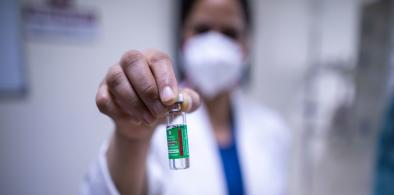
The President of the UN General Assembly on Friday urged countries to “do better” in making COVID-19 vaccines available to everyone, everywhere, warning that “good intentions are no match for vaccines in arms.”

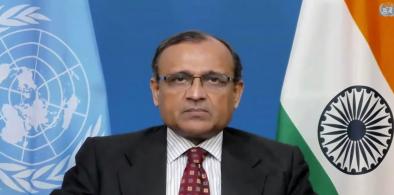
Jaishankar skips high-level, ministerial Security Council meeting China convened

India's External Affairs Minister S. Jaishankar skipped a high-level UN Security Council meeting at the ministerial level that was convened by China, the global body's president for this month

UN chief pledges to keep ‘memories alive’ of those who died in service during 2020

The United Nations paused on Thursday to honor 336 personnel who lost their lives in the line of duty in 2020: the highest number ever in a single year

UN launches key initiative to protect seafarers’ human rights

Around 200,000 cargo ship crew members are stranded at sea, beyond the length of their contracts due to COVID-19 restrictions, placing a major strain on their physical and mental health

Cut methane emissions to avert global temperature rise, UN-backed study urges

Methane emissions caused by human activity can be reduced by up to 45 per cent this decade, thus helping to keep global temperature rise to 1.5 degrees Celsius in line with the Paris Agreement on climate change, according to a UN-backed report published on Thursday

Guterres renews zero-emissions appeal to avoid falling into climate abyss

All countries should commit to zero carbon emissions by 2050 if the world is to avoid a disastrous 2.4 degree Celsius temperature rise by the end of this century, UN Secretary General António Guterres said on Thursday

If ever there was need for partnership, it is now: Pakistan UN envoy

A senior Pakistan envoy has stressed the need for partnerships to effectively combat the global pandemic Covid 19, and called upon all nations to work together to prevent millions from descending into extreme poverty and destitution

UN forum examines how to make science and technology work better for all

Harnessing the full potential of science and technology for the benefit of all people, everywhere, is the focus of a two-day virtual meeting convened by the UN Economic and Social Council (ECOSOC), which opened on Tuesday

UNGA president says Kashmir status should not be changed; acknowledges Simla agreement

United Nations General Assembly President Volkan Bozkir has said that the status of Jammu and Kashmir should not be changed while acknowledging the 1972 Simla Agreement between India and Pakistan making it a bilateral issue

UN condemns deadly attack at guesthouse in Afghanistan

The United Nations strongly condemned Friday’s suicide attack in eastern Afghanistan, in which at least 21 were killed and over 100, including women and children, wounded

Pandemic showcases need for partnerships: ECOSOC

The COVID-19 pandemic has shown how all countries are connected, underscoring that global cooperation and solidarity are the only way out of the crisis, senior UN officials said on Monday during the annual Partnership Forum, organized by the UN Economic and Social Council (ECOSOC)