India has signed a $375 million contract with the Philippines for three batteries of BrahMos supersonic cruise missiles, among the most advanced in the world. This will be seen by Beijing as a direct threat to its interests in the South China Sea.
South Asia remains one of the least integrated regions in the world despite geographical proximity and complementary economic structures. Greater regional trade, improved transport connectivity, cross-border electricity markets, digital payment systems and investment partnerships could substantially reduce external vulnerabilities.
Between 2004 and 2023, India produced roughly five million graduates every year, but graduate employment increased by only around 2.8 million annually. Even fewer obtained salaried employment. Millions are either unemployed or working below their qualifications or in the waiting room for the elusive government job.
Policy instability during the 2015-2024 likely pushed back Sri Lanka’s path towards becoming South Asia’s first High-Income Country. The 2022 financial crisis would never have happened as stable growth during the first half of 2015–2024 would have built enough buffer to weather impact of the Covid pandemic
China’s Belt and Road Initiative - which funded Sri Lanka’s Hambantota Port through loans resulting in a 99-year lease to Chinese State-owned enterprise in 2017 due to Colombo’s struggle to service said loans - follows the same expansionary script.
India has signed a $375 million contract with the Philippines for three batteries of BrahMos supersonic cruise missiles, among the most advanced in the world. This will be seen by Beijing as a direct threat to its interests in the South China Sea.
“We are all fighting a global war against our common enemy, which is the climate crisis,” said Dr Rajendra Shende
China used both the ASEAN FTA and RCEP tariff concessions to enter the ASEAN market to make it a potential platform for sneaking into the Indian market through the ASEAN–India FTA.
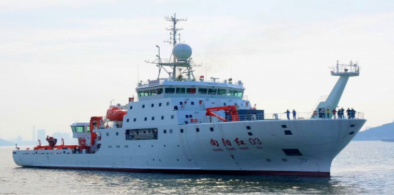
Sri Lanka is also allowing Chinese research vessels in its ports. China has big plans for the region, not just spy ships.
India’s inevitable regional and global leadership provides a welcome new opening for the country and the region in their security calculations. It remains the region’s most important Asian partner in providing the economic and security fallback that is based on values, trust and proven expectations.
Why no heads rolled for the surprises in 2020 with PLA exercising in Aksai Chin and a new road constructed five km short of Galwan?
The establishment of a second naval base in Lakshadweep, INS Jatayu is a key part of this strategy. It's a calculated move to counter China's influence in the Indian Ocean Region.
China has tried to set up a hybrid renewable energy system mixed with solar, wind, and other renewables on three islands in the Jaffna Peninsula. It was later cancelled. There is no economic reason for hosting such a project in a place so close to India.
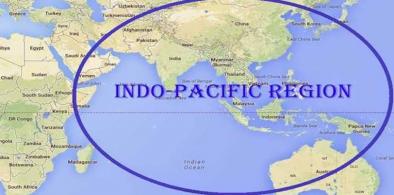
Australia has succeeded in sending a strong message to both ASEAN and China. To ASEAN, Canberra has communicated its commitment both in economic and security terms. The keyword will be a free and open Indo-Pacific, which is in line with the overall security vision of the West.
The US meanwhile, remains resilient in its future demographic and economic growth projection and stability, alongside the prospects of India. The so-called rise of China is now reversing, and the perceived decline of the US and the West is not happening.
Among other things, the bill, which is now an act, dismisses as inaccurate the Chinese claim that Tibet has been part of China since ancient times and empowers the State Department to actively counter China’s disinformation about Tibetan history, people and institutions.
The critical mineral supply chain in the Indo-Pacific is undergoing transformative changes through new deals, reforms, and negotiations facilitated by the strategic partnership of QUAD.
The belligerence by the PLA also exposes the futility of continuing Corps Commander-level military-to-military talks when China has repeatedly indicated there will be no more PLA pullback.
Beijing might still use this election victory for President Tsai as a pretext to increase aggression and to justify that peaceful reunification is a lost cause, portraying the DPP as the cause of increasing cross-Strait tensions.
As traditional geopolitics transforms, with the Gulf regaining centrality in the larger Indo-Pacific arena, India, Japan, and Southeast Asia see their strategic perspectives increasingly converge. The Big-B plan has significant implications for India, Bangladesh's Look East policy, and Thailand's Look West policy.