India-Bangladesh border fencing

India’s Push-Ins Could Push Bangladesh Towards China

Amid strategic challenges from Beijing in Bangladesh, New Delhi cannot separate border management with foreign policy. New Delhi should hold high-level dialogue with Dhaka and develop a cooperative roadmap to facilitate the identification and repatriation of undocumented migrants from India. 

Growing Sri Lanka-India Defence Cooperation Throws Up Air-Defence Questions

The visit therefore should not be viewed simply as another bilateral defence engagement. It represents an attempt by New Delhi to institutionalise India's security relationship with Sri Lanka, while simultaneously reassuring Colombo that India's expanding security interests need not threaten Sri Lankan sovereignty.

Belgium and India: Building a Strategic Partnership Beyond Economics and Trade

Belgium views India as an opportunity to reduce its economic dependence on China and limit vulnerability to developments in the United States. India offers scale, growth, industrial capacity and ambition, while Belgium offers technology, specialised expertise, logistics and access to the European market.

Guardians of Harmony: Acknowledging Role of Mothers as Peacebuilders

India has its own legacy of maternal peacebuilding, from Jijabai to the Meira Paibi. What we lack is the language to celebrate and institutionalize these contributions. Recognizing mothers as peacebuilders is not just a cultural insight; it is a practical necessity for societies striving for harmony.

More on Geopolitics, Security and Strategic Affairs

South Asia Can Benefit from Its Common Educational Heritage

Initiatives under SAARC, though often criticized as politically dormant, have nonetheless sought to promote educational and cultural exchanges in fits and starts. Projects that highlight shared histories and traditions can help build a stronger regional identity and collective progress. Elements of ancient wisdom — such as holistic learning, ethical education, and personalized mentorship — continue to inspire modern educational reforms across South Asia.

The Phantom Capture: How a Faked Rafale Pilot Story Became a Case Study in Misinformation

The story of the alleged captured Rafale pilot is not a case of miscommunication. This is a textbook example of disinformation. It demonstrates how false narratives can be created, promoted, and weaponized in an age where information itself is a weapon of war. The lesson from this experience is plain. In this age of immediate communication, digital literacy and skepticism are critical civic virtues. 

Bangladesh Imam’s Kidnapping Drama: Islamist Plot To Incite Hatred Against Hindus?

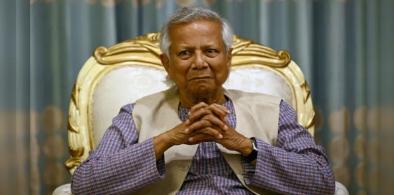
Taken together - the staged abduction drama, Zakir Naik’s planned visit, and Zaheer’s clandestine movements - paint a deeply disturbing picture of Bangladesh’s current trajectory. Since the 2024 coup, Islamist influence has expanded alarmingly under the interim regime of Muhammad Yunus, creating fertile ground for extremist ideologies to spread under official tolerance. 

Caught in the Middle: Afghanistan’s Policy Options Between Rival Neighbors

India and Pakistan are both interested in establishing influence over Afghanistan. In pursuing control, both adopt a zero-sum approach. India fears that Pakistan’s influence in Afghanistan could create safe havens for anti-India elements such as Lashkar-e-Taiba and Jaish-e-Mohammad. Pakistan fears that India’s presence in Afghanistan could lead to its encirclement and threaten security along its northwestern borders.

Integrative Medicine: The Way Forward for Futuristic Healthcare; Opportunity For India

Internationally, leading medical institutions such as the Mayo Clinic, Harvard Medical School, and the National Center for Complementary and Integrative Health (NCCIH) in the United States have recognized Integrative Medicine as a legitimate, evidence-informed discipline. They are conducting research, developing protocols, and training healthcare professionals in the art and science of integration.

Why Undermining the Uniformed Guardians Endangers Bangladesh

Bangladesh is not immune to the regional trend of rising religious and political extremism after a dramatic regime change. Credible security analyses warn that, with recent upheavals, hardline groups are reconfiguring networks and testing gaps in the state’s capacity to respond. To weaken the armed forces and other disciplined services is to invite those groups to exploit the vacuum. 

Bangladesh’s Social Paradox: Rising Conservatism And Online Exploitation

This moral dissonance is far from a Bangladeshi anomaly -  it echoes across South Asia. From India to Pakistan to Sri Lanka, the lines between desire, dominance, and digital depravity are blurring faster than ever.

Pakistan’s Economic Revival: From Crisis Management to IMF-Supported Structural Consolidation

Pakistan's transition from imminent default in 2023 to stability in 2025 exemplifies a remarkable macroeconomic reversal in South Asia. In contrast to Sri Lanka, which is mired in post-default restructuring, and Bangladesh, which is experiencing export stagnation, Pakistan's synchronized budgetary discipline and IMF-supported reforms have started to produce concrete outcomes

India's New Grammar of Energy Diplomacy

If there is a doctrine emerging from this moment, it is one of managed interdependence. India’s 25 percent import cap is not just a regulatory rule; it’s a political philosophy. It enshrines diversification as a matter of national security, insulating the economy from both volatility and coercion. No single country — whether Russia, Saudi Arabia, or the United States — should have the leverage to weaponize energy against India.

Regional flux: India Can Help Shape New South Asian Order

Yet, no matter how effectively India strengthens its regional partnerships, the enduring challenge of Pakistan and rising Chinese influence cannot be overlooked. Geopolitical churn may reshape alignments, but Islamabad’s propensity for misadventures continues to demand vigilance, alongside engaging in backchannel diplomacy.

Demographic Dividend: Why South Asia Is Not Able to Fully Reap It

Demographic data show South Asia’s working-age population rose from 66.7% (2019) to 67.9% (2024), while the share in high-income countries fell from 65.6% to 64.7%. South Asia’s vast diaspora can further strengthen the region by leveraging knowledge networks, remittances, and investment flows.⁸

Taliban Delegation’s India Visit: A New Chapter in Indo-Afghan Engagement

New Delhi recently received an official delegation from the Taliban government, led by Afghanistan’s Acting Foreign Minister — the first such visit since the formation of the Islamic Emirate in 2021

Dhaka–Delhi Trade Frictions: Call For Urgent Reset And Regional Cohesion

If trade tensions intensify, they could unravel years of progress in regional connectivity and energy integration. The same border that once symbolized shared progress could become a faultline of friction. Safeguarding these gains requires renewed dialogue, predictability, and partnership. Trade must be the foundation, not the faultline, of the Dhaka–Delhi relationship.

The Gen Z Revolt: Youth-led Political Upheavals in South Asia

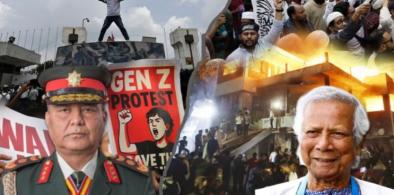
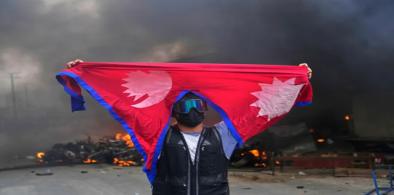
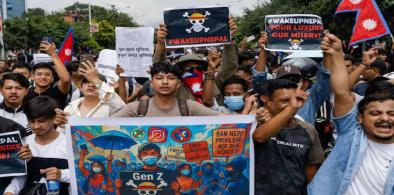
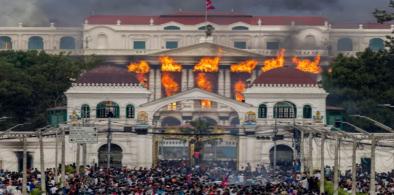
The movements in Sri Lanka, Bangladesh, and Nepal are a powerful reminder that South Asia's political landscape is being reshaped. A new generation, technologically savvy and politically aware, is unwilling to accept the status quo. The challenges are immense, but the opportunity for a more democratic, prosperous, and just future for the region is undeniable.      

India’s Taliban Gamble: Why Keeping Americans out of Bagram Is Critical For Regional Stability

As Afghanistan struggles to rebuild, Bagram stands as both a scar and a lesson, a reminder of how intervention failed and how fragile independence can be. For India, backing the idea that no foreign power should return to that base is a way of saying the region must take responsibility for its own peace.