Colombo Port City

China’s Criminal Footprint in Sri Lanka has Regional Security Implications

When a Chinese company won the contract to establish hybrid wind and solar energy projects on three islands off the northern Jaffna peninsula—just 45 km from Rameswaram in Tamil Nadu—the security implications extended far beyond economics. Against this backdrop, India’s concerns are entirely justifiable. Sri Lanka faces a pressing question: how will the nation confront the infiltration of Chinese global criminal networks? Since Mahinda Rajapaksa’s tenure, Chinese presence in Colombo has steadily increased, with Sri Lanka positioned as a partner state in Beijing’s Belt and Road Initiative.

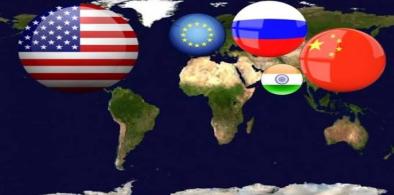
Wolf World or a Multipolar World? How Major Powers Exercise Power Will Determine Emerging International Order

The growing role of middle powers adds another layer of complexity. Yet the term itself remains imprecise. Not every country outside the United States and China qualifies as a middle power, and many reject the label altogether. India, for example, increasingly sees itself as a leading power pursuing strategic autonomy rather than as a middle power seeking alignment with one bloc or another.

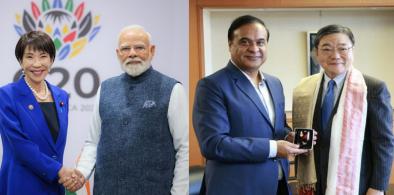
Is Northeast India's Permit System Inhibiting India-Japan Paradiplomacy? Colonial-Era System may be Stumbling Block to Subnational Exchanges

If India and Japan genuinely envision Northeast India as the gateway connecting South Asia with the Bay of Bengal and the Indo-Pacific, then the next chapter of the partnership cannot remain confined to New Delhi and Tokyo. It must also be written in Guwahati, Shillong, Aizawl, Imphal, Agartala, Kohima, Gangtok and Itanagar 

Bangladesh's Strategic Balancing and India's Neighbourhood Challenge: China Will Consolidate Influence if New Delhi Fails to Deliver

In several neighbouring countries, including Bangladesh, Sri Lanka and Nepal, China has demonstrated an ability to move from agreements to implementation far more rapidly than many competitors. India, despite enjoying unmatched geographic and cultural advantages, has often struggled with delays 

More on Geopolitics, Security and Strategic Affairs

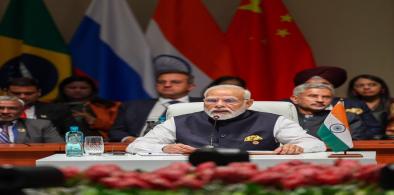
Turning Strategic Autonomy Into Genuine Influence: Route To A Resurgent India Runs Through Europe And The Global South

This twin strategy -- institutionalised engagement with Europe and practical leadership of the Global South -- would broaden India’s repertoire. A strengthened European partnership would sharpen India’s industrial and technological edge; robust South-South initiatives would deepen its diplomatic capital and soft power. Together they would blunt the effect of whimsical shifts in U.S. policy and give New Delhi greater leverage with Moscow and Beijing.

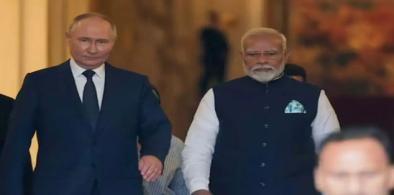
Putin’s visit to India: More Messaging Than Substance

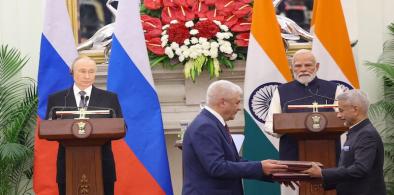
India has thus far shown that it is willing to continue its friendship with Russia and expand relations in diverse areas from defence to energy, from manpower mobility to innovation, from investment and technology exchange to culture and tourism. In short, Putin’s visit was meant to prepare both countries to defy sanctions and explore new areas of cooperation - in Russia’s Far East and Arctic, cooperation in areas of climate change and green energy, and work together to strengthen multilateral forums like the BRICS, SCO and G-20.

Changing Bangladesh: Where Women Are Silently Rewriting the Rules of Society

The expansion of education in Bangladesh has played a key role in this transformation. Girls are now equal to boys in schools, colleges, and universities and sometimes even ahead of them. Women have proven their capabilities as doctors, engineers, teachers, researchers, and even pilots. This achievement is not just personal;  this is the evolution of the mentality of a society.

Whither SAARC, As Cyclone-Devastated Sri Lanka Seeks South Asian Climate Compact

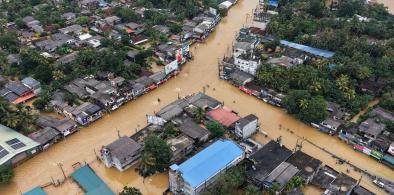
However. the desire to collaborate regionally has faced many hurdles such as geopolitical tensions arising from the India–Pakistan rivalry and limited SAARC summit activity that has greatly weakened implementation of regional initiatives. The Rapid Response Mechanism remains largely on paper, with no standing regional force or pre-positioned assets. Smaller nations like Bhutan, Maldives, Nepal and Sri Lanka face financial/technical limitations in aligning with regional standards.

White-Collar Terror And Their Radicalised Network In India

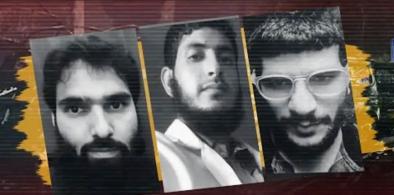
The exposure of a sophisticated white-collar terror network underscores the evolving nature of radicalisation and the need for comprehensive security reforms. Measures that merit consideration include: a)Reinstating long-term President’s Rule in J&K to stabilise governance and security; b) Implementing an organised, sustained deradicalisation programme, particularly among youth and educated professionals; c) Strengthening the permanent presence of the Indian Army in the Valley and increasing the number of cantonments; and d) Ensuring that elections are conducted only when broader community representation is viable, including Kashmiri Pandits, Dogras, Sikhs and other displaced groups

An Islamist Takeover in Bangladesh Can Have Dangerous Consequences

Bangladeshis can be found in the unlikeliest of places in search of gainful 'employment'. Recently two Bangladeshi militants were killed, reportedly in an anti-militancy raid in Pakistan. Two Bangladeshis were also found in the Ukraine war fighting in support of Russia as mercenaries. With financing and patronage, Bangladesh with a vast population of poor devout Muslims can potentially become an unlimited source of Islamic militants and suicide bombers for the rest of the world.

Putin’s Visit Shows How India Uses Multipolarity as a Shield, Not a Slogan

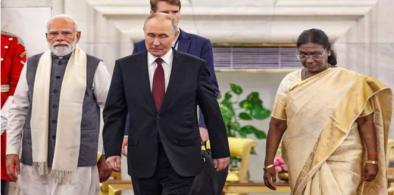
Putin’s 2025 visit to New Delhi was a strategic demonstration of India’s contemporary foreign policy, not a sentimental reunion. For India, multipolarity is a toolkit — a defense built on diverse partnerships, institutional investments, and internal resilience, not an abstract idea. Yet a shield can fail if it is brittle or hollow. To ensure multipolarity remains a durable defense, New Delhi must convert diplomatic goodwill into operational readiness by strengthening domestic supply chains, addressing payment and logistical gaps, and sustaining principled diplomacy that safeguards India’s international standing. Otherwise, multipolarity risks becoming a comforting phrase rather than real protection.

Lessons From An Indian Epic: Mahabharata Holds A Mirror To Today's World

The Mahabharata’s deepest warning is stark and sobering: nations rarely fall because of external enemies alone. They fall because of internal decay. Hastinapur did not collapse under foreign assault. Its destruction was the inevitable outcome of accumulated resentment, festering grievances, unchecked ambition, wounded egos, and a collective failure to address its own fault lines. The gates were opened from within, and once the poison reached its tipping point, war became unavoidable.   

Rohingya Refugee Crisis: A Burden Bangladesh Must Bear

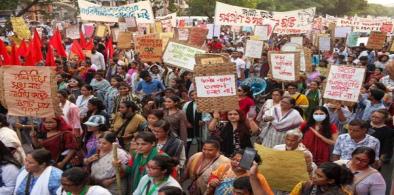
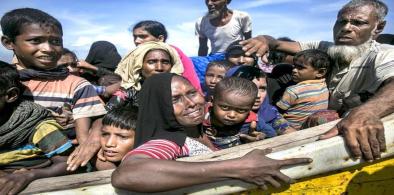
Meanwhile, Bangladesh struggles to sustain 33 camps in Cox’s Bazar—the world’s largest refugee settlement—amid a 63% humanitarian funding deficit. Ration cuts have intensified. Following USAID reductions, 48 health facilities were closed or scaled back, according to the International Rescue Committee. Nearly 300 children are diagnosed with malnutrition daily.

In Putin Visit India Reasserts Its Strategic Autonomy

The visit has also proved crucial for Putin in terms of international optics where the world’s largest democracy and its prime minister offered sanguine words to him. Although pomp and circumstance often attend such visits, it is not inconceivable that some of that was aimed at sending a signal to President Donald Trump, particularly on the question of his pressure on Modi to altogether stop importing Russian oil as well as a punitive 25% tariff on New Delhi in response to that.

The Cartography of Power: Why the India–Nepal Border Dispute Will Shape South Asian Geopolitics

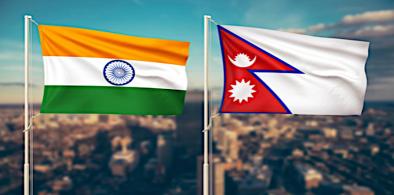
Ultimately, the India–Nepal border dispute is not only about the origin of a river. It is about how neighboring countries engage with shared history, evolving national identities, and shifting geopolitical environments. In a region shaped by growing strategic competition and enduring historical legacies, the conversation around Kalapani and Lipulekh remains a significant chapter in South Asian diplomacy 

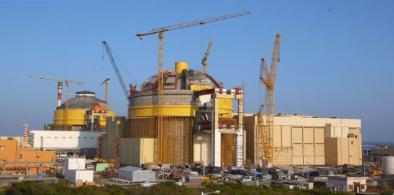
India-Russia Civil Nuclear Cooperation: Why So Crucial And The Road Ahead

Amid fragmented supply chains, the Russia-Ukraine war, Russia-China convergence, and escalating US-China tensions, India’s nuclear cooperation with Russia helps hedge against overdependence on the West and ensures Moscow remains embedded within India’s strategic ecosystem. While Russia needs stable export markets, India needs dependable technology and supply chains — a mutual dependence strengthened by sanctions and geopolitical flux.

The Muslim Brotherhood’s Ideological Insurgency Poses A Transnational Challenge

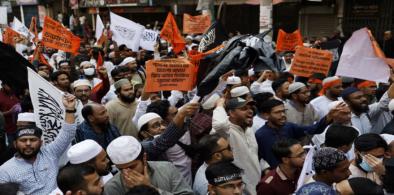
The Brotherhood’s strategy is global. In India, pro-Palestinian protests have been weaponized by groups including Jamaat-e-Islami, Jaish-e-Muhammad, Lashkar-e-Taiba, ISIS-linked entities, and Pakistan’s ISI to stoke communal hostility and recruit young Muslims into political Islam. Hundreds of millions of dollars have been funneled toward campus radicalization, media manipulation, and political influence campaigns that demonize Hindus and normalize Islamist narratives.

How AI Politics is Reshaping Cognitive Warfare in South Asia

Even reciprocal communal violence is spreading between Bangladesh and India through generative AI tools. Meta AI’s text-to-image generation feature is producing and propagating hate against Muslim minorities in India, which is creating an anti-India narrative in Bangladesh. Similarly, Several AI-generated images were found circulating on X and Facebook showing burning temples and torched bodies of the Hindu minority in Bangladesh

Putin's India Visit Outcomes Will Have Global Resonance

India’s multi-dimensional and wide-ranging relationship with Russia, with strategic issues, defence and energy security as bulwarks, has been one of the critical pillars of its foreign policy, one it will try to ensure remains vibrant and mutually beneficial and supportive during Putin’s visit, despite pressures. If, additionally, it can gain global stature by furthering a peace agreement on Ukraine, New Delhi will consider it a visit well done.