Colombo Port City

China’s Criminal Footprint in Sri Lanka has Regional Security Implications

When a Chinese company won the contract to establish hybrid wind and solar energy projects on three islands off the northern Jaffna peninsula—just 45 km from Rameswaram in Tamil Nadu—the security implications extended far beyond economics. Against this backdrop, India’s concerns are entirely justifiable. Sri Lanka faces a pressing question: how will the nation confront the infiltration of Chinese global criminal networks? Since Mahinda Rajapaksa’s tenure, Chinese presence in Colombo has steadily increased, with Sri Lanka positioned as a partner state in Beijing’s Belt and Road Initiative.

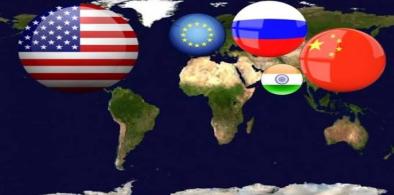
Wolf World or a Multipolar World? How Major Powers Exercise Power Will Determine Emerging International Order

The growing role of middle powers adds another layer of complexity. Yet the term itself remains imprecise. Not every country outside the United States and China qualifies as a middle power, and many reject the label altogether. India, for example, increasingly sees itself as a leading power pursuing strategic autonomy rather than as a middle power seeking alignment with one bloc or another.

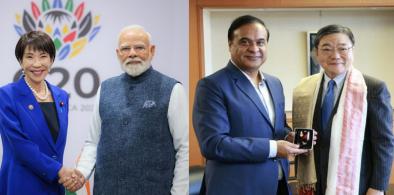
Is Northeast India's Permit System Inhibiting India-Japan Paradiplomacy? Colonial-Era System may be Stumbling Block to Subnational Exchanges

If India and Japan genuinely envision Northeast India as the gateway connecting South Asia with the Bay of Bengal and the Indo-Pacific, then the next chapter of the partnership cannot remain confined to New Delhi and Tokyo. It must also be written in Guwahati, Shillong, Aizawl, Imphal, Agartala, Kohima, Gangtok and Itanagar 

Bangladesh's Strategic Balancing and India's Neighbourhood Challenge: China Will Consolidate Influence if New Delhi Fails to Deliver

In several neighbouring countries, including Bangladesh, Sri Lanka and Nepal, China has demonstrated an ability to move from agreements to implementation far more rapidly than many competitors. India, despite enjoying unmatched geographic and cultural advantages, has often struggled with delays 

More on Geopolitics, Security and Strategic Affairs

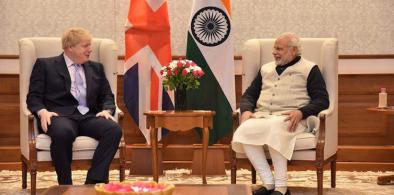
A strategic partnership at stake: UK needs to correct Kashmir policy

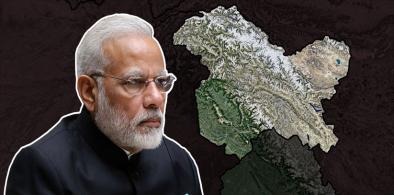
PM Modi has made it clear that it cannot be business as usual. The UK would need to carefully consider whether its pre-1947 agenda of promoting an autonomous Muslim state at the intersection of South and Central Asia is a desirable objective for the West, wrties Ambassador Bhaswati Mukherjee (retd) for South Asia Monitor

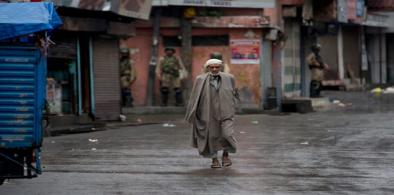
A nation deserted by ‘friends’: Pakistan’s anguish over Kashmir

Pakistan is unhappy that major players which could bail it out at the UN are all embroiled in their own affairs – the US trying to quit Afghanistan and China facing a trying time in Hong Kong, writes Mahendra Ved for South Asia Monitor

British stance on Kashmir can strain India ties

Boris Johnson has ended the British stance till now that Kashmir is a bilateral India-Pakistan issue, thereby delivering a lethal blow to India-Britain relations, writes Prakash Chand Katoch for South Asia Monitor

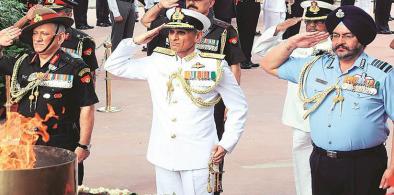
A CDS for India's armed forces must come with integrated theatre commands

CDS by itself without its essential adjunct of integrated theater commands would be of little avail. It may turn out to be just one more four star-general, without any enhancement in Indian military’s war fighting capabilities, writes  Lt-Gen Harwant Singh ( retd )  for South Asia Monitor

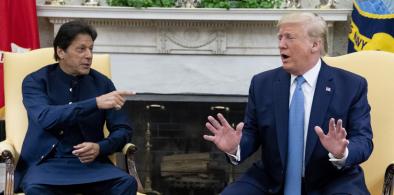
Kashmir developments triggered by Trump-Imran meet?

India has rudely shaken China, pushing back the bilateral Wuhan understanding with Beijing. It has hit not just China’s prime ally, but has moved close to Aksai Chin, the Kashmir territory Pakistan ceded to China, writes Mahendra Ved for South Asia Monitor

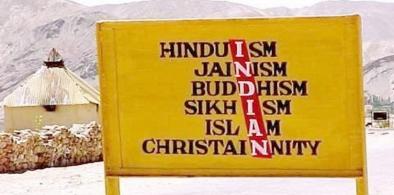
India should celebrate religious diversity, find spiritual common ground

Religious leaders should promote interfaith dialogue. They should bring together followers of different persuasions for meaningful conversations. They should promote a dialogue of understanding and a shared sense of community with other faiths, writes Frank Islam for South Asia Monitor

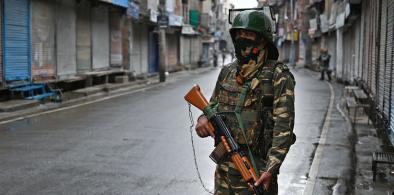
Jammu and Kashmir: Why revoking Art 370 was vital

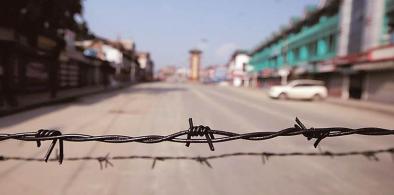
The abolition of J&K’s special status will complete the ongoing process of annexation into the Indian Union, as it was a temporary provision, and will bring misguided and stone-pelting Kashmiri youth into mainstream politics, writes Sudhanshu Tripathi for South Asia Monitor

How sacrosanct is the 'Idea of India'?

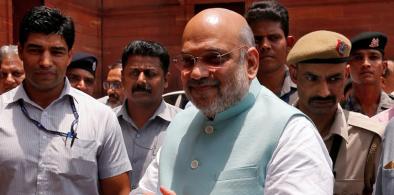
Experts are divided about the legality and constitutional propriety of the August 5 decisions in relation to Article 3 and the reorganization of states. What is at stake is the sanctity of  constitutionalism  and for PM Narendra Modi the way the Kashmir issue unfolds  will  define his political legacy, writes C Uday Bhaskar for South Asia Monitor

Jammu & Kashmir: A landmark decision, but a work in progress

Internationally, the impact has been positive across the international community and, even China, although initially negatively disposed, has chosen not to be too vociferous in its protestations, writes  Lt Gen Syed Ata Hasnain (retd)  for South Asia Monitor
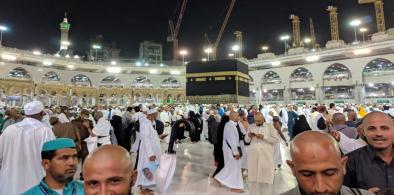
The pivotal role of Haj in transforming Saudi-India ties

Haj will continue to be the harbinger of cultural and economic cooperation between India and Saudi Arabia, writes Dr H A Nazmi for South Asia Monitor

Modi's ‘high-risk’ coup could yield rich dividends in Jammu & Kashmir

Those who have closely watched Modi believe that the prime minister wanted to give a clear signal that his government would be in a pro-active mode to handle long pending issues, writes Arun Anand for South Asia Monitor

Why Pakistan got trapped in its Kashmir plebiscite demand

The reason Pakistan was afraid of the plebiscite was that the raiders and troops it had sent in “had indulged in loot, arson, rape, and murder in the State. Scores of villages and towns were destroyed and hundreds of thousands of people uprooted, writes Arul Louis for South Asia Monitor

India's move will bring investments into Jammu & Kashmir, create employment

Pakistan can be expected to up the ante on terror, but any misadventure by Pakistan will be suitably responded to by India, writes  Lt Gen Prakash Chand Katoch (retd) for South Asia Monitor
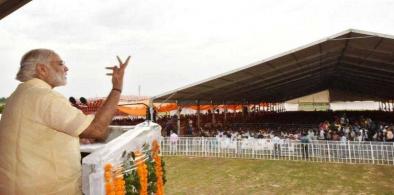
In Kashmiri psyche, Hindu majoritarianism will replace a multicultural democratic India as national symbol

If, in the name of security, the BJP can, with one stroke, undo the federal asymmetry which was a product of the unique circumstances pertaining to the accession of J&K state to India, with a complex set of legal and constitutional mechanisms, the same can be done to the Northeast special powers, but with greater ease, writes Reeta Tremblay for South Asia Monitor

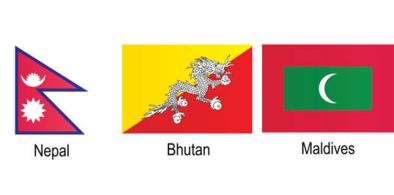
The course of three South Asian democracies - Nepal, Bhutan and Maldives

After a decade, these three countries - Nepal, a Hindu majority country, Bhutan, a Buddhist country and Maldives, an Islamic country - make a compelling study in the journey of democracy, writes Rishija Singh for South Asia Monitor