Representational Photo

PLA’s Border Intrusions Make a Mockery of All Meets and Agreements With India

The face-offs in Arunachal Pradesh—specifically around areas like Asaphila, Taksing, and Maza—have reignited intense debate regarding Beijing's commitment to bilateral border agreements. That China signs agreements it has no intention of following on the ground is a perception shared by many Indian diplomatic and security experts.

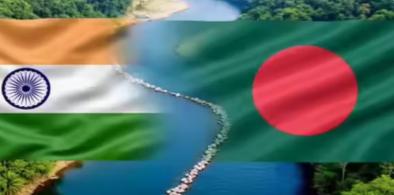
Before the Ganga Treaty Lapses: Bangladesh and India Need Prudent Water Diplomacy

Progress on the Ganga could also build the trust needed for wider cooperation among Bangladesh, Bhutan, India and Nepal in electricity trade, connectivity and climate adaptation. Both governments should act now.

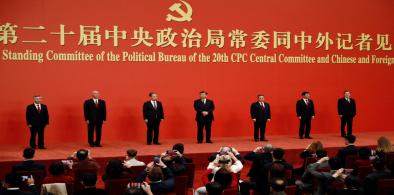
China’s 'Quiet State' from Tibet to Hong Kong: How Chinese Statecraft Weaponizes Surveillance and Development

Border settlements, transportation networks, surveillance grids, and civilian administration now work alongside conventional defense planning to strengthen Beijing’s claims. Understanding China’s rise requires attention not just to military power projection but also to these quiet instruments of authority.

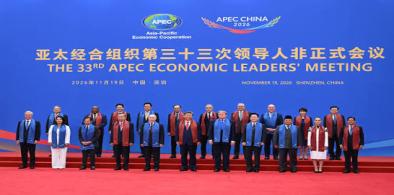
Odd Summit : Why Shenzhen Should Matter for India

That is the paradox of Shenzhen. An odd summit, convened by three leaders with different compulsions, produced an anodyne declaration that nevertheless impinges  onto India's core concerns:  UN reform without India, ICC impunity versus UNCLOS, and energy through Hormuz.

More on Geopolitics, Security and Strategic Affairs

Pakistan's mounting TTP threat and India overtures

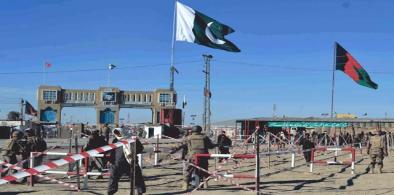
With constant attacks on CPEC projects and Chinese workers, protests breaking out across the nation against economic hardships, and an increase in internal terrorism, Islamabad is being forced to ramp up its military even while it is being spread thin due to increasing crisis points requiring its attention.

Tensions in Pak-Afghan relations: Lessons in it for India?

Afghanistan is important to India’s continental economic aspirations, including closer ties with Central Asia and Iran. These goals are currently hampered by Pakistan’s blockade of Indian access to the region.

Sectoral economic transition in South Asia: Emerging trends and opportunities

Between 2008 and 2021, the sectoral economic transition witnessed in most countries in South Asia - and in other parts of Asia - has  reduced the sectoral share of GDP in agriculture  and also the  employment burden on agriculture  in most countries.  This trend, however, changed in the wake of Covid -19  when the share of agriculture in GDP in countries rose along with share of employment.

50 Years of climate negotiation: Two daydreams and seven nightmares sum up COP-27

As of December 2022, the total dues to developing countries by developed countries stand at about USD 1 trillion whereas only about USD 10 billion have been disbursed through Green Climate Fund till now.

Need for more transparency in US project funding in Bangladesh

Bangladesh always has had good terms with the US and is one of the largest recipients of US government and private aid. But as the geopolitics of the Indo-Pacific region becomes heated, it has brought in its wake  diverse interests that Bangladesh is not ready to cater to as yet.

Is Gautam Adani, India's richest man, hedging his political bets?

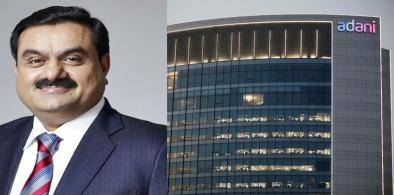
The question is whether Adani, also the world's third richest man, is also sensing shifting political sands in India and is preparing to stabilize himself so as not to trip if such an eventuality comes to be. The answer will unfold over several months until 2024.

China's forked tongue amid sinister regional agenda

With the Communists back in power in Kathmandu, China will be able to push its own agenda, as well as that of Pakistan, in Nepal. It has cross-border ramifications for India at the tactical level, as well as larger ones at the strategic level when seen in concert with Chinese moves in Bhutan and Myanmar.

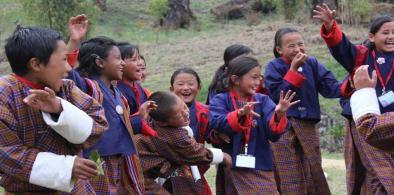
Bhutan's GNH concept can be a guiding light for South Asia

As Bhutan celebrates 50 years of introducing Gross National Happiness to the world, it has had a sizable impact on the political, social, environmental, and economic aspects of Bhutan. It is time for the world to give the concept more importance and conduct research on it.

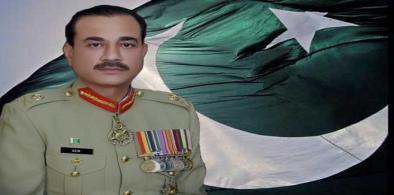
Gen Asim Munir as Pakistan's COAS: Will there be a re-evaluation of his predecessor's policies?

Delhi views Munir as a hardliner; so it is expected the COAS may use all resources against India to tarnish India`s image through information warfare or other means to perpetuate friction.

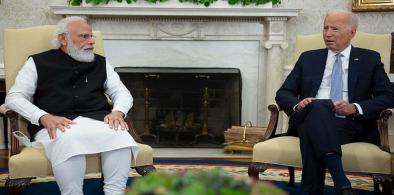
Is the US-led West double-timing India over China?

The US would love an India-China war - India becoming the Ukraine of the Indo-Pacific. The US administration would be ready to sell any amount of weaponry to India – nothing gratis of course.

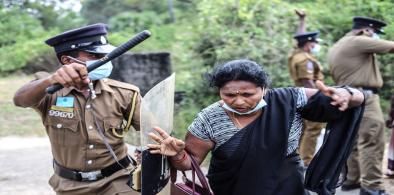
Human security remains at risk in Sri Lanka

The human security status of Sri Lanka has depreciated due to deep-seated and pervasive issues linked to the country's economy and politics. To overcome pressing challenges related to human security, the government needs to have a well-designed policy framework in place.

Dangerous nexus between right-wing forces and terrorism in Bangladesh

The right-wing and Islamist political forces that have always maintained connections with violent extremist forces are exerting their influence in Bangladeshi society. This is an ominous sign in this part of the world.

Maldives: Is ruling MDP heading for a split threatening island's stability?

The political events, including those inside the once monolith MDP, are playing out at a time when Defence Minister Mariya Didi claimed that the recent raids, arrests and explosives seizure in capital Male and southern Addu City related to the "most dangerous terror-plot" in the country.

India's inter-state tensions send out wrong signals to the world

There is a simple but fundamental truth – good relations, trust and cooperation are critical among neighbours, both within India's borders and across it.

Selective amnesia or whitewashing history? Pakistan yet to come to terms with 'bitter truth' of 1971

“Indeed, the West Pakistani elite — politicians, bureaucracy, military — all played a role in aggravating the crisis,” a Dawn editorial said, adding: “Unfortunately, we as a nation have yet to come to terms with the bitter truths of 1971.”

Newsletter Subscription

The subscriber's email address.
Stay informed - subscribe to our newsletter.