Representational Photo

PLA’s Border Intrusions Make a Mockery of All Meets and Agreements With India

The face-offs in Arunachal Pradesh—specifically around areas like Asaphila, Taksing, and Maza—have reignited intense debate regarding Beijing's commitment to bilateral border agreements. That China signs agreements it has no intention of following on the ground is a perception shared by many Indian diplomatic and security experts.

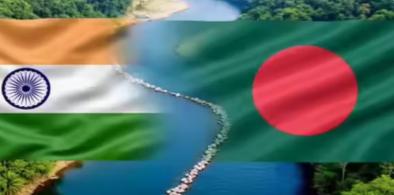
Before the Ganga Treaty Lapses: Bangladesh and India Need Prudent Water Diplomacy

Progress on the Ganga could also build the trust needed for wider cooperation among Bangladesh, Bhutan, India and Nepal in electricity trade, connectivity and climate adaptation. Both governments should act now.

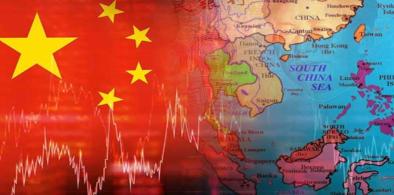
China’s 'Quiet State' from Tibet to Hong Kong: How Chinese Statecraft Weaponizes Surveillance and Development

Border settlements, transportation networks, surveillance grids, and civilian administration now work alongside conventional defense planning to strengthen Beijing’s claims. Understanding China’s rise requires attention not just to military power projection but also to these quiet instruments of authority.

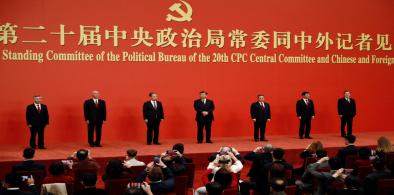
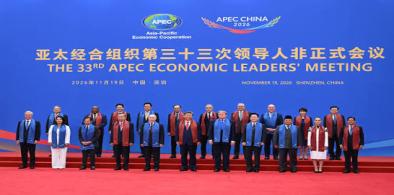
Odd Summit : Why Shenzhen Should Matter for India

That is the paradox of Shenzhen. An odd summit, convened by three leaders with different compulsions, produced an anodyne declaration that nevertheless impinges  onto India's core concerns:  UN reform without India, ICC impunity versus UNCLOS, and energy through Hormuz.

More on Geopolitics, Security and Strategic Affairs

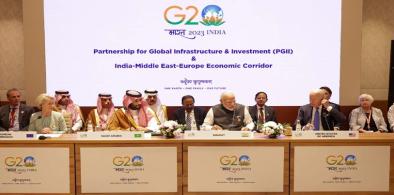
Will IMEC be a potential game-changer for India and South Asia?

For India, IMEC is a strategic move to lessen dependency on its traditional trading partners while opening up a horizon of opportunities in markets ranging from technology to energy. Also, India is poised to countervail growing Chinese influence in South Asia if successful implementation of IMEC becomes possible. 
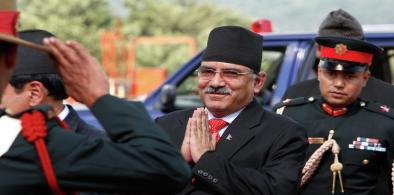
Nepal's regional diplomatic balancing demonstrates its non-aligned foreign policy

Nepal’s participation in bilateral infrastructure projects with China exemplifies its aspiration for mutual economic growth. Yet its decision to distance itself from the GSI indicates its commitment to remain neutral, given its deep-rooted ties with India.

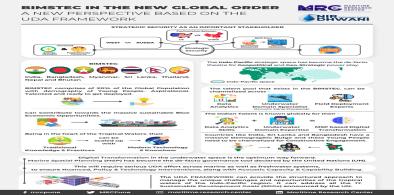
How Indian expertise and BIMSTEC's traditional knowledge can transform underwater domain awareness for regional benefit

The talent pool that exists in the BIMSTEC - in countries like Bangladesh, Sri Lanka, and Thailand - can be channelized across areas of data analytics, underwater domain (acoustic signal processing) and for field deployment.  Indian talent is known globally for its data analytics skills, and coupled with the underwater domain expertise, can work on the MSP-based digital transformation for the region.

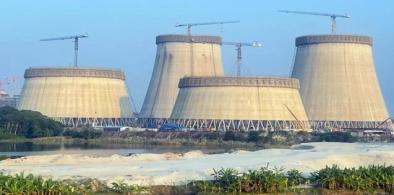
Bangladesh's march towards energy security - with a little Russian help

The successful operation of the  Rooppur plant will underscore the commitment of Bangladesh to responsible and secure nuclear energy utilization

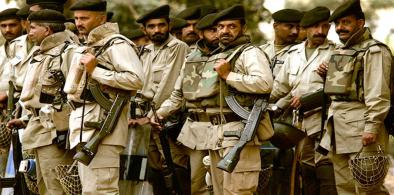
Pakistan needs to reshape priorities: Trim high defence budget, build positive ties with India

History has shown that whenever Pakistan sought peaceful relations with India, India responded positively. This held true during democratic governments and even during dictatorships in Pakistan.

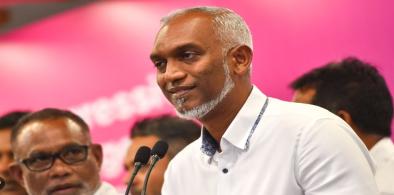
With China tightening hold on South Asia, Maldives a wake-up call for India

Muizzu’s regime in the Maldives in conjunction with Pakistan could be potentially sitting on China’s lap for decades, along with a pro-China government in Nepal, and Myanmar annyway drawn into China’s strategic sphere since the military coup in Nay Pyi Taw in February 2021.

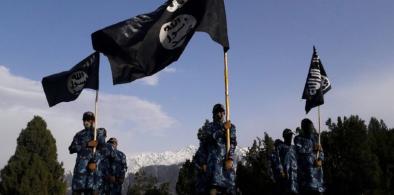
Islamic State's expanding footprints pose grave security threat to Pakistan and South Asia

While Pakistan continues to blame India for the bombings in Balochistan and Khyber Pakhtunkhwa,  it fails to introspect on its own internal crisis stemming from its policies against its citizens and the military/political support being given to certain radical outfits or groups.

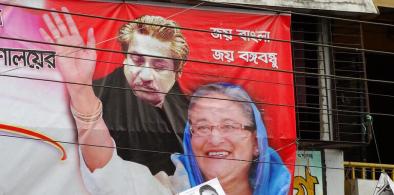
Why are the people of Bangladesh apprehensive about the upcoming elections?

Due to the lack of established regard for the democratic system, elections held after the 1990s have been marred by political turmoil and civic unrest. The absence of a solid democratic foundation has hindered the institutionalization of democracy in national life and politics.

Maldives election: India should not align its neighbourhood policy to individual leaders

The China-funded Sinamale Bridge connecting the capital Male and the airport island Hulhule, is a boon to the Maldivian people, who readily relate to the project, and hence to China as a development partner. But China is seen only as a developmental supplementary to long-term friendly neighbour India and not as an alternate in any way.  

Student suicides in India: Kota is a wake-up call

What we see in Kota today is deeply rooted in middle-class aspirations for social mobility, considering meritocracy a fair and promising system. But, the ‘merit ladder’ for upward mobility is not equally tangible and accessible to all. The material, social and psychological resources available for these students depend on their social location.

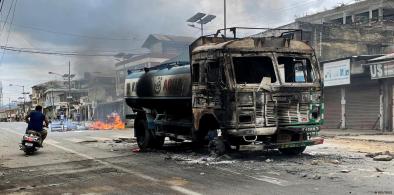
Continued ethnic strife in Manipur making region vulnerable to external exploitation

China has been supporting, training and arming northeast terrorists for the past several decades. The ongoing political experiment of ethnic cleansing and polarization in Manipur would naturally be exploited by China.

Shedding the misconceptions: Bangladesh's ties with China should not be a concern for India

The Sino–Bangladeshi partnership has not grown at the expense of the Indo–Bangladeshi partnership. Bangladesh does not constitute a part of the traditional Chinese sphere of influence. 

Empowering Bangladesh: The promise of solar-wind hybrid renewable energy systems

Bangladesh's energy woes demand innovative solutions, and the integration of solar and wind energies in a hybrid system represents a groundbreaking approach to meeting the nation's power needs. 

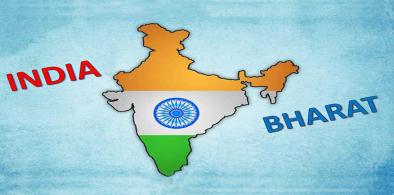
‘India’ or ‘Bharat’ debate reflects postcolonial insecurities, not in tune with modern nationhood

India holds together not by ignoring diversity but by granting constitutional and ideational recognition to different ethnic, religious and linguistic groups. The word ‘India’ evokes and symbolizes a “we feeling” in the people's collective consciousness, derived from long-held traditions and pluralist imaginations. 

Child marriages in South Asia: Gross violation of girl rights that needs urgent regional attention

The persistence of child marriage in South Asia indicates the widespread failure of governments to address one of the most critical human rights issues. Effective legal remedies and ensuring accountability for those complicit in such crimes can be the panacea for such social ills.

Newsletter Subscription

The subscriber's email address.
Stay informed - subscribe to our newsletter.