

Mecca Joint Defence Agreement between Saudi, Turkey and Pakistan

The Mecca Joint Defense Agreement: What It Means for South Asia

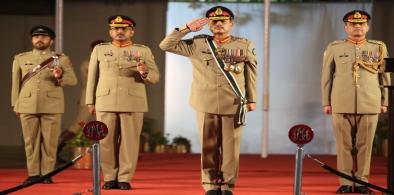
New Delhi’s official response has been measured, almost pointedly so, a statement that India is “looking into the implications” rather than any dramatic condemnation. That restraint is wise, and should be read as strength rather than uncertainty. India’s ties with Saudi Arabia are too economically consequential, too carefully cultivated over the past decade, for Riyadh to jeopardize them by handing Pakistan a blank check. 

The Mineral Geopolitics of the Bay of Bengal: To Win the Subterranean War, India's Maritime Strategy Needs a Paradigm Shift

The vulnerability for India lies in the asymmetry of technological readiness and the aggressive sub-surface mapping being conducted by external actors, most notably China. Beijing has been able to resource its scientific research vessels, oceanographic mapping devices, and supposed civilian ocean surveys to map the bathymetry and mineral content of the Indian Ocean Region systematically.

Growing US-China Rivalry in Indian Ocean: A Test of Sri Lanka's Foreign Policy

China’s growing influence in Sri Lanka is an immediate concern for India as the resident power in the region, but it is also a global concern for the United States. 

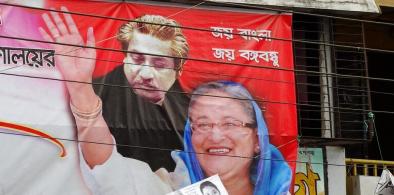
Hasina's Return Proclamation Throws a Spanner in India-Bangladesh Ties

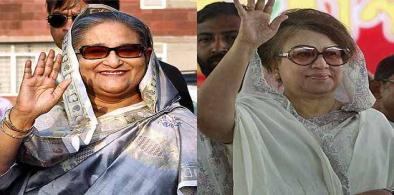
The Indian government is caught in a bind. Despite the BNP government’s outrage, for Delhi to hasten Hasina’s extradition is not an option.

More on Geopolitics, Security and Strategic Affairs

China poses no threat to the multi-faceted India-Bangladesh partnership

The accompanying data and graphs indicate that random charges about Bangladesh tilting toward China are just hype and with no basis in facts. Unlike Pakistan and Sri Lanka, Bangladesh has conducted prudent macroeconomic management in order to avoid overdependence on China.

Helpless pawns in a bilateral dispute: No relief in sight for poor Indian and Pakistani fishermen

The current process shows the insensitivity of our systems and highlights how fishermen and others are of the lowest priority as they remain incarcerated without reason in the other country's prisons.

The Rohingya refugee dilemma: Does a sustainable solution lie in their integration into Bangladesh?

While the Rohingya issue remains complex and multi-faceted, the potential for the coming generations to integrate into Bangladesh seems natural and realistic. As we move into a seventh year since their major influx, it's evident that repatriation efforts have made limited headway. 

Six years later, Bangladesh's Rohingya refugee crisis sees no signs of resolution

Declining funds, deteriorating camp conditions, growing insecurity, and the adverse impact of the refugees on the host community have made Bangladesh a desperate host looking to reduce the burden. This crisis is also destabilizing regional security.

Rivers as network: Towards a pluriverse South Asia

The Indus, the Brahmaputra, and the Ganges, as well as the Kabul river basin, which is interconnected to South Asian nations, are perennial rivers that have shaped and influenced South Asia's history, politics, culture, economy, and civilizations for many millennia on a shared basis.

Will BRICS create a new balance in the global order?

If BRICS can truly identify issues of larger common interest and move forward on the basis of consensus, it can become the new leader of the post-Western world order where the NDB will be the primary competitor of the World Bank and IMF.

Why despite few returns India remains invested in Afghanistan

A few months back the members of the Taliban regime in Kabul attended a four-day ‘India immersion’ online course offered by the Ministry of External Affairs through IIM Kozhikode.  The course was part of the capacity-building assistance through the ITEC (Indian Technical and Economic Cooperation) programme to developing countries, including Afghanistan.

Can a Modi-Xi meeting at Johannesburg break the border standoff?

The Major General-level talks (initially described as confidence building) apparently aim for a conducive atmosphere when Modi comes face to face with Xi at Johannesburg for the BRICS summit August 22-24.

Will Bangladesh benefit by joining the RCEP? The pros outweigh the cons

If Bangladesh applies to join this year, it can be a member of RCEP from 2025 onward. Apart from Bangladesh, Nepal, and Sri Lanka are also reportedly eager to join the China-led trade bloc.

Hydropolitics of the Helmand River: Iran-Afghanistan water-sharing dispute could imperil regional security and ecology

The Helmand River water issue has the capacity to escalate into a protracted and intense conflict, drawing both countries into a state of violence.

Pakistan: Military rule by proxy continues and will continue

It is apparent the Pakistani military is the sole decision-maker for Pakistan and the arbiter of its destiny. The probability of a prolonged interim government under caretaker PM Kakar is a strong possibility during which time the Pakistani military will call the shots through its puppet figure. 

South Asia's overcrowded prisons: Lock-up culture needs to give way to reformation and empathy

Some South Asian countries have taken welcome steps toward the release of undertrial prisoners, including India, Pakistan, Nepal, Bhutan, and Bangladesh. These measures need to be implemented and applied consistently. Biraj Patnaik, Amnesty International's South Asia Director,  says, “South Asia’s prisons are a blight on the region’s conscience...

Another round of India-China military talks : Obfuscating ground realities?

The latest round of military-to-military talks was orchestrated to time with Prime Minister Narendra Modi attending the BRICS Summit in South Africa on August 22-24 and the G20 Summit in New Delhi on September 9-10, which Chinese President Xi Jinping is slated to attend.

Crisis-ridden Pakistan battles an Afghan dilemma

The ISKP’s current objective is to prevent the Taliban from accomplishing its objective as a government in Kabul and prevent it from fulfilling its promises to the Afghan people. In order to achieve this, ISIS/ISKP will continue to target not just Taliban fighters but also nations that may have alliances with the Taliban government, such as China, Russia, and Pakistan.

How the China factor influenced US-India ties in the last 76 years

As the US tries to break the stranglehold of China on its supply chains, especially in hi-tech, India is emerging as a venue for what is now called 'friendshoring' – developing manufacturing in friendly countries that can be reliable partners. From being a recipient of food aid from the US seven decades ago, India has emerged as a partner in defence, space, health and technology.