China’s Belt and Road Initiative - which funded Sri Lanka’s Hambantota Port through loans resulting in a 99-year lease to Chinese State-owned enterprise in 2017 due to Colombo’s struggle to service said loans - follows the same expansionary script.


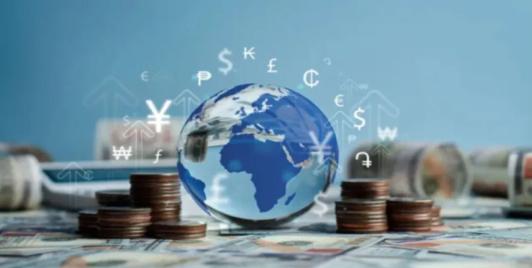
Remittances have become an unusually large source of external finance for South Asia. But a development model in which workers migrate because domestic employment is inadequate, and then send income home to support domestic consumption, cannot indefinitely substitute for creating productive employment at home.
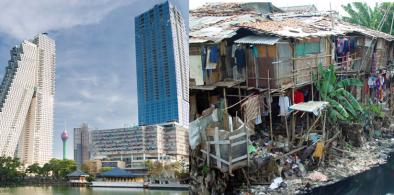
In 2025, Sri Lanka was ranked as the second most expensive housing market in the world based on rentals compared to average income. It is possible that market distortions caused by black economy and corruption have contributed to this.
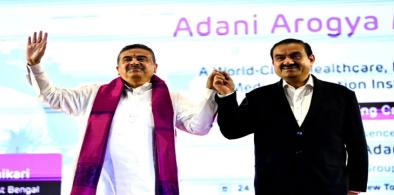
The larger opportunity before West Bengal is therefore not another round of infrastructure creation in isolation. It is the creation of an ecosystem in which infrastructure, private capital, local enterprise and skilled labour reinforce one another.
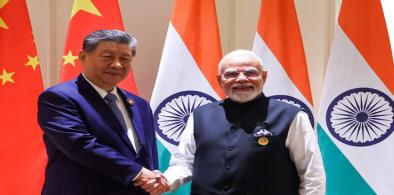
Why not begin by reopening serious discussions with Chinese conglomerate BYD about an Indian factory? BYD is now one of the world’s dominant EV manufacturers. Its Indian ambitions were caught in the post-Galwan investment freeze. Invite it back to the table—but on Indian terms
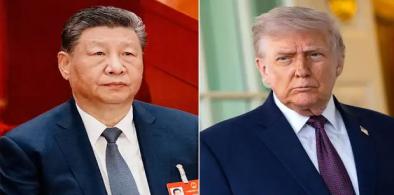
China’s Belt and Road Initiative - which funded Sri Lanka’s Hambantota Port through loans resulting in a 99-year lease to Chinese State-owned enterprise in 2017 due to Colombo’s struggle to service said loans - follows the same expansionary script.
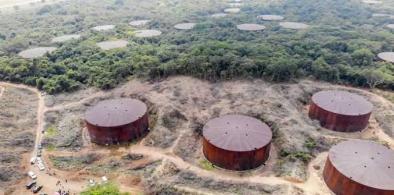
If one location matters most to India in Sri Lanka, it is Trincomalee. With one of the finest natural harbours in the world, Trincomalee has immense commercial, naval, and energy value. For decades, strategists in New Delhi have viewed it as critical to the security architecture of the Bay of Bengal.
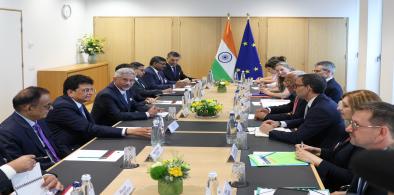
It also demonstrated that the EU increasingly sees India as a strategic alternative to excessive dependence on China and India increasingly sees the EU as an important technology and investment partner amid a more fragmented global trading system.
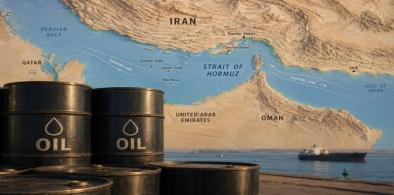
India's energy profile has changed significantly over the past decade. Crude imports from Russia, increased purchases from the United States, Brazil, Angola and other suppliers, together with expanding strategic petroleum reserves, have reduced dependence on any single source. India's energy vulnerability has not disappeared, but it has become more diversified.
As South Asia seeks to become one of the principal engines of global growth in the twenty-first century, velocity may emerge as one of the most important indicators of economic vitality. The countries that prosper most will not necessarily be those that create the most money, but those that use it most effectively.
If the twentieth century was shaped by the Atlantic and the early twenty-first century witnessed the rise of the Pacific, the coming decades may well belong to the Bay of Bengal. The foundations of that future will not be built solely through trade agreements or infrastructure projects. They will emerge from a shared commitment to connectivity, cooperation and civilisational understanding.
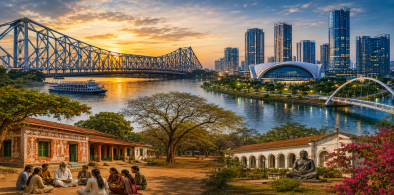
West Bengal has the resources, talent, culture, and strategic location necessary to become one of India’s most prosperous states. By combining efficient governance, investment-friendly policies, infrastructure development, education, innovation, trade expansion, tourism growth, environmental sustainability, and social inclusion, the state can achieve rapid economic transformation and substantially raise incomes, employment, and overall quality of life.
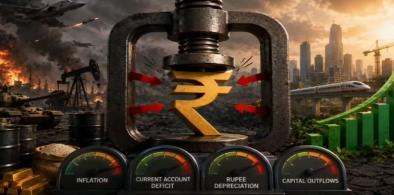
India possesses immense talent, entrepreneurial capacity, and a large domestic market, yet it still lacks sufficient depth in high-end manufacturing, research and development, semiconductor ecosystems, advanced engineering, and globally dominant product companies.
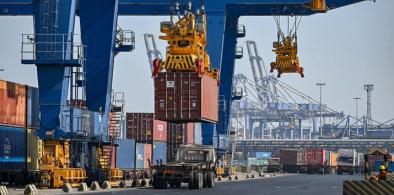
One of the most striking features of South Asian trade is how little the region trades internally. Intra-regional trade within South Asia remains among the lowest in the world relative to geographic proximity. Political tensions — especially between India and Pakistan — have prevented the emergence of a deeply integrated regional production system comparable to ASEAN or the European Union. This is a major missed opportunity.
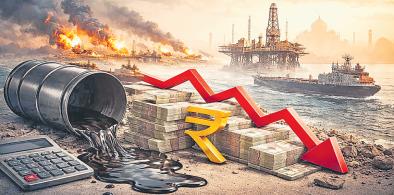
Scarcity of cooking fuel is pushing people, particularly across South Asia, toward hunger. Livelihoods have been lost among the large unorganised labour force while thousands of self-employed street vendors, smaller restaurants and eateries are being forced to close shop, facing a scary, insecure future. For middle class households across India, everyday snacks like the samosa or dosa have become scarce because of shortage and high prices of cooking gas cylinders.

India is one of the world’s largest suppliers of generic medicines and APIs to Europe. If the EU begins favouring “Made in EU” pharmaceutical production through procurement preferences, subsidies or state aid, Indian drug manufacturers could face reduced access to EU public procurement contracts and tougher supply-chain resilience requirements.
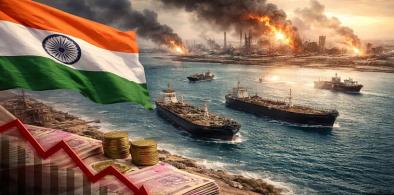
India’s pharma export market has been affected as India supplies medicines to more than 200 countries. Supply chain interruption not only hurts Indian producers but also creates medicine scarcity in the US, UK, and African markets that highly depend on Indian generics. From the logistics end, re-routing of cargo away from conflict-ridden corridors such as the Red Sea and Strait of Hormuz has increased freight insurance premiums, distressing Indian exporters who function on lean cost structures.
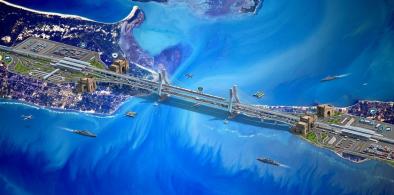
Neutrality and balance — Colombo’s habitual vocabulary — have yielded little economic benefit. Ultimately, Sri Lanka slid into bankruptcy. Given this background, the land link is not merely a strategic starting point but a necessity. India’s strategic position on Sri Lanka is perennial; whether the bridge is built or not, India’s concerns remain fundamental. As an immediate neighbour and rising global power, India will not allow rivals to use Sri Lanka as a base.
Increased industrial activity in India could generate demand for raw materials, intermediate goods, and services from countries such as Nepal, Bhutan, Bangladesh, and Sri Lanka. Bangladesh’s textile industry could strengthen its links with Indian manufacturing networks, while Sri Lanka may gain from expanded opportunities in tourism, logistics, and services.
ADB’s role has evolved beyond financing into shaping India’s structural transformation into a high-growth, technology-driven, and climate-conscious economy. Compared to other multilateral institutions, it offers a more agile, implementation-focused, and regionally attuned approach. As India moves toward becoming one of the world’s largest economies, this partnership will play a defining role in shaping not only India’s growth trajectory but also the broader economic future of Asia.