The UN High Commission for Refugees (UNHCR) has operations in more than 130 countries. In places where people are already displaced, Agniveers could help them prepare for and adapt to climate change


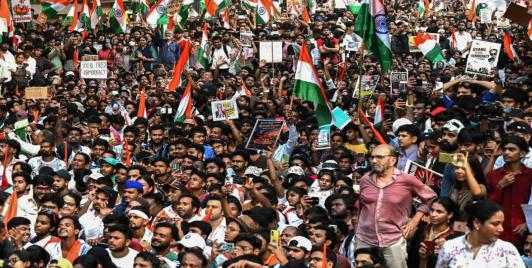
The CJP’s journey, however, is no longer confined to the politics of examination failures and youth precarity. Its School Thik Karo campaign has extended the movement’s work towards accountability for basic public-school infrastructure, while its latest mobilisation has turned to electoral accountability.
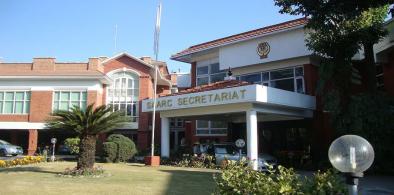
Whether or not “Himalayasia” ever catches on as a name, the underlying question it poses is a serious one for a region that houses a quarter of the world’s population, spends tens of billions of dollars a year arming itself against its own neighbors, and still trades more easily with the far side of the globe than across its own borders

South Asia often discusses youth mobility after a student has already decided to leave the region. A stronger regional system would give students another option before that point: international experience that is close enough to be practical, but different enough to change what they learn.

If dummy admissions, prolonged school absenteeism, and an unregulated coaching culture continue unchecked, we may end up producing students who have spent enormous amounts of time and money on education without actually receiving the education they need.

The UN High Commission for Refugees (UNHCR) has operations in more than 130 countries. In places where people are already displaced, Agniveers could help them prepare for and adapt to climate change

India is a nation where, under current laws, only 3 percent of the citizens need to file an income tax return, and only 1 percent is actually found to annually have earned a taxable income. The majority of Indians, who are engaged in agriculture, are not required to pay income tax at all
The political instability in a large and industrialized state like Maharashtra is not helping. Instability means inaction or even paralysis in decision making, since policy makers are distracted in tackling the political situation

The Padma Bridge will make international investors, including Saudi companies, to give a serious look at Bangladesh as an investment destination
The need of the hour is to adopt a rights-based approach to environmental protection that places the people harmed by environmental degradation at its centre
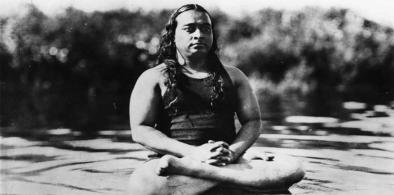
Indian yogic and spiritual masters have been very clear in their thinking. Hating anyone, particularly any other religion, was a major no-no

Yoga has its roots in ancient India. Over the centuries, it has spread to other parts of the world including East Asia, Central Asia, Southeast Asia and Europe
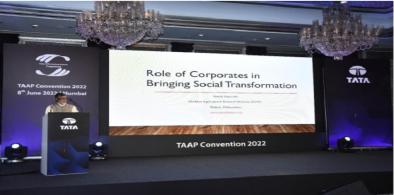
If corporates produce technologies and solutions to improve the quality of life of rural population, then they need to reduce the profit margins for rural goods and services

Dr. Anupama Gotimukula, President of AAPI, said: “We do acknowledge that these are challenging times, more than ever for us, as physicians, who are on the frontline to assess, diagnose and treat people are affected by this deadly pandemic with Physician burnout post Covid-19. Our colleagues have sacrificed their lives in order to save those impacted by this pandemic around the world."
Like Janus, the RSS and the BJP have two faces, one face has marks of the actions of the past on it. Some of these marks are too clear and deeply etched to allow a makeover, writes Ganesh N. Devy for South Asia Monitor
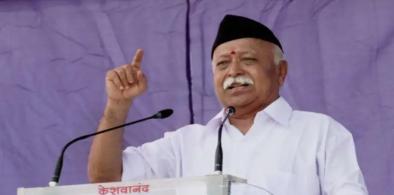
The present statement of the RSS supremo reinforces the belief that Islam was spread by aggressors. This again is a superficial and selective projection of history
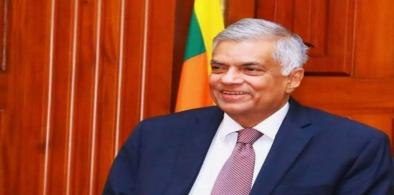
Sri Lanka’s governance should be guided by technologists, engineers and economic experts, and not by politicians at the present time

Battleships decommissioned in the future should also be developed as museums to attract general public -- on ground and on water too
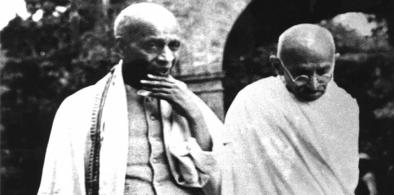
In contrast to what Gandhi envisioned, the gulf between the two communities in India has been made wide and deep
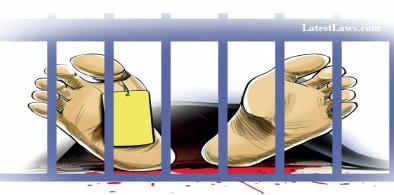
The explicit duty to respect human rights should be added to the duties of police mentioned in the Police Act, 1861, and respect for human rights should be included in the training