

Dhaka’s Dangerous Drift: Need for Serious Diplomacy to Resolve Rohingya Problem
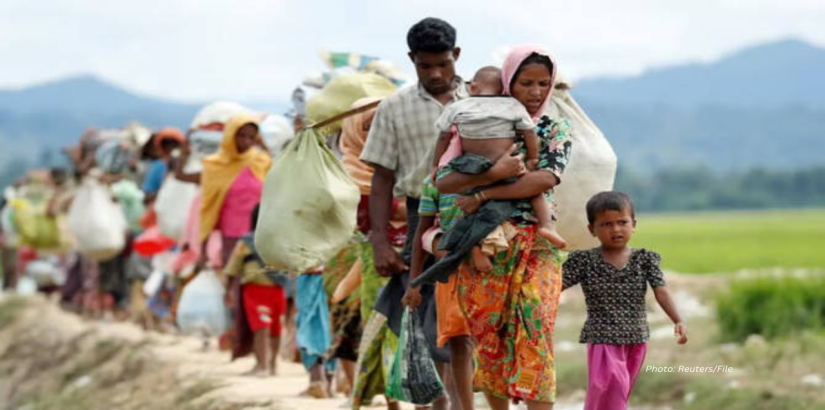
The Rohingya dimension is inseparable from the question of AA engagement. Bangladesh hosts 1.4 million displaced Rohingya. While these numbers do not decrease, the fiscal, social, and security costs compound, pressing against the newly elected Bangladesh Nationalist Party’s electoral promises: a domestic agenda centered on growth in the Chattogram division, and a foreign policy agenda built around repatriation of the Rohingyas.
 Apr 07, 2026
There is a particular kind of foreign policy failure that accumulates quietly in deferred decisions, diplomatic silence, and in the bureaucratic comfort of pretending that an inconvenient reality will eventually conform. Bangladesh is deep in that accumulation now, and the bill is coming due on a 271-kilometre border that the government in Naypyidaw does not control.
The United League for Arakan (ULA) did not seek Bangladesh’s permission before beginning to function as a nascent state at its border; it simply became one. It controls territory, levies taxes, runs courts, and, as of February 2026, conducts prisoner exchanges with a neighbouring country’s border forces. When the Border Guard Bangladesh (BGB) sits across a table with the Arakan Army (AA), the armed wing of the ULA, to negotiate the release of detained fishermen, the legal fiction of non-recognition ceases to have operational meaning.
Talking With Wrong People
What is Bangladesh actually doing here? Dhaka is conducting functional diplomacy with an unrecognised non-state actor, because it has no viable alternative. Knowing particularly well that in the volatile geography of the Bay of Bengal’s northern rim, this evasion may carry real consequences from Naypyitaw.
The ULA/AA’s consolidation of Rakhine, while militarily impressive, is politically fraught. Operation 1027 shattered the Tatmadaw’s (Myanmar armed forces) authority along Bangladesh’s border faster than most analysts anticipated. What replaced it is not an administrative vacuum but a Rakhine nationalist project with its ethnic hierarchies, historical grievances, and a defined sense of who belongs in the territory it now governs.
The organisation that Bangladesh is quietly engaging has recently been documented as burning Rohingya villages, a finding recorded in multiple human rights bodies. Dhaka is, in effect, negotiating with an administration that helped further a crisis it has the key to resolve. The diplomatic contortion this requires is extraordinary, and no one in the foreign ministry appears willing to say so publicly.
The Rohingya dimension is inseparable from the question of AA engagement. Bangladesh hosts 1.4 million displaced Rohingya. While these numbers do not decrease, the fiscal, social, and security costs compound, pressing against the newly elected Bangladesh Nationalist Party’s electoral promises: a domestic agenda centered on growth in the Chattogram division, and a foreign policy agenda built around repatriation of the Rohingyas. The recent prisoner exchanges, however, underscore that the latter remains an aspiration without an executable plan.
Festering Rohingya Issue
Eight years since the 2017 exodus of Rohingyas, Cox’s Bazar is destabilising in ways that extend well beyond the visible. Narcotics flows, radicalisation vectors, and the persistent presence of the Arakan Rohingya Salvation Army (ARSA) all trace back to the same unmanaged geography. The March 2025 arrest of ARSA’s leader on Bangladeshi soil was an embarrassing reminder of how long a designated threat was permitted to operate from within Bangladesh’s own territory.
The BNP government is visibly preoccupied with consolidating domestic power and appears to treat this foreign policy inheritance as discretionary. The structural pressures on the Myanmar border do not pause for electoral transitions or constitutional negotiations. The AA will continue to govern Rakhine, and without inclusive dialogue, the Rohingya will continue to sit in Cox’s Bazar. The methamphetamine trade will continue to exploit the gap between closed formal trade routes and insatiable domestic demand. All of these problems become more expensive the longer the architecture for managing them remains unbuilt.
Functional Contact no Solution
What architecture? That is the operative question. Functional contact with the ULA must be converted into a formal federal framework: one that distinguishes clearly between trade and border management and the Rohingya repatriation question. These tracks cannot be merged into a single issue for quid pro quo, as the Muhammad Yunus-led interim administration attempted to do. They must run in parallel, each with its own timeline and accountability mechanisms.
Though concerns remain - on the one hand, repatriation without genuine safety guarantees and verifiable stakeholder commitments is refoulement; on the other, trade normalisation without explicit human rights conditionality is a subsidy. If Bangladesh wants to avoid moving towards simultaneous failures, it needs to acknowledge that its south-eastern neighbourhood is changing rapidly, and understand that the change is durable, and managing it will require precisely the sustained, serious diplomacy that Dhaka has historically been least willing to undertake.
(The author is editor and faculty at the Institute of Human Rights and Democratic Governance, Spring University Myanmar who has previously worked on Indian government projects to monitor election developments in Bangladesh. She can be reached at dipannitamariabagh@gmail.com.)







Post a Comment