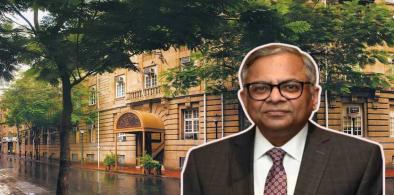
Ram Janmabhoomi Temple at Ayodhya

Ayodhya Temple Scandal in India Signals Systemic Decay

The scandal at Ayodhya is not a new low really. It is all too expected as the slippery slope of a journey focused only on the ends without caring for the means. The collapse at Ayodhya is thus a logical culmination of a system of leadership, governance and capture of power that believes in and lives by the edict that results matter and how we get to the results does not.

The Hidden Tax: Road Accidents Drain Over 3% of GDP From India and Sri Lanka Every Year; Generative AI Could Win it Back

The core data architecture — a national road safety data lake, AI-powered enforcement, multilingual public awareness — is replicable at any scale, in any South Asian language, in any South Asian urban or rural road environment. The technology does not need to be reinvented for Dhaka, Kathmandu or Karachi. It needs to be validated in Colombo and Delhi first.

India's Graduate Unemployment Crisis: Need to Redesign Degrees, Give Social Dignity to Trade Skills

The deeper problem is India’s graduate unemployment crisis. Millions of young graduates are not working, earning or acquiring experience, but preparing for competitive exams. The government job has become a lottery ticket; the coaching class has become a waiting room

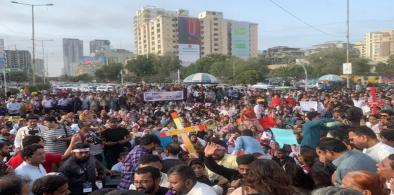
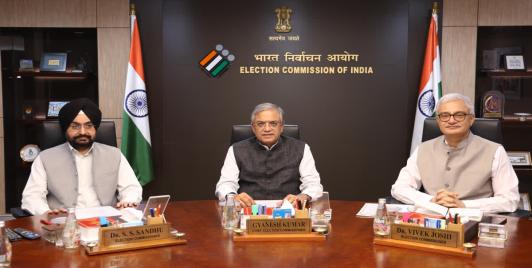
Electoral Revision and the Crisis of Citizenship in India: Democracy is Measured by its Protection of the Vulnerable, not by Exclusion

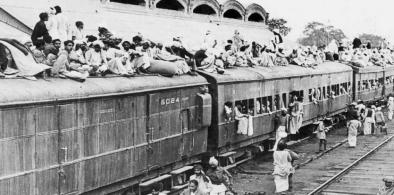
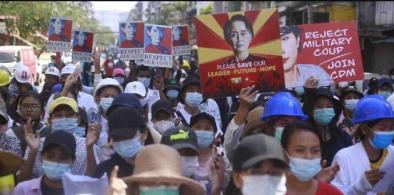
India is neither Nazi Germany nor Myanmar, and historical comparisons should never be employed simplistically. However, comparative political sociology reveals a recurring lesson: when citizenship becomes tied to ideological notions of national authenticity, minorities disproportionately bear the burden of proving belonging.

More on Public Policy and Governance

After giving a clean chit on human rights, US should lift sanctions against Bangladesh's RAB

Bangladesh still has a terrorism problem and cross-border drug cartels pose a significant threat to its national security. And the elite force remains one of the important agencies to curb terrorism and narcotics control. 

Need to understand the invisible economics of nature

The reason we are losing nature boils down, in my mind, to one basic problem: our inability to perceive the difference between public benefits and private profits.

Bangladesh has a resilient economy, will not collapse like Pakistan; is streets ahead of it in all-round development

Pakistan will never catch up with Bangladesh in the race for economic development. The GDP growth rate of Bangladesh increased gradually to 8.13 percent in the fiscal year 2018-19. In 2020-22, the impact of the novel coronavirus pandemic and the Russia-Ukraine war slowed down the growth rate of Bangladesh, but it was much higher than that of Pakistan and the growth rate is estimated to exceed 6.5 percent in the fiscal year 2022-23.

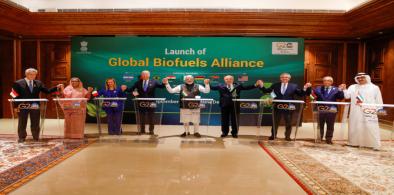
S. Jaishankar and George Soros: Politically at odds, but both speak up for the Global South

Another result of Jaishankar’s active advocacy for the Global South is the recently held “Voices of Global South Summit” which was hosted by India. Jaishankar led the summit with participation from 120 developing countries.

IMF‘a call to regulate cryptocurrencies a necessary step to ensure global financial stability

I believe that the increased regulation of cryptocurrencies is a necessary step to ensure the stability of the financial system and protect consumers, and can be achieved through collaboration between governments and industry participants.

A crying need for empathy and equity in India's education system

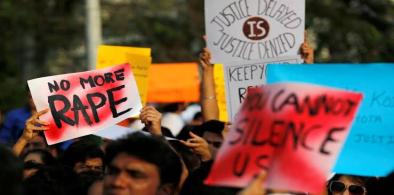
There is a culture that refuses to understand the pain of an entire class of population subjugated over the centuries, a harshness that translates in general to every other aspect of Indian life, superimposed on which is the ever-present threat of violence (State and non-State) that makes the claim of a nation that stands for non-violence hollow.

Giving poor easier access to welfare benefits: Need to develop citizen experience-focused policies

Across India, accessing the correct eligibility documents is many times harder for the poor than an average privileged caste and a class person. If we add complex digital interfaces for application to paperwork ordeal, then the experiences of the poor worsened. This burdensome citizen experience either dampens the confidence of citizens in welfare policy or reduces the net benefit access due to the cost borne by the citizen.

Elections in Meghalaya: A paragon of civility in India's coarse democratic politics

It was interesting to observe how focused party representatives and voters in this small northeastern state bordering Bangladesh were on basic development issues; and how vocal voters are in seeking their basic rights at the local level, perhaps showing what genuine grassroots democracy should reflect. 

Clean up the mess: A case for action in the Adani saga

The government has a choice it can sit back and do nothing, or it can choose swift regulatory action and full-fledged investigations into what has been alleged to be, in the words of Hindenburg Research, “the world’s 3rd richest man pulling the largest con in corporate history.”

Oil magnet to lead the global conference to phase out oil? UAE has a unique opportunity to show the way: An Indian perspective

Dr Al Jaber has been awarded the Champion of the Earth award from UNEP.  Indian Prime Minister Narendra Modi conferred on him a lifetime achievement award for his contributions to energy security, building bridges to emerging Asian economies, and reshaping traditional energy business models.

Lessons from the Adani stock crash: Indian regulator must restore faith in the market

No doubt that the Adani Group will do its utmost to bounce back, but regulators and policymakers must ensure that investors’ trust in the markets is not dented. India’s stock markets are world leaders in terms of technology and surveillance systems. The regulators and exchanges must match that in terms of excellent governance and strengthening the foundation of trust.

India adds its first tactical ballistic missile to its military arsenal

The newly developed missile, fired from a canister, can make precise manoeuvres before impacting a target.

Healing hands in a disaster: Poignant notes from flood-ravaged Sindh

Flash floods destroyed 70 per cent of the region’s standing summer crop. The stagnant flood water has derailed the planting of the next crop. For a population already tethering on the brink, this spells doom. I’m petrified of the famine looming on the horizon – something my friends at the #FixSindhDrainage Twitter Space have been communicating for the past three months.

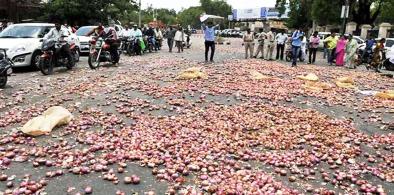
Who gained from India's ill-conceived demonetisation policy?

The net impact of the overall  Rs.32.12 lakh crore currency in circulation at present is that the benefit of demonetisation stands undone, resulting in a disturbing level of growth of a parallel economy and corruption in the country.

Has the RSS reshaped its agenda for the upcoming elections?

Why has the language of the RSS chief seemingly changed from his 2018 speeches at Vigyan Bhavan? There may be many reasons for Bhagwat to be more forthright than sugarcoating his agenda earlier. Many state elections are due in 2023 and general elections are due in 2024. The polarization around identity issues seems to be the main instrument in its hands.