

Representational Photo

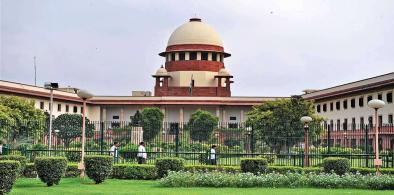
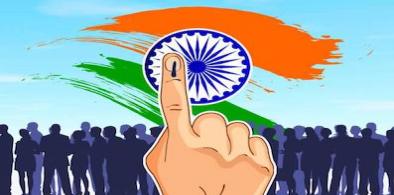
Voter Name Deletions, Denial of Voting Rights Blot on India's Elections

Only a peaceful, Gandhian ‘feet on the ground’ movement can save our 1950 compact. The values embedded in that 1950 compact: Liberty, Equality, Fraternity, Justice, Secularism, can be defended only by that. Each one of us must decide and work for rescuing the republic and the Idea of India. Keep in mind that everyone who lives in this land owns this country. It’s not owned by any one denomination, religion, caste, creed, region, colour, eating and dressing habits and traditions. It’s owned by everyone.

Jammu & Kashmir's Drug-Addiction Crisis is a Multidimensional Threat: Joint Civic and Institutional Campaign Against it has Generated a Sense of Shared Responsibility

A particularly noteworthy initiative has been the implementation of the Nasha Mukt Bharat Abhiyan (NMBA), the national de-addiction campaign. In Jammu and Kashmir, this national mission has gained remarkable traction. The recently conducted 100-day intensive campaign under NMBA has created widespread awareness and engagement across all districts. It has mobilized stakeholders from all sections of society, including educational institutions, law enforcement agencies, civil society groups, and community leaders.

Indian Elections: Big Changes and Some Bigger Questions

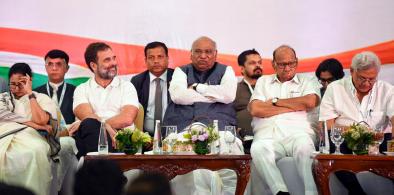
At the end of the day, this is a political battle that shows the BJP to be an unstoppable steamroller, now controlling power across the North, the West and the East. The Opposition parties, which have been unable to come together with a cogent way to stand up and fight the political fight for the long haul, will have to once again think of the road ahead. It is clear that the BJP of today will stop at nothing in doing the deals it needs to take power

A Thousand Splendid Wounds: Afghanistan through Hosseini’s prophecy

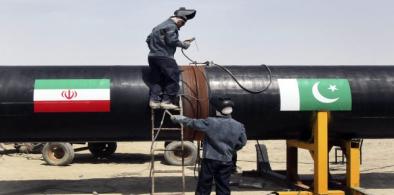
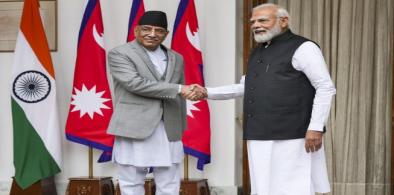
India's engagement with the Taliban is strategic as much as it is humanitarian, a counterweight to Pakistani influence, a gateway to Central Asian connectivity. And the Taliban's continued erasure of women and minorities sits as a profound moral contradiction at the heart of any diplomatic embrace.

More on Public Policy and Governance

Caught in a cleft stick: Congress' invite rejection reflects its dilemma over Hindu vote

It would seem as if the Congress Party were going for broke by rejecting the invitation quite aware that it is unlikely to win even the moderately right-leaning Hindu electorate, let alone the hard Hindu right, in the foreseeable future. 

Modi's Christian outreach: Wooing a marginalised community for electoral gains?

The anti-Christian violence is a low-radar activity where the priests working in remote areas are apprehended when they are conducting prayer meetings in particular.

To avoid climate catastrophe, developed nations need to acknowledge historical culpability

For nations like Bangladesh, it is an issue of concern since it will be difficult to successfully carry out national climate action plans for adaptation and mitigation in the absence of explicit financial commitments from wealthier nations. 

New criminal justice laws in India are repressive

What is perceptible is the government’s intention to destroy the fabric of human rights protection in India and to increase the power of the government to control and oppress the people of India.

IMF prescribed mantras not in Sri Lanka's interests

From Sri Lanka’s example of periodically falling into a BOP crisis, one might wonder if IMF-prescribed solutions (or terms and conditions attached to IMF funding) ever help small nations like Sri Lanka to achieve long-term BOP stability. 

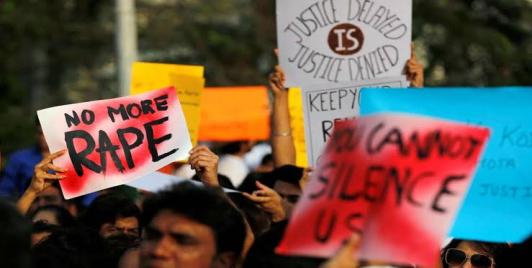
The flawed criminal justice system in India: Rape law reforms need political will to transform mindsets

The cavalier attitude and patronizing politics of a patriarchal society need to change to eliminate the social stigma of the victim in rape trials in India.

IAF set for critical replenishments to meet growing threats

Reportedly, a part of China’s dole to Pakistan in March 2022 was the multirole J-10C fighter jets which can be interconnected with their Chinese counterparts through the PLA air force's KJ-500 early warning aircraft.

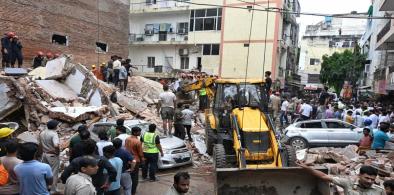
Avoiding Himalayan disasters: Need to heed geological warnings

A number of such disasters could have been avoided if local geology was understood or warnings from experts had been heeded

Crying for justice: Need for Indian government to make speedy justice delivery a mission

The time for half-hearted attempts, and/or conventional methods, has gone by when it comes to delivering justice in India.

Bangladesh Army's stellar role in bringing peace and development to CHT

Local sources claim that multiple tribal terrorist groups are holding hundreds of thousands of people in the Chittagong Hill Tracts as hostages. These groups are active in controlling and influencing their areas through various sabotage and terrorist activities, extortion, kidnapping for ransom, attacks, and counter-attacks.

India celebrates Navy Day commemorating its operational power and maritime history

Indian Navy celebrates Navy Day on 4 December to commemorate "Operation Trident", the Navy’s lethal attack on Karachi harbour during the 1971 war.

COP28 commitments: Need for India to go beyond lip service and gimmicks

The pollution severely affecting the health of the population is of no consequence to India's politicians. It is high time our policymakers look at themselves in the mirror.

Roots of terrorism: Wrong to blame it on a religion

In recent years, a central phenomenon that spurred the rise of terrorist groups has been the United States cultivating fundamentalist Islamist groups through the CIA in client states such as Pakistan. 

Underwater Domain Awareness (UDA) framework needs incorporation in India's Blue Economy vision

The Ministry of External Affairs (MEA) is working towards making the UDA framework an agenda for the multilateral forums in the IOR. 

Free food and election promises: Why India's food security system needs an overhaul

The Niti Aayog estimates using a multi-dimensional approach, that poverty has fallen below 15 percent. Why then are 58 percent of Indians getting free food? Or even if their food security needs have to be addressed, would this be better served by direct benefit transfers?