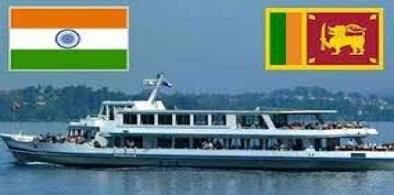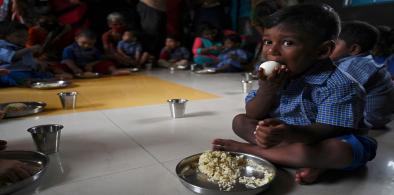
Herman Kumara, the national convener of the National Fisheries Solidarity Organization (NAFSO) in Sri Lanka, strongly opposes the practice of keeping arrested fishermen in jail even after their punishment has been served.
At its heart, the challenge to Section 62(5) is a test of constitutional sincerity, of whether the Indian Republic truly believes that citizenship endures even behind bars. Enacted in the infancy of the republic, the provision has long outlived its moral logic. It collapses the distinction between confinement and culpability
To its credit, the new state government’s policy declaration recognised this reality. It emphasised skill development, industry-linked learning and stronger connections between educational institutions and emerging sectors of the economy. Whether those aspirations translate into measurable reform remains to be seen.
Apart from risks related to the integrity of the process, the SIR process also turns what is celebrated as the festival of Indian democracy into a nightmare for the excluded. It can create divisions and split neighbourhoods, particularly when the numbers are large and hotly contested, as they have been in the most recent example in the state of West Bengal.
The rise of the Cockroach Janata Party may ultimately fade as quickly as it appeared. Most internet movements do. But the frustrations driving it are real and unlikely to disappear soon. Millions of young Indians feel politically unheard and economically cornered. Increasingly, they are expressing that frustration not through traditional political participation, but through irony, parody and nihilistic humour.
Herman Kumara, the national convener of the National Fisheries Solidarity Organization (NAFSO) in Sri Lanka, strongly opposes the practice of keeping arrested fishermen in jail even after their punishment has been served.
Today, what is needed is a genuine assessment of the population of different marginalized sections and to modify the country's policies so that the uneven growth of society is brought on the path of equality. The deaths of the likes of Rohith Vemula and Darshan Solanki should awaken India to the need to combat the biases constructed against the socially marginalized sections and strive for a future where ‘annihilation of caste’ is the central credo of our society.
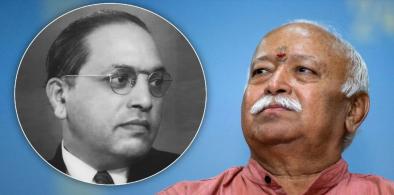
This is surely not the first or the last of the fake encounters (extra-judicial killing) in our country. Are people, including the police, losing faith in constitutional methods so earnestly championed by Dr. Ambedkar? What would he have said, had he been alive today?
Four years after the passage of the law, the promised Arbitration Council of India to authorise and regulate arbitration institutions has yet to be operationalised. Save for a small number of arbitration institutions established and funded by well-known law firms, some state governments do not support professionally established arbitration institutions.
This transit agreement will pave the way for energy imports from Bhutan. A Free Trade Agreement (FTA) was signed between the two countries in 2009. After last month's agreement, the FTA will gain momentum. The agreement will enable Bhutan to use Bangladesh's air, railways, river ports, land and sea ports since Bhutan is a landlocked country and has no river or sea ports of its own.
India, Pakistan, Nepal, and the Maldives are the four countries from South Asia among 120 countries at this year's Democracy Summit. Bangladesh, Sri Lanka, and Afghanistan were not invited, but Pakistan, one of the most authoritarian and corrupt countries in South Asia with scant respect for human rights, was invited.
India has some deep soul-searching to do as we explore the question: Are we truly a democratic nation? Or is democracy the story we sell to ourselves and the world when the nation and its people know that we are not what we think or claim to be?
Bangladesh still has a terrorism problem and cross-border drug cartels pose a significant threat to its national security. And the elite force remains one of the important agencies to curb terrorism and narcotics control.
The reason we are losing nature boils down, in my mind, to one basic problem: our inability to perceive the difference between public benefits and private profits.
Pakistan will never catch up with Bangladesh in the race for economic development. The GDP growth rate of Bangladesh increased gradually to 8.13 percent in the fiscal year 2018-19. In 2020-22, the impact of the novel coronavirus pandemic and the Russia-Ukraine war slowed down the growth rate of Bangladesh, but it was much higher than that of Pakistan and the growth rate is estimated to exceed 6.5 percent in the fiscal year 2022-23.
Another result of Jaishankar’s active advocacy for the Global South is the recently held “Voices of Global South Summit” which was hosted by India. Jaishankar led the summit with participation from 120 developing countries.
I believe that the increased regulation of cryptocurrencies is a necessary step to ensure the stability of the financial system and protect consumers, and can be achieved through collaboration between governments and industry participants.
There is a culture that refuses to understand the pain of an entire class of population subjugated over the centuries, a harshness that translates in general to every other aspect of Indian life, superimposed on which is the ever-present threat of violence (State and non-State) that makes the claim of a nation that stands for non-violence hollow.
Across India, accessing the correct eligibility documents is many times harder for the poor than an average privileged caste and a class person. If we add complex digital interfaces for application to paperwork ordeal, then the experiences of the poor worsened. This burdensome citizen experience either dampens the confidence of citizens in welfare policy or reduces the net benefit access due to the cost borne by the citizen.
It was interesting to observe how focused party representatives and voters in this small northeastern state bordering Bangladesh were on basic development issues; and how vocal voters are in seeking their basic rights at the local level, perhaps showing what genuine grassroots democracy should reflect.