Being oblivious to the history and traditions of Afghanistan, misreading the local culture, or a sickening obsession with 'Islamic terrorism' has always clouded the reality for the West, writes Anondeeta Chakraborty for South Asia Monitor


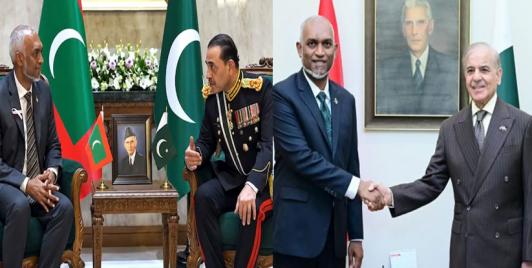
The Maldives, like other small states, has an interest in diversifying its international partnerships, widening its economic choices and retaining room for diplomatic manoeuvre. Engagement with Pakistan does not necessarily come at India's expense
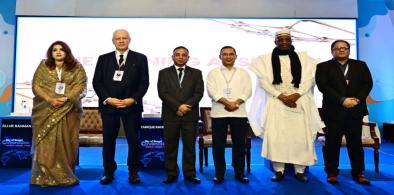
Three days of dialogue, debate, and engagement in Dhaka reinforced a sobering reality: despite ongoing discussions about multipolarity, middle powers, and strategic autonomy, great powers continue to shape the choices available to smaller states.
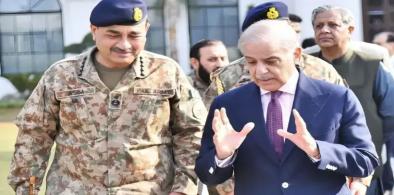
It would be simplistic to assume that every retired general appointed as an ambassador is an instrument of Asim Munir's influence. It would be equally complacent to dismiss the wider institutional implications of placing so many former military officers in diplomatic positions across several regions.

Arunachal Pradesh presents a particularly important dimension of the problem. China claims the northeast Indian state, refers to it as Zangnan, or South Tibet, and periodically challenges India's sovereignty through statements and the assignment of Chinese names to places within the state.
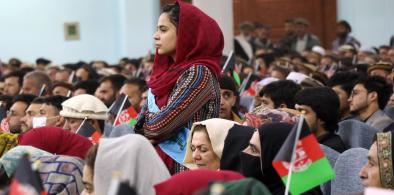
Being oblivious to the history and traditions of Afghanistan, misreading the local culture, or a sickening obsession with 'Islamic terrorism' has always clouded the reality for the West, writes Anondeeta Chakraborty for South Asia Monitor
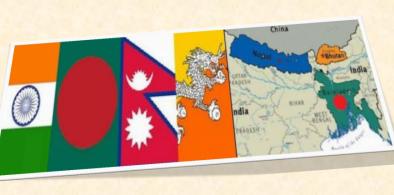
The Bangladesh-Bhutan-India-Nepal (BBIN) sub-regional group has the potential to multiply the prosperity of its members, writes Amb. Sarvajit Chakravarti (retd) for South Asia Monitor
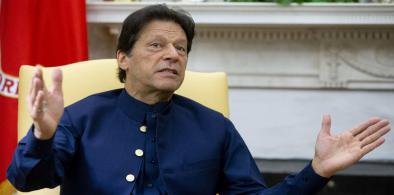
Pakistani analysts say the civil-military 'hybrid arrangement' has been severely dented and mutual mistrust has set in, writes Mahendra Ved for South Asia Monitor

A potent Western Leg of Quad in partnerships with Russia, France, Japan and possibly Oman, South Africa, Indonesia and Singapore remains a must to craft, writes Lt Gen Yash Malhotra (retd) for South Asia Monitor
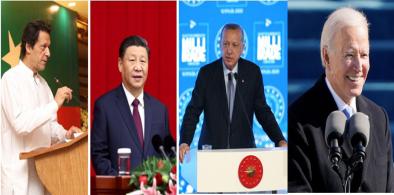
A US drone base in Pakistan will adversely affect Pakistan-China relations; it will arouse Taliban anger with whom Islamabad is negotiating to curb the Tehrik-i-Taliban Pakistan (TTP), writes Lt Gen P. C. Katoch (retd) for South Asia Monitor
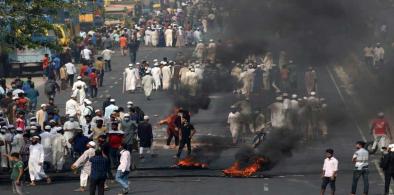
Attacks on Hindu localities and places of worship, like temples and Durga Puja mandaps, are aimed at terrorizing Hindus so that they don't assert politically, stay away from voting and even vote against Awami League in frustration at lack of protection, writes Subir Bhaumik for South Asia Monitor
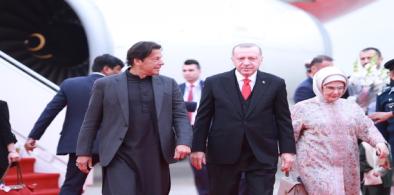
The Turkish actors are immensely popular in Pakistan, even as the women actors, glamorous and without any veils, even sporting swimwear in real lives, have drawn criticism from the Pakistani conservatives, writes Mahendra Ved for South Asia Monitor
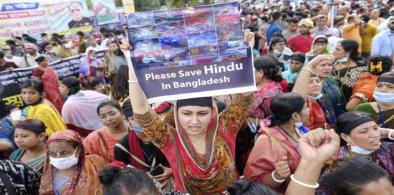
While the ruling Awami League remains committed to protecting the minorities, the administration has been often unable to prevent Islamist rampages, writes Tapas Das for South Asia Monitor

Instead of following the unsustainable growth example of the US and China, which is based on extreme greed and a very materialistic outlook, we should give the world a new direction of development where high technology is guided by spirituality, writes Anil K. Rajvanshi for South Asia Monitor
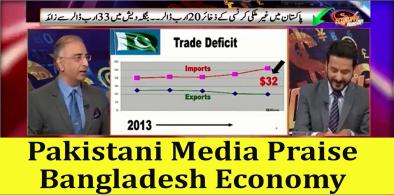
Had it not been exploited by Pakistan economically for 24 years (1947-71), Bangladesh would have gone further ahead, writes Pathik Hasan for South Asia Monitor
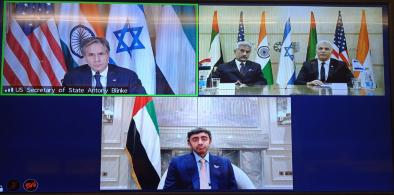
In a cooperative set-up of the four nations focused on the Middle East, UAE has the capital, Israel and the US the technology edge and India the manufacturing and execution capability, writes Arul Louis for South Asia Monitor
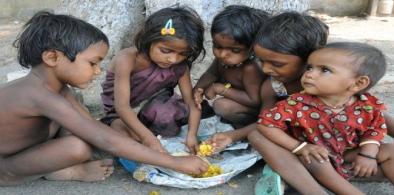
The GHI ranking given to India is certainly a wake-up call for the country, writes Partha Pratim Mitra for South Asia Monitor
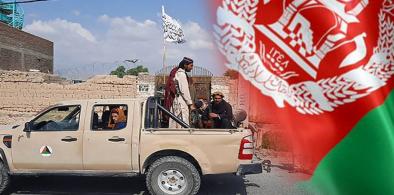
Pakistan has shifted anti-India terrorist camps into Afghanistan and there is evidence of the Taliban allowing Harkat-ul Ansar (HuA) to push terrorists from Afghanistan into Kashmir, writes Lt Gen P. C. Katoch (retd) for South Asia Monitor
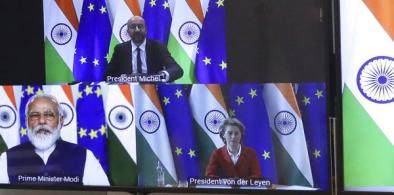
The new strategy is a most welcome development for India, which had been juggling its national security interests in this vast and volatile region with support, as usual, from France, writes Amb. Bhaswati Mukherjee (retd) for South Asia Monitor
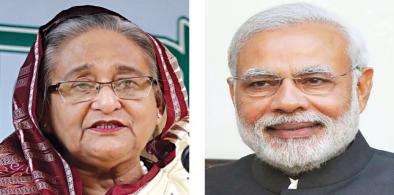
In this 50th year of Bangladesh’s liberation, need India remind them that in 1971 it sheltered over 10 million Bangladeshi refugees without a whimper, with hardly any foreign aid, and that all Indians kept paying for decades afterward to defray the cost to the nation?, writes Amb. Sarvajit Chakravarti (retd) for South Asia Monitor