
The Killer Squadron traces its genesis to the 1971 war when it took part in operations that enabled the Indian Navy to dominate the Arabian Sea, crippling the Pakistan Navy, writes Col Anil Bhat (retd) for South Asia Monitor
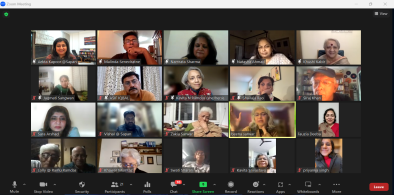
Moderator Khushi Kabir repeatedly situated Nepal’s uprising within a broader South Asian context, drawing parallels with recent mass movements in Sri Lanka and Bangladesh. She described Nepal’s experience as part of a regional reckoning driven by youth demanding accountability, dignity, and meaningful participation in governance.
With PNS Khaibar's delivery Pakistan and Türkiye are taking their relationship to a new level which is not limited to traditional political friendship. At the handover ceremony, Erdoğan described the relationship between the countries as "brotherly ties" and emphasised the need to further collaborate in defence production. The naval leadership of Pakistan also pointed to the fact that the partnership should benefit Pakistan in achieving its overall maritime modernisation.
What is unfolding in Bangladesh bears unsettling resemblance to trajectories seen in Pakistan and Afghanistan, where false blasphemy accusations have long been used to terrorize minorities and silence dissent. Once such violence is tolerated, it expands - devouring journalists, artists, reformist Muslims, and eventually the state itself.
The current strains in Bangladesh–India relations should therefore be seen not as an inevitable deterioration, but as a test of diplomatic maturity. Bangladesh and India share more than geography and history; they share a responsibility to ensure that temporary political frictions do not harden into structural mistrust. In a time of regional uncertainty, neither country benefits from a relationship defined by grievance or miscommunication.
The Killer Squadron traces its genesis to the 1971 war when it took part in operations that enabled the Indian Navy to dominate the Arabian Sea, crippling the Pakistan Navy, writes Col Anil Bhat (retd) for South Asia Monitor
India, as also Eurasia – Russia and the Central Asian Republics (CARs) - have a common adversary in terrorism and need to make it a common goal to work on, writes Mahendra Ved for South Asia Monitor
How does India compare with the South Asian neighbourhood? The World Inequality Lab database indicates that regional disparities are less than India’s, writes N. Chandra Mohan for South Asia Monitor
With some 600 million Indians facing high to extreme water stress, ‘games’ offer vital insights for expanding self-governance to help people manage water more sustainably, write Ruth Meinzen-Dick and Pratiti Priyadarshini for South Asia Monitor
The two countries’ leaders have brought Delhi and Dhaka closer and can together bring economic prosperity to South Asia, writes Pathik Hasan for South Asia Monitor
The foremost geostrategic challenge for India vis-à-vis Bangladesh is to counter the machinations of the China-Pakistan axis, writes Amb Pinak Ranjan Chakravarty (retd) for South Asia Monitor
As a result of the Nixon-Kissinger folly that made it an accomplice of the Pakistani crimes in Bangladesh, Washington is now facing a formidable rival in China, writes Arul Louis for South Asia Monitor
The movement in Gwadar under the leadership of Maulana Hidayat Ur Rehman Baloch has attracted a massive number of people across Balochistan, especially from the Mekran region, writes Nizam Hassan for South Asia Monitor
The development of tribal people in the Chittagong Hill Tracts is much better than any remote region of Bangladesh, writes Hafizur Talukdar for South Asia Monitor
This is the story of Ganpat Singh from Pakistan’s Sodha Rajput community. Like him, each member of this half a million strong community has matrimonial linkages across the border in Rajasthan, India, writes Beena Sarwar for South Asia Monitor
The Taliban will soon face internal strife; the Haqqani network and extremist and fanatical factions will revolt against the moderates, splitting the Afghan nationalist struggle, writes Dr Ruhollah Eslami for South Asia Monitor
A stronger relationship with India is undeniably in Australia’s – and Western Australia’s – interest, writes Andrew Hunter for South Asia Monitor
Bhutan contributes little or zero to the climate crisis. Yet, it has not been justly rewarded for its noble and invaluable sacrifices, writes Rinchen Kinzang for South Asia Monitor
India and Bangladesh can show the world how neighbouring countries can become all-weather friends, writes Jubeda Chowdhury for South Asia Monitor
The repeal of the farm bill stretches the plight of poor farmers and hurts the potential growth of food processing in the country, writes S. Majumder for South Asia Monitor