There are any number of disasters happening in India, with the sad conclusion that the elected representatives of the people are failing in their duties and remain indifferent to pressing local issues and the needs and grievances of the people.


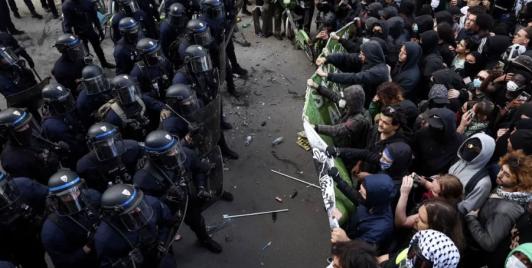
Southern Europe shows that mobilisation can reshape political agendas while leaving difficult economic questions unresolved. South Asia shows that a narrow grievance can become a challenge to the legitimacy of a governing system when trust has already been eroded. The real test of governance is whether institutions learn between storms—before the next generation concludes that the street is the only place where its voice can be heard.
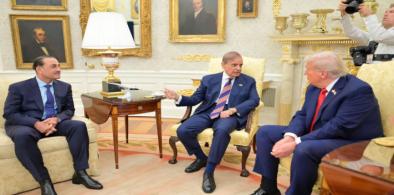
At independence, Pakistan's economy was competitive with India's. Today India's is more than ten times larger, and Pakistan is on roughly its 25th IMF program. Investors rarely abandon a country simply because it is poor. They leave when they cannot tell who actually decides.
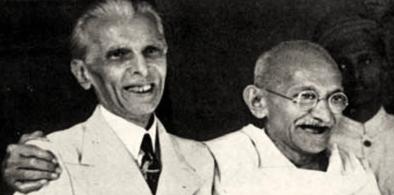
The young need not become another opposition. They could become an independent democratic force that questions every government but belongs to none; that protests when necessary but constructs continuously; that demands accountability from institutions while practising accountability itself.
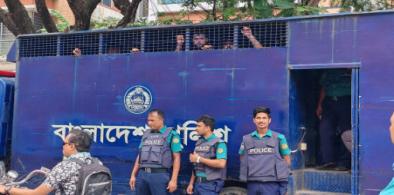
To what extent has the current BNP government been able to realise the vision that drove the 2024 mass uprising in Bangladesh? Will the BNP government, too, manipulate state mechanisms and law enforcement agencies to serve its own interests, much like the previous Sheikh Hasina regime, to suppress the opposition and silence critics? The government must therefore take serious steps to amend police laws and prevent deaths in police custody. This is one of the crucial reforms facing the administration.
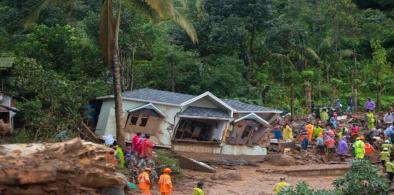
There are any number of disasters happening in India, with the sad conclusion that the elected representatives of the people are failing in their duties and remain indifferent to pressing local issues and the needs and grievances of the people.

Such behavior from the Pakistani State is a concern for the future of Balochistan. Pakistan needs to thoroughly review its policies in Balochistan; otherwise, it may not be long before another Bangladesh is born.
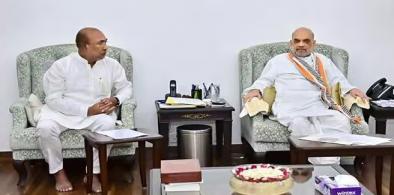
The rise of ethnic violence in Manipur has had a devastating impact on the state. Thousands of people have been killed and displaced from their homes. The violence has also crippled the economy and disrupted the development of the state.
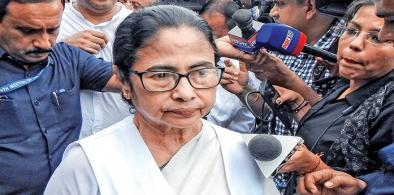
The government’s answer is to keep the pot boiling as it lives a Rip Van Winkle story – almost as if it slept through the election results and now wants to live an old reality in a new world.
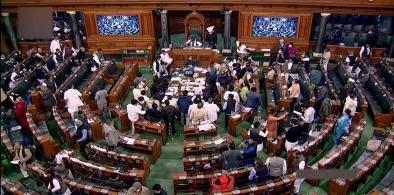
The proceedings of the recent parliamentary session create doubts as to whether our MPs are capable of setting up such standards. By their behavior as seen currently, they are setting up a very bad example for the younger generation and are doing great harm to the fiber and fabric of a resurgent India.
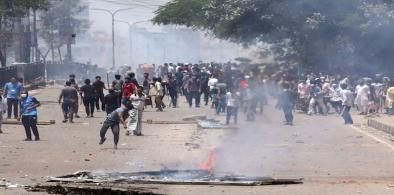
There should also be no doubt that these protests are being fueled by China and Pakistan to depose the pro-India Sheikh Hasina Government and install a pro-Islamist anti-India government like the erstwhile BNP-led government in Bangladesh.

The reality is that communal politics of the kind played by the BJP, led by Prime Minister Modi, has stopped paying dividends of the kind that it once did.

As the world watches the unfolding drama in the United States, the implications for South Asia, particularly India, Pakistan, and China, are profound
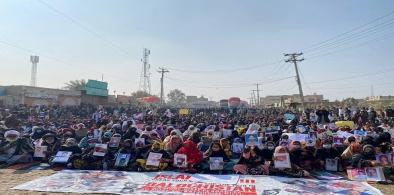
The Baloch resistance movement faces an unprecedented threat in the form of deepfakes and propaganda propelled by 5GW tactics. The strategy aims to destabilize and discredit the movement, paving the way for a tightened grip on the region.

This need got a number of us doctors working in different parts of India to come together as a group. We post our questions in the group, or call up an expert for guidance: How do you manage fluctuating blood sugar in a young woman with diabetes? How do you treat malaria in a pregnant woman? We meet online once a week - to share new knowledge, case studies, and also ask questions.

The US needs to acknowledge that it needs India more than the vice versa. It would be good for the Biden Administration to get off the high horse and not issue “warnings” that can adversely impact the existing bilateral relationship.
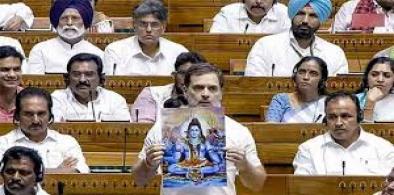
While leaders like Mahatma Gandhi to Rahul Gandhi have expounded on the humane aspect of Hinduism, the Hindutva fraternity are seen by its critics to have treaded the path of hate and violence.

There is always resistance to any change and in a democracy with free media and freedom of expression, varied views on all matters are only to be expected and welcome. In this fast-developing world, an army can’t be static - or traditional - and frozen in an era of the past.

Babar Ali, a senior TTP commander, says, “Entire country (Pakistan) is now under our control; we are present in every corner of Pakistan.” Some 200 TTP fighters are located close to Pakistan’s largest nuclear facility in Dera Ghazi Khan in Pakistan’s Punjab

As the world turns more careful and looks to build with caution and care, the Indian State is going berserk in multiple directions with the goal of showing its strength outside India while ordinary Indians are getting the rough end.