


Eighteen Inches Apart

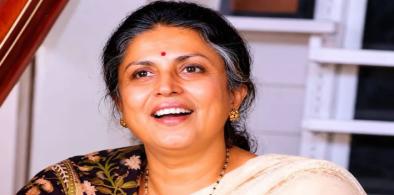
In the Quiet Spaces Between Strangers, Sonia Bahl’s Eighteen Inches Apart

And perhaps this is precisely what many readers, particularly South Asian readers navigating fractured contemporary lives, have been missing without fully realising it: fiction willing to slow down long enough to notice the fragile, passing intimacies through which people continue surviving one another.

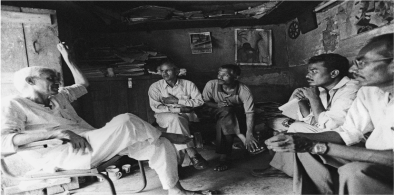
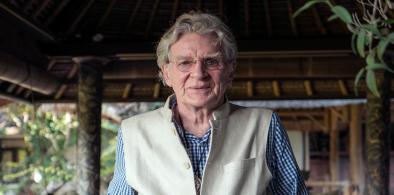
Robert A.F. Thurman, an academic with a Buddhist monk’s soul

Thurman said that Tibet was not an individual nation-state question but something that goes far beyond that. “It is not about a people yearning for freedom from an invading state. It is about a very valuable society struggling to keep its centuries-old tradition of intellectual evolution alive.” He said that while he was hopeful that the problem would be resolved soon, “and during His Holiness’ lifetime,” it was hard to put a timeframe to it.

A White Strip Exposes New Political Faultlines in Cosmopolitan Mumbai

The perceived push from a political leadership that has roots in Gujarat, the split in the locally rooted Shiv Sena that was engineered, the resentment it brewed among ordinary citizens and the history of Maharashtra -- which was born on May 1, 1960 after a bitter struggle that split the erstwhile Bombay State into two distinct linguistic states of Maharashtra and Gujarat -- are all complex and contributory factors to the evolving political unrest in middle-class Mumbai. 

Patriotism not About Hating Another Country: South Asia's Shared Inheritance Deserves a Future Beyond Perpetual Hostility

I claim Tagore and Iqbal. I claim the music of Lata Mangeshkar and Mehdi Hassan.I claim the shared cultural inheritance of South Asia in all its richness and contradictions. History divided states. It could not divide memory. The food we eat, the stories we tell, the languages we speak, and the melodies that move us still carry echoes of a shared past.

More on Culture and Society

Vision of Shared Humanity: Path of Dharma For Peaceful and Purposeful Living in an Interconnected World

It does not ask anyone to abandon their religion. A Christian, Muslim, Hindu, Buddhist, Sikh, Jew, or secular humanist can walk the path of Dharma without contradiction. Dharma is not a replacement for religion. It is a shared ethical foundation beneath all religions — the ground on which they all, at their best, already stand.

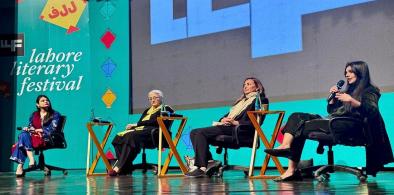
Pakistan's Literary Festivals Inject Oxygen into Constrained Intellectual Spaces, but Cross-Border Exchanges Remain Frozen

Inspired by the Jaipur Lit Fest, Pakistan’s first literary festival took place in the country’s largest city Karachi in 2010. Subsequently replicated in Lahore and Islamabad, such festivals now take place around the country, from the agricultural and industrial hub of Faisalabad, formerly Lyallpur, to the port city of Gwadar on the Balochistan coast. 

An Unending Struggle for Justice: A Rare Insight into the Everyday Lives of Migrant Workers in India

While the overall picture is depressing, Ramaswami also describes hopeful strands within the social fabric of workers’ lives such as the mutual support and 'bhaichara' (fellowship) between men across ethnic, religious and caste boundaries that become more fluid within the city. The inter-religious and inter-caste ties forged between workers can be seen as small glimmers of hope in the context of the rising tide of Hindutva politics over the past decades. 

Suman Kalyanpur: A Silken Echo Falls Silent

Today, as we bid farewell to the Dhaka-born singer once fondly called the “Dhake ki malmal,” one is reminded that the softest fabrics often endure the longest. Her voice was just that. Fine, delicate, yet enduring beyond time. And now, as that voice falls silent, it leaves behind not an emptiness, but an echo. An echo that will continue to drift through radio waves, old recordings and the private corners of memory. 

Aurat March is About Women's Identity: Movement for Gender Justice in Pakistan and Across the Region

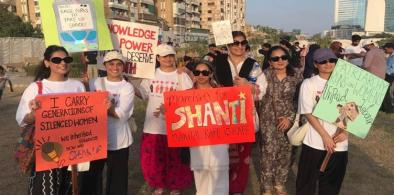
Two girls stood silently holding a placard that read: ‘Forcing your daughter to get married is forcing her to get raped.’ The message speaks to a reality across the South Asian region where the priority for most families is to get their daughters married. On a sheet where attendees were penning messages to their mothers -- words they could not say aloud -- an anonymous note read: “Would you rather see me married or alive?”

Homage to an Iconic Ray Film Whose Popularity Spans Generations and Cultures

The result was a phenomenal script with a stellar cast and a music which not only took the storyline ahead but also paused to reflect upon each moment. Satyajit’s rendition of the story has several of his beliefs reflected, including his anti-war stance, his love for performative arts, including various forms of classical dance, his love for history and regional history, amidst others, his stance against caste and class discrimination and oppression of the poor and the tyranny and subjugation of the ruling class

How a Russian-Jewish Bride Internalised Santiniketan: Arc of a Family History Book-Ended by the Russian Revolution and Indian Independence Across Three Generations and Three Continents

It is a neat division and the first part of 70 pages is the Kotia-Ketaki memoir.  In the second section, Chandana picks up the narrative  and weaves the micro family history of the Jonas family with the macro events of the late 19th century and her grandmother's  journey that brought her to Santiniketan  in the 20th century.
 

A Scientist’s Rebuttal to the "Hellhole" Rhetoric: Why the West Misjudges Global Happiness

The rhetoric targeting these nations ignores the fact that they steer the very firms—Google, Microsoft, Adobe—that sustain Western dominance. This wasn't "loophole" migration. It was strategic resource acquisition. During the Y2K crisis, the U.S. was desperate for Indian talent to prevent a digital infrastructure collapse. 

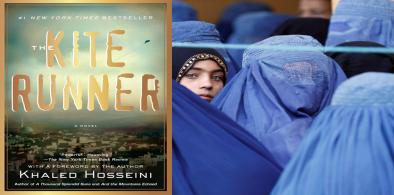
A Thousand Splendid Wounds: Afghanistan through Hosseini’s prophecy

India's engagement with the Taliban is strategic as much as it is humanitarian, a counterweight to Pakistani influence, a gateway to Central Asian connectivity. And the Taliban's continued erasure of women and minorities sits as a profound moral contradiction at the heart of any diplomatic embrace.

The ‘Pinny’ and the Past: A Bengali Summer Dress That Carries History in Its Threads

Today, the tape-jama survives on the margins of a rapidly changing marketplace. It is still found in local bazaars, though no longer a default festive purchase for children. Yet its significance lies beyond its material presence. The garment endures as a symbol of memory—of simpler times, of long summer afternoons, and of a cultural ethos shaped by resourcefulness and tradition. Its soft cotton folds carry stories of Bengal’s textile heritage, its artisanal practices, and its ability to absorb and reinterpret external influences. In doing so, the pinny becomes more than a childhood dress—it is a living archive of history and identity.

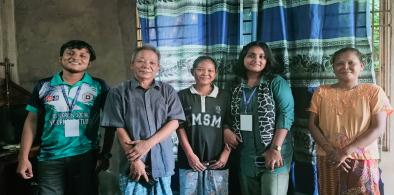
When a Language Dies: The Struggle for Cultural Survival of Bangladesh’s Lushai Community

According to the latest (2024) survey by the International Mother Language Institute, 45 languages have been identified as existing now in Bangladesh out of which there are 11 indigenous languages including Lushai (Mizo)—that have become critically endangered. Based on UNESCO data, a handful of languages which have made it to the endangered list in Bangladesh are in such a forlorn state that only 5-12 older folks from respective communities can still converse in them.

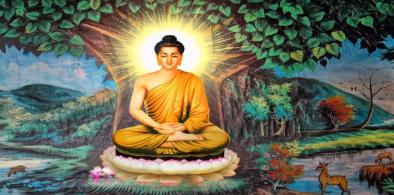
The Buddha Aimed for a Harmonious Society: India's Constitutional Values Were Inspired by His Teachings

Through his principles of love and compassion (karuna), Buddha aimed for a harmonious society free from caste, racism, and injustice. The Sangha he established is not just a community of monks but spiritual fraternity, which emphasizes collective unity, social cohesion and shared ethical living. 

Marvels of a Self-Healing Body: Restoring the Equilibrium


Biological sciences tell us that body heals itself to return to homeostatic (state of balance) condition. It says that all the systems in the body are in equilibrium and whenever they go out of balance the healing process starts to bring. it back. This has been the basis of how Chinese and Ayurvedic system of medicines work

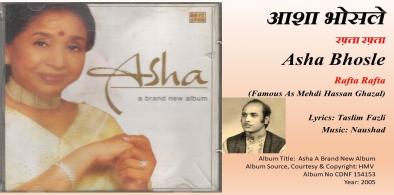
Asha Bhosle: A Shared Legacy Across Borders

Asha leaves behind a legacy that is as much ours as it is India’s. The phrase “Nightingale of Asia” was coined for Lata, In Pakistan, we always had a prefix for Asha: “Hamari Nightingale.” Our nightingale. In her passing, Pakistan has lost a friend, a teacher, and a voice that made the world feel a little less divided.

End of an Era in Playback Singing in Indian Cinema

The global music industry, where millions of songs are sung, and billions are spent and earned, is a larger story. But the duo’s role as singers remains iconic in India, and perhaps South Asia, where numerous others have come, stayed to make music,  and gone.