The participation of Indo-Pacific partners in the NATO summit epitomizes the breaking of traditional geopolitical barriers, ushering in what is often referred to as "the new geometry" of international relations.
It also demonstrated that the EU increasingly sees India as a strategic alternative to excessive dependence on China and India increasingly sees the EU as an important technology and investment partner amid a more fragmented global trading system.
India's energy profile has changed significantly over the past decade. Crude imports from Russia, increased purchases from the United States, Brazil, Angola and other suppliers, together with expanding strategic petroleum reserves, have reduced dependence on any single source. India's energy vulnerability has not disappeared, but it has become more diversified.
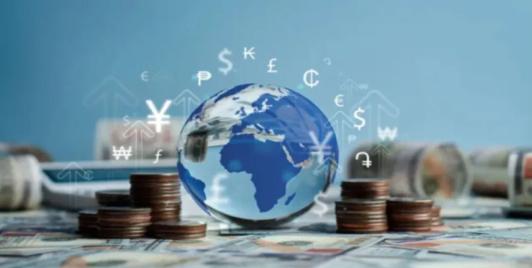
As South Asia seeks to become one of the principal engines of global growth in the twenty-first century, velocity may emerge as one of the most important indicators of economic vitality. The countries that prosper most will not necessarily be those that create the most money, but those that use it most effectively.
If the twentieth century was shaped by the Atlantic and the early twenty-first century witnessed the rise of the Pacific, the coming decades may well belong to the Bay of Bengal. The foundations of that future will not be built solely through trade agreements or infrastructure projects. They will emerge from a shared commitment to connectivity, cooperation and civilisational understanding.
The participation of Indo-Pacific partners in the NATO summit epitomizes the breaking of traditional geopolitical barriers, ushering in what is often referred to as "the new geometry" of international relations.
India introduced the Agnipath system of recruitment in its military, denying regular recruitment to thousands of Nepalese Gurkhas into the Indian Army, not only aggravating unemployment in Nepal, but more importantly, shattering the strong bond between the Indian and Nepalese armies.
From the Indian standpoint Prime Minister Modi may like to keep the Tibetan issue on the foreign policy agenda of his third term while dealing with a recalcitrant China. Its particular reference to the Tibetan issue remaining unresolved in accordance with international law may provide some opening to New Delhi to work on given the historical sensitivities of India's border dispute with China.
If NDA 3.0 wanted to show assertiveness to China, why were representatives of the Central Tibet Administration not invited for the osth-taking ceremony at Rashtrapati Bhavan on June 9, as they were invited in 2014 for the swearing-in of the then new NDA government.
New power tools being used by China to expand regional dominance have heightened regional security dilemmas and sparked arms races. They have also caused systemic wariness among nations of the Indo-Pacific who will long for the status quo of a stable rules-based order.
The potential implications of recent protests in New Caledonia are best understood in the context of a broader framework of China’s increasing presence in the South Pacific island countries.
This new bloc is vital for both the US and regional players, especially the Philippines which is not part of the original Quad. For Australia and Japan, this new partnership represents a more focused security arrangement with greater on-the-ground ease of conducting military activities as compared to the more bureaucratic Quad.
Bangladesh must exercise caution when considering the adoption of the Indo-Pacific Strategy advocated by the US and its regional allies. This move could potentially strain Bangladesh's friendship with China.
Over half of these 'research vessels' operated in the South China Sea, but their growing presence in the Indian Ocean has stirred regional tensions and is a matter of growing concern to India.
While most of the attention to keeping the Indo-Pacific region free and open has been focused on strategic issues, Venkataraman emphasized the critical role of the IPEF in boosting regional economic ties.
India has signed a $375 million contract with the Philippines for three batteries of BrahMos supersonic cruise missiles, among the most advanced in the world. This will be seen by Beijing as a direct threat to its interests in the South China Sea.
“We are all fighting a global war against our common enemy, which is the climate crisis,” said Dr Rajendra Shende
China used both the ASEAN FTA and RCEP tariff concessions to enter the ASEAN market to make it a potential platform for sneaking into the Indian market through the ASEAN–India FTA.
Sri Lanka is also allowing Chinese research vessels in its ports. China has big plans for the region, not just spy ships.
India’s inevitable regional and global leadership provides a welcome new opening for the country and the region in their security calculations. It remains the region’s most important Asian partner in providing the economic and security fallback that is based on values, trust and proven expectations.