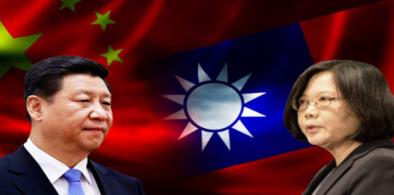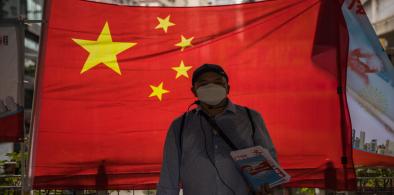

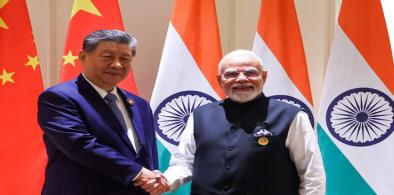
The punitive mood against Chinese firms is not reflected in a diminishing dependence on Chinese goods on the trade front or telecom technology. The dragon remains one of our largest trade partners, writes N. Chandra Mohan for South Asia Monitor
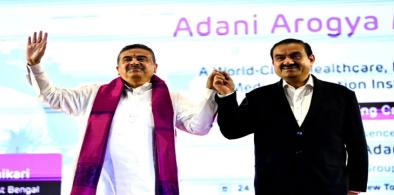
West Bengal has the resources, talent, culture, and strategic location necessary to become one of India’s most prosperous states. By combining efficient governance, investment-friendly policies, infrastructure development, education, innovation, trade expansion, tourism growth, environmental sustainability, and social inclusion, the state can achieve rapid economic transformation and substantially raise incomes, employment, and overall quality of life.
India possesses immense talent, entrepreneurial capacity, and a large domestic market, yet it still lacks sufficient depth in high-end manufacturing, research and development, semiconductor ecosystems, advanced engineering, and globally dominant product companies.
One of the most striking features of South Asian trade is how little the region trades internally. Intra-regional trade within South Asia remains among the lowest in the world relative to geographic proximity. Political tensions — especially between India and Pakistan — have prevented the emergence of a deeply integrated regional production system comparable to ASEAN or the European Union. This is a major missed opportunity.
Scarcity of cooking fuel is pushing people, particularly across South Asia, toward hunger. Livelihoods have been lost among the large unorganised labour force while thousands of self-employed street vendors, smaller restaurants and eateries are being forced to close shop, facing a scary, insecure future. For middle class households across India, everyday snacks like the samosa or dosa have become scarce because of shortage and high prices of cooking gas cylinders.
The punitive mood against Chinese firms is not reflected in a diminishing dependence on Chinese goods on the trade front or telecom technology. The dragon remains one of our largest trade partners, writes N. Chandra Mohan for South Asia Monitor
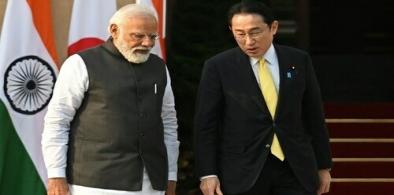
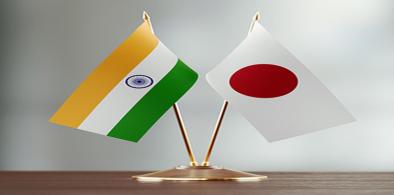
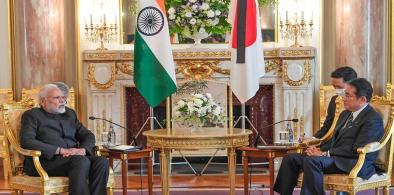
Apart from engaging in projects for upgrading India highways that go all the way till the Bangladesh border, Japan could also collaborate with India in the constantly deferred Agartala (India)-Akhaura (Bangladesh) rail link, something that provides scope for Indo-Japan collaboration under India’s Act East Policy and Japan’s Free and Open Indo-Pacific Strategy, writes Prarthana Sen for South Asia Monitor
Abe was among the first to envision with then-Prime Minister Manmohan the group of democracies as a potential counterweight to China in the Indo-Pacific taking forward the cooperation of the four countries in providing relief during 2004 tsunami
China has harmed Tibet, massacred innocent Tibetans and is occupying Tibet for the last several decades with a vice-like grip and suppressing freedom of the Tibetans
There are several ways whereby the IPEF will outbid China in the Indo-Pacific region and outweigh India’s China dependency, writes S. Majumder for South Asia Monitor
The short game might be Beijing’s to lose for now, but the long game is certainly Washington’s to squander away, writes Collins Chong Yew Keat for South Asia Monitor
Vietnam, an important country of the ASEAN (Association of Southeast Asian Nations), has territorial disputes with China in the South China Sea region. India has oil exploration projects in the Vietnamese waters in the South China Sea. India and Vietnam have been boosting their maritime security cooperation in the last few years to protect common interests.
Since the US is not a member of RCEP, the collaborative approach of the US and India will pose a big challenge to RCEP, which falls under Chinese influence, writes S. Majumder for South Asia Monitor
Michael Kugelman, a senior fellow at the Washington-based Wilson Centre, noted in a Foreign Policy Brief that the Biden administration’s growing engagement with countries like Sri Lanka, Nepal, and the Maldives, “marks a shift for Washington, which in recent decades has expended most of its diplomatic capital in the region on India, Pakistan, and Afghanistan.”
Beijing also seems nervous as its earlier run, largely on the back of support of the now-discredited Rajapaksa brothers, appears to have come to an end. Unlike earlier, a crisis-hit Sri Lanka in need of assistance is more eager than any time before in recent years to embrace India, the West, and the United States.
Kim Jong-un's new strategy shifts the region's counter-reaction to a new level of risk that will invite changes in the dynamics of the military spectrum, writes Collins Chong Yew Keat for South Asia Monitor
The summit is taking place under the shadow of the Russia-Ukraine conflict. It is also taking place at a time when relations between China and the Quad member countries have become fraught, with Beijing increasingly challenging democratic values and resorting to coercive trade practices.
A review of Quad initiatives is one of the key agendas for the four world leaders, an Indian government statement quoted the prime minister as saying before his departure. The grouping includes the world’s oldest and largest democracies — Japan, India, Australia and US — and represents a combined GDP of $34 trillion, or 40 per cent of the global total.
Bachelet, during her China visit between 23-28 May, will “meet with a number of high-level officials at the national and local levels, civil society organizations, business representatives, academics, and deliver a lecture to students at Guangzhou University,” the statement released by her office said on Friday
But what came as surprise amid this report was the Chinese state media's defence of India after criticism from Group of Seven (G7) nations, ANI news agency said. Global Times, a Chinese government outlet said, "Blaming India won't solve the food problem."