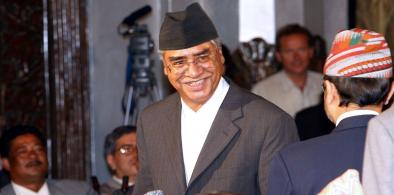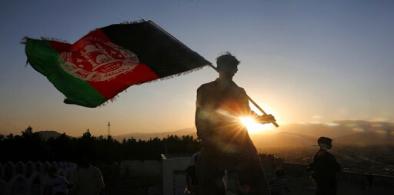
Whether the Taliban will accept Karzai, a man with considerable charisma, distinctive and much written about capes and lambskin hat, is still not clear. But he has struck a highly conciliatory note, writes Mahendra Ved for South Asia Monitor
When a Chinese company won the contract to establish hybrid wind and solar energy projects on three islands off the northern Jaffna peninsula—just 45 km from Rameswaram in Tamil Nadu—the security implications extended far beyond economics. Against this backdrop, India’s concerns are entirely justifiable. Sri Lanka faces a pressing question: how will the nation confront the infiltration of Chinese global criminal networks? Since Mahinda Rajapaksa’s tenure, Chinese presence in Colombo has steadily increased, with Sri Lanka positioned as a partner state in Beijing’s Belt and Road Initiative.
The growing role of middle powers adds another layer of complexity. Yet the term itself remains imprecise. Not every country outside the United States and China qualifies as a middle power, and many reject the label altogether. India, for example, increasingly sees itself as a leading power pursuing strategic autonomy rather than as a middle power seeking alignment with one bloc or another.
If India and Japan genuinely envision Northeast India as the gateway connecting South Asia with the Bay of Bengal and the Indo-Pacific, then the next chapter of the partnership cannot remain confined to New Delhi and Tokyo. It must also be written in Guwahati, Shillong, Aizawl, Imphal, Agartala, Kohima, Gangtok and Itanagar
In several neighbouring countries, including Bangladesh, Sri Lanka and Nepal, China has demonstrated an ability to move from agreements to implementation far more rapidly than many competitors. India, despite enjoying unmatched geographic and cultural advantages, has often struggled with delays
Whether the Taliban will accept Karzai, a man with considerable charisma, distinctive and much written about capes and lambskin hat, is still not clear. But he has struck a highly conciliatory note, writes Mahendra Ved for South Asia Monitor

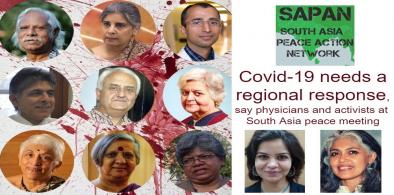
While South Asia has to grapple with deep-seated inequalities and vulnerabilities, the pandemic also provides an opportunity to find a path towards a more equitable and robust recovery, writes Partha Pratim Mitra for South Asia Monitor

The P 305 tragedy ought to be the catalyst for radical reforms in India's offshore support sector, writes Commander Anand B Kulkarni (retd) for South Asia Monitor

The implications are straightforward: With rising levels of carbon dioxide in the future, there will be stronger rains with potentially destructive outcomes in the South Asian region, writes N. Chandra Mohan for South Asia Monitor
India needs to deter China through a combination of its military prowess, discerning diplomatic action, and devising ways to become economically self-reliant with investment partnerships and collaborations with like-minded nations, writes Indu Saxena for South Asia Monitor
China is also keen to extend the coverage of CPEC and Belt and Road Initiative (BRI) to Afghanistan. This expansion of China’s footprint would be a matter of huge concern for both the US and India, writes Amb Ashok Sajjanhar (retd) for South Asia Monitor
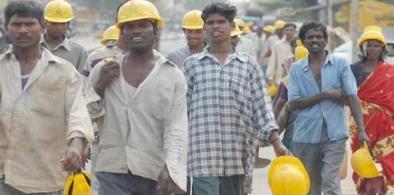
In 2021, there could thus actually be a drop in remittances - more so after the second wave of Covid 19, and the recent travel restrictions imposed by many countries including those in the Gulf on travelers from South Asia, write Tridivesh Singh Maini and Karan Bidani for South Asia Monitor
BIMSTEC gained importance and traction after progress in SAARC (South Asian Association for Regional Cooperation) got stalled following heightened frosty ties between India and Pakistan, writes Ranjana Narayan for South Asia Monitor
Although India controls two-thirds of the global Basmati market, competition between the nations has grown in recent years as Pakistan increases sales to Europe, writes Mahendra Ved for South Asia Monitor
India must augment science and technology transfer and research cooperation in space with nations like Saudi Arabia, Israel, UAE, Bahrain and Qatar, writes Aneek Chatterjee for South Asia Monitor
As there are 110 million youth in the country, there is a need for generating two million jobs every year to absorb them, the finance minister said, adding that “if we do not go into growth mode, we will have a major crisis on the streets”, writes N. Chandra Mohan for South Asia Monitor
Although current Sino-Indian relations are still in a state of relative tension, Beijing is encouraging Chinese companies to meet India’s procurement demands for oxygen concentrators and other anti-pandemic supplies, writes Siwei Liu for South Asia Monitor
The invitation to Narendra Modi for G7, where China is not invited, also reaffirms a stark reality that there is no alternative on the horizon to Modi’s bold and decisive role in the global play and India's strategic geopolitical position that hedges against China’s hegemony, writes Rajendra Shende for South Asia Monitor
The inherently low EPI scores of the South Asian countries underline the need for more sustainable efforts within the region to address concerns relating to air and water quality, climate change and biodiversity, write George Cheriyan and Simi T.B for South Asia Monitor
As Sri Lanka has clasped China’s strategic hands a la Pakistan, India will have to carefully calibrate its moves, writes M.R. Narayan Swamy for South Asia Monitor