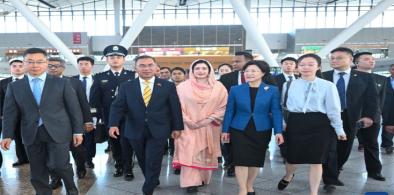

Colombo Port City

China’s Criminal Footprint in Sri Lanka has Regional Security Implications

When a Chinese company won the contract to establish hybrid wind and solar energy projects on three islands off the northern Jaffna peninsula—just 45 km from Rameswaram in Tamil Nadu—the security implications extended far beyond economics. Against this backdrop, India’s concerns are entirely justifiable. Sri Lanka faces a pressing question: how will the nation confront the infiltration of Chinese global criminal networks? Since Mahinda Rajapaksa’s tenure, Chinese presence in Colombo has steadily increased, with Sri Lanka positioned as a partner state in Beijing’s Belt and Road Initiative.

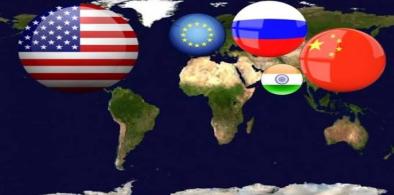
Wolf World or a Multipolar World? How Major Powers Exercise Power Will Determine Emerging International Order

The growing role of middle powers adds another layer of complexity. Yet the term itself remains imprecise. Not every country outside the United States and China qualifies as a middle power, and many reject the label altogether. India, for example, increasingly sees itself as a leading power pursuing strategic autonomy rather than as a middle power seeking alignment with one bloc or another.

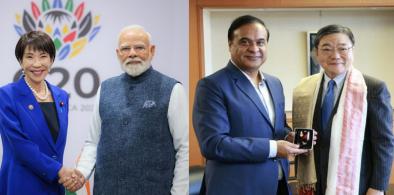
Is Northeast India's Permit System Inhibiting India-Japan Paradiplomacy? Colonial-Era System may be Stumbling Block to Subnational Exchanges

If India and Japan genuinely envision Northeast India as the gateway connecting South Asia with the Bay of Bengal and the Indo-Pacific, then the next chapter of the partnership cannot remain confined to New Delhi and Tokyo. It must also be written in Guwahati, Shillong, Aizawl, Imphal, Agartala, Kohima, Gangtok and Itanagar 

Bangladesh's Strategic Balancing and India's Neighbourhood Challenge: China Will Consolidate Influence if New Delhi Fails to Deliver

In several neighbouring countries, including Bangladesh, Sri Lanka and Nepal, China has demonstrated an ability to move from agreements to implementation far more rapidly than many competitors. India, despite enjoying unmatched geographic and cultural advantages, has often struggled with delays 

More on Geopolitics, Security and Strategic Affairs

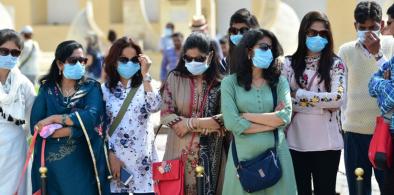
COVID-19 fear grips densely populated South Asia

In the South Asian region, only Maldives and Sri Lanka fare relatively better in global rankings of quality of healthcare system. Pakistan, which spends the least on health, has only 0.6 beds per 1000 people compared to 8.5 beds per 1000 people in Germany, writes Kavita Bajeli Datt for South Asia Monitor

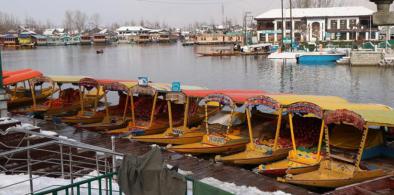
Coronavirus hits prospects for a revival in Kashmir this summer

For Kashmiris, who were hoping to come out of a long period of isolation after August 5, 2019 and subsequent government clampdown to ensure peace, the deadly virus has been a huge setback at a time when the thaw was beginning and restrictions easing, writes Brig Anil Gupta (retd) for South Asia Monitor

COVID-19 will redefine global governance

The government's role has to transition from that of an arrogant extortionist to a responsible shareholder: The reality is that governments across the world generally collect between 25-40% of income as taxes, writes Prof Rajendra Pratap Gupta for South Asia Monitor 

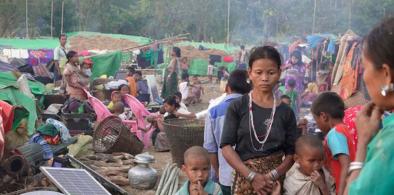
Myanmar’s Rakhine conflict threatens regional peace

It would be in the interest of all stakeholders, including India, to drive the agenda for peace to ensure the insurgency does not spiral into an uncontrollable cycle of violence which engulfs the region, writes Jaideep Chanda for South Asia Monitor

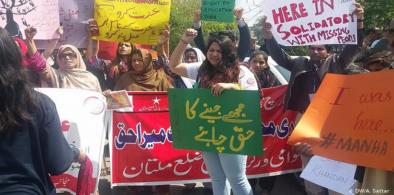
‘Aurat March’: A groundbreaking rally against patriarchy in Pakistan

The term ‘Aurat’ itself signifies the negative connotation, vernacularly, with which South Asian women have to contend. The significant rally cry, “Mera Jism, Meri Marzi” highlighted women’s body rights and gender equality, writes Azeemah Saleem for South Asia Monitor
With laws, more social awareness needed to curb child pornography in South Asia

We have strict laws but it is quite difficult to control child pornography based on only laws. We must create social awareness to stop this horrific crime, writes Monira Nazmi Jahan for South Asia Monitor

India’s challenged foreign policy: Diplomatic missteps and domestic mismanagement

The domestic turmoil at the moment is not only reshaping the country’s foreign policy but also causing an inordinate impact on the trajectory of India’s international affairs, write Muhsin & Mufsin Puthan Purayil for South Asia Monitor

India, US need to realign tech relationship to meet rapidly changing global order

Now with the world increasingly getting caught in a spreading viral infection, and the US political theatre getting embroiled in approaching elections, the India-US agreement on trade doesn’t seem likely to happen before 2021, writes Kumardeep Banerjee for South Asia Monitor

Whither police reforms? Law enforcement may be failing Indian democracy

The current pattern of law enforcement in India dilutes the claim to be a  robust and equitable democracy and  the hapless citizen pays a heavy price, writes C Uday Bhaskar for South Asia Monitor

Modi's cancelled visit: Coronavirus saves the blushes for Delhi, Dhaka

The moment of relief for both sides, as it were, stems from the unstated, but nevertheless evident situation whereby Modi could have faced hostile protests in Dhaka that the Hasina regime was preparing meticulously to avoid, writes Mahendra Ved for South Asia Monitor

Covid-19 turning point for globalisation, a challenge for India

While China may re-emerge from the crisis slightly weakened, the consequences can be devastating for countries like India, which missed out on most of the benefits of rapid globalisation and do not have the capital accumulation, unless they can reinvent themselves, writes Arul Louis for South Asia Monitor

Coronavirus helping save Modi government foreign policy blushes?

In the face of such sustained criticism, to which its foreign office is very unaccustomed, it is clear that India’s domestic politics are now placing India’s global ambitions at grave risk, writes Nilova Roy Chaudhury for South Asia Monitor

US, Taliban and the Doha Agreement: Afghan government short-shrifted

It is the agenda going forward that effectively puts a stamp over what the US assumes would be a Taliban-led, if not outright, Taliban government in Afghanistan, writes Shakti Sinha for South Asia Monitor

South Asia needs to reclaim its cultural ethos, revive SAARC

Although BIMSTEC has been gaining momentum in the recent past, it cannot be an alternative to SAARC, as it involves all the players in the region, including Pakistan, writes Samudrala VK for South Asia Monitor

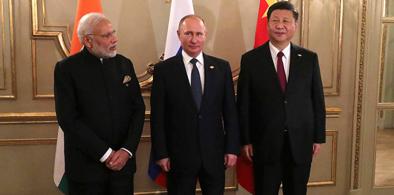
Russia, India, China should cooperate to lead the Asian century

RIC, a troika of the three Eurasian powers, can work extensively on issues like counter-terrorism, transnational organised crime, illicit drug trafficking and climate change, writes Samudrala VK for South Asia Monitor