

Diplomacy Cannot Wait: The Case for an Immediate Bangladesh–India Bilateral Visit
A more sensible and balanced engagement with India might help Bangladesh maintain its national interests while boosting its competitiveness in the region as it moves into the post-LDC transition period. A bilateral visit should happen soon to address Bangladesh's food, fertiliser and fuel shortages.
 Sep 17, 2026
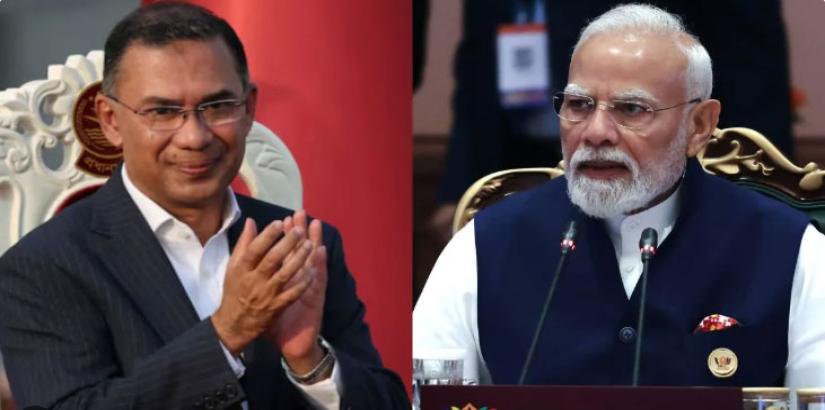
Whether it is politics or the economy, neither Bangladesh nor India can ignore their dependence on each other. After Bangladesh’s mass uprising in 2024, bilateral relations remain gloomy, with little indication of stability. Multiple issues have shaped the relationship adversely. Following the election under the interim government, a new BNP-led government was formed in Bangladesh, but it has still not been able to capitalise on the relationship in a positive manner.
Bangladesh is India's largest trading partner in South Asia, while India has become Bangladesh's largest export destination in Asia. However, over the past few years, the relationship has deteriorated due to a lack of trust and an unwillingness to cooperate in various fields, including political and security cooperation, trade and economic relations, development partnerships, cultural exchanges and people-to-people interaction. This has also been reflected in statements made by the top leaders of both countries in recent days.
Bangladesh’s State Minister for Foreign Affairs, Humayun Kabir, said that “Bangladesh would raise its concerns with India at every appropriate level while adhering to international law, border protocols and agreements between the two countries.” Asked about the reported review of 101 MoUs, he said the agreements were being scrutinised as part of the parliamentary process.
This clearly outlines the present circumstances between India and Bangladesh. Bangladesh wants to rebuild a new relationship with India, treating India as a neighbour based on mutual interests and direct bilateral talks rather than relying on multilateral forums.
Simultaneously, tensions persist regarding border-management incidents, concerns in Dhaka over Indian media narratives, and the political fallout concerning former Prime Minister Sheikh Hasina’s stay in India.
Trade, Energy and Water Diplomacy
For the current administration in Bangladesh, fostering a more robust and pragmatic relationship with India focuses on safeguarding national interests rather than aligning with a particular geopolitical bloc. It emphasises economic collaboration, connectivity, energy security and water diplomacy.
India stands as Bangladesh's primary trading partner in South Asia and its second-largest partner in Asia, with bilateral trade expected to reach around US$12.9 billion in FY2023–24. Furthermore, India has offered nearly US$8 billion in Lines of Credit for various infrastructure initiatives, including roads, railways and ports, such as the Akhaura–Agartala rail link, which improves regional connectivity.
In the energy domain, Bangladesh relies on imports of approximately 1,160 MW of electricity from India, highlighting cross-border power cooperation as a vital component of energy security.
Renewed engagement is vital for addressing lingering disputes, especially the 1996 Ganges Water Sharing Treaty, which is set to expire in December 2026, and the long-delayed Teesta agreement. Recent diplomatic overtures from both nations indicate potential for a bilateral reset, despite the tensions that have arisen since 2024.
Therefore, maintaining ongoing dialogue is crucial for ensuring trade, managing borders effectively and fostering long-term stability in the region.
Reciprocity and Shared Interests
In any case, Bangladesh should strengthen its ties with India in the areas of trade, energy, connectivity, border management and water diplomacy. Economic growth and energy security can be supported by increasing bilateral commerce, enhancing port, rail and road connectivity, and bolstering cross-border power cooperation.
Making progress on the long-stalled Teesta deal and extending the 1996 Ganges Water Sharing Treaty before it expires in December 2026 should continue to be a top diplomatic priority. Bangladesh can safeguard its strategic and economic interests while fostering long-term regional stability through increased collaboration in these areas.
Beyond the Teesta and Ganges treaties, Bangladesh could pursue a reciprocity-based policy framework that ties deeper cooperation to tangible outcomes in trade, border security, investment and connectivity.
Dhaka could push for the removal of non-tariff barriers on Bangladeshi exports, expedite a Comprehensive Economic Partnership Agreement (CEPA), expand border haats and land-port modernisation, and seek mutual recognition of product standards to improve market access.
It could also press for stronger mechanisms to reduce border killings, prevent forced pushbacks through coordinated BGB–BSF cooperation, simplify visa procedures for students, patients and businesses, and encourage joint industrial zones in border areas to attract investment and create jobs.
Why a Bilateral Visit Matters
If based on reciprocity and shared interests, a reinvigorated relationship between Bangladesh and India might yield substantial political and economic advantages. In political terms, persistent communication may boost confidence, enhance border control and generate momentum for resolving enduring problems related to regional security and water sharing.
Deeper collaboration may lower logistical costs and promote long-term growth by increasing trade, attracting more investment, enhancing cross-border energy cooperation, and improving rail, road and port connectivity.
A more sensible and balanced engagement with India might help Bangladesh maintain its national interests while boosting its competitiveness in the region as it moves into the post-LDC transition period.
A bilateral visit should happen soon to address Bangladesh's food, fertiliser and fuel shortages.
(The author is a foreign policy and security analyst and educator who holds a postgraduate degree from the Department of International Relations, Rajshahi University, Bangladesh. The views expressed are personal. He can be contacted at: alaminislamshuvo16@gmail.co )





Post a Comment