

81 Years After Hiroshima: Don't Normalize the Unthinkable
August 6 is not a day for ceremonies alone. It is a day to remember why restraint was carefully created in the first place and to prevent another Hiroshima - Nagasaki. A third devastation, deliberate or accidental will take less than 43 seconds.
 Aug 06, 2026
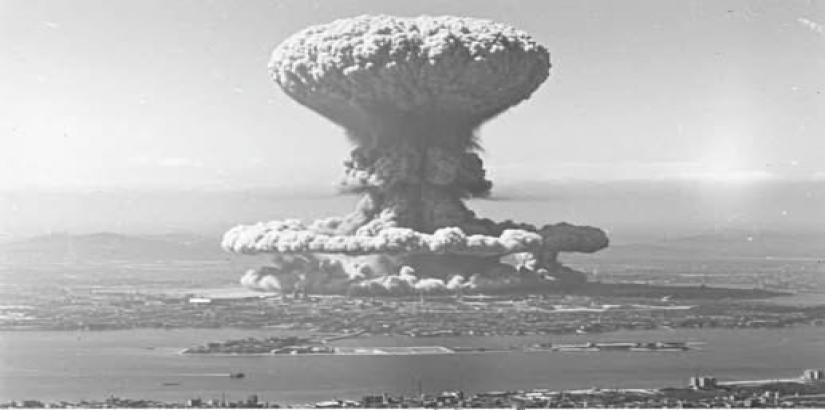
On August 6, 1945 , a US military aircraft dropped an atomic bomb on Hiroshima at 8:15 AM in the morning.
In 43 seconds, Hiroshima ceased to exist. Nagasaki was targeted on August 9. The embedded message of that apocalyptic violence was meant to be final: build a world where this horrific tragedy can never happen again.
Eighty one years later the world is paying scant attention to this message and the restraint around nuclear weapons that was maintained since the 1962 Cuban missile crisis is unravelling.
Guardrails Coming Off
The guardrails that ensured a semblance of stability and restraint are coming off, one by one.
President Putin’s invasion of Ukraine began in early 2022 and Russia, a nuclear-armed P5 state repeatedly referenced its nuclear doctrine in public. ‘Escalation management’ became a talking point on global television and the strategic community. It did not matter whether Moscow was bluffing to rattle the adversary. What mattered is that the threat of nuclear weapon use was dragged from the realm of the unthinkable into the realm of the negotiable.
For 70 years after Hiroshima and Nagasaki, the red line of rhetorical restraint held. In the last four years, it has been tested out loud and the line is getting blurred. The unthinkable exigency is being normalized.
NPT is Fraying
Furthermore, the grand bargain of the Nuclear Non-Proliferation Treaty (NPT) is fraying. The central deal of the NPT is simple: non-nuclear weapon states (NNWS) forfeit their right to enrichment and do not seek the bomb; in return, the nuclear weapon states (NWS) gradually move toward disarmament while providing cast-iron security assurances to the unarmed.
That deal looks weaker today. In 2025, Iran, an NPT member, saw its nuclear facilities attacked by Israel and later in 2026 by the USA. The justification was pre-emption. The message received by others was different: NPT treaty membership does not buy you safety or protect the right to enrichment. A selective geopolitical filter has been introduced.
The 11th NPT Review Conference concluded in May this year without any consensus on the final statement. This is a huge void. Whereas the use of nuclear weapons was deemed forbidden in the past and the nuclear weapon had only one purpose – deterrence – the NWS tried to introduce a certain elasticity in the semantic framework to suit their strategic interest, leading to the collapse of a very important conference.
No Regulatory Structure
Another development of great concern is that the regulatory architecture among the major nuclear states no longer exists.
The last arms control treaty between the US and Russia expired in February 2026. There is nothing to replace it. Meanwhile, the US, Russia and China are in the middle of full-scale modernization: new missiles and submarines, hypersonic delivery options and smaller warheads marketed as ‘more usable.’ Other nuclear states are following. When everyone upgrades simultaneously, deterrence doesn’t become more stable. It becomes more brittle.
To exacerbate matters, the NPT umbrella is leaking. France has suggested extending its nuclear doctrine to more European partners and Saudi Arabia is seeking enrichment capability. The underlying logic is spreading: if you can’t trust extended deterrence, get your own.
This is not the bipolar Cold War. That was dangerous but it was managed with periodic meetings at the summit level and regular consultations among the arms control professionals. The current nuclear order is multipolar, opaque, and faster. More fingers on more buttons, yet, with fewer phone lines between them.
India's Principled Position
India is not an NPT member but has been accorded an exceptional status, wherein it can retain its nuclear weapons and has accepted certain obligations.
Since it became a state with nuclear weapons (SNW as opposed to NWS) in May 1998, the Indian doctrine has remained unchanged: Credible Minimum Deterrence and No First Use.
At the Conference on Disarmament (CD) in 2023, India’s statement was unambiguous: “India remains committed to the goal of a world free of nuclear weapons, to be achieved in a universal, verifiable, and non-discriminatory manner.”
In a period where nuclear weapons are being used as tools of coercion, India’s track record gives it credibility to demand guardrails. It merits recall that India has raised its voice in the mid 1960s and enabled the PTBT (partial test ban treaty) and also introduced the Rajiv Gandhi Action plan for nuclear disarmament at the UN.
In recent years Delhi has argued that disarmament cannot be piecemeal or discriminatory. At the CD in 2024, India again called for “the commencement of negotiations on a Comprehensive Nuclear Weapons Convention.”
The point is simple: if the goal is a nuclear-weapon-free world, then the process must include everyone, not just NPT members.
Hiroshima is not History
Hiroshima is not history. It is an operating manual for survival and the major powers must be encouraged to move on three policy tracks
First, restore the taboo. The nine nuclear weapon capable states must reaffirm the Reagan-Gorbachev tenet: “A nuclear war cannot be won and must never be fought.” No more doctrinal ambiguity and couched public signaling.
Second, act on risk reduction now . Even without a new START, the world needs crisis hotlines, missile test pre-notification and limits on tactical nuclear weapons. Nuclear weapons must be delinked from conventional war.
Third, re-anchor non-proliferation. Non-nuclear states need credible negative security assurances, absent which, the incentive to proliferate will only grow. The CD must be revived to start real negotiations and not merely issue statements.
Disarmament remains the ultimate goal. But the world will not get there by pretending that guardrails do not matter or that restraint can be jettisoned.
Greatest Danger to World
The hibakusha, the survivors of Hiroshima, spent their lives with one message: the survivors envy the dead victims. 81 years on, the nuclear weapon has become more apocalyptic.
The greatest danger is that the world has become more used to living with it and there is complacency, veering towards indifference about the enormity of the nuke.
August 6 is not a day for ceremonies alone. It is a day to remember why restraint was carefully created in the first place and to prevent another Hiroshima-Nagasaki. A third devastation, deliberate or accidental will take less than 43 seconds.
(The writer is President, Society for Policy Studies. The views expressed are personal. He can be reached at cub.sps@gmail.com)





Post a Comment