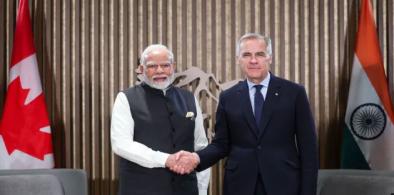
The NATO summit can indirectly transform India from a regional power into a West Asia stakeholder by integrating India into maritime security frameworks, supporting connectivity projects, strengthening intelligence ties, reinforcing India’s role as an alternative to China. The long-term outcome is that India could emerge as a pillar of stability linking Europe, the Gulf, and the Indo-Pacific
Japan has also proposed developing a Bay of Bengal–Northeast India Industrial Value Chain aimed at transforming the region into an integrated industrial zone. As part of the Free and Open Indo-Pacific vision, this includes strengthening cross-border connectivity with Bangladesh, Myanmar, Nepal and Bhutan.
China's expressed interest in modernising and upgrading both Chattogram and Mongla ports suggests the emergence of an interconnected infrastructure network linking the Bay of Bengal with southwestern China through Myanmar. If realised, such connectivity would enhance trade flows, improve regional logistics and deepen China's economic footprint across the Bay of Bengal littoral, while simultaneously increasing Bangladesh's importance as a regional transit and connectivity hub.
While Washington and New Delhi seek to strengthen bilateral ties with Colombo, Beijing has strategically engaged with the political forces that control the government. By engaging directly with actors at the core of Sri Lanka’s governance, Beijing appears to be signalling its strategic intent—projecting influence and reinforcing ideological ties.
The broader message of the Sino-India pact is clear: the world is moving toward a multipolar order where the dominance of Western powers is increasingly being challenged by the rise of nations like China and India. This agreement exemplifies the ability of non-Western nations to resolve their conflicts without Western interference
China has been saying that the border question should be left separate from the bilateral relationship, implying it should be kept on the back burner. Resumption of patrolling in Ladakh, in whatever form, will be good, But the reversion to pre-April 2020 posture by China is out of the question.
Nepal made history with its 2007 judgment, becoming the first South Asian nation to formally register same-sex marriage, with a trans woman and a gay man legally marrying in the Lamjung district. It also passed affirming laws regarding sexual orientation and gender identity, including the legal recognition of a third gender over ten years ago, placing Nepal ahead of many other countries.
The SAFER project achieves two goals, by prioritizing participation of women, children, youth, and resilience of vulnerable communities, and by achieving gender equality and social justice. This ambitious project by Pakistan sets a precedent for other developing nations to follow, showing the importance of community driven, ecosystem based approaches to climate adaptation.
ADR law aims to make justice more accessible and reduce the burden on courts, which currently have over 4.48 crore (nearly 45 million) cases pending from District Court to Supreme Court, 1.08 crore of which are civil disputes and 3.40 crore of which are criminal cases. According to the National Judicial Data Grid, these cases have been pending for anywhere from one year to more than 30 years.
Beyond the immediate flare up, the fact that Trudeau is sticking to his guns so publicly without offering any actionable evidence could mean that internally he is certain of the damaging nature of what his law enforcement has gathered. If not, then he is playing a dangerous game prompted by domestic political compulsions.
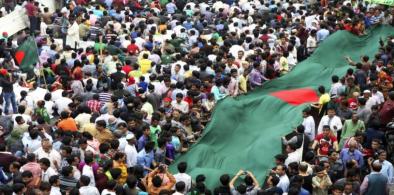
The current government came to power with promises of systemic reform and state reorganization. However, the alarming rise of mob justice across Bangladesh suggests a shift from reform to revenge. Since the police returned to duty on August 11, 21 people have been beaten to death in 38 days, with only eight arrests. This highlights the failure of law enforcement to curb mob violence
The rise of populism, religious polarisation, and centralization of power have raised concerns, especially concerning freedom of speech. While India's framework of democracy is more vibrant and institutionalized compared to its neighbors where fear of authoritarianism or military interventions is constant, it requires sustained efforts to put that democracy on a solid foundation.
A growing concept in India, known as silver economics, aims to empower elderly individuals to become entrepreneurs, enabling them to take control of their own solutions and challenging the notion that entrepreneurship is reserved exclusively for the younger generation.
Analysts believe that Jaishanakar's visit will be a significant opportunity for India to reinforce its commitment to providing development support for its strategically situated Indian Ocean neighbor amid worries about a shift in its foreign policy under the new president.
Pakistan’s pivot to geo-economics has gained significant momentum, particularly in the context of its deepening ties with Central Asian Republics and Azerbaijan, aligning with the country's goal of becoming a regional trade hub
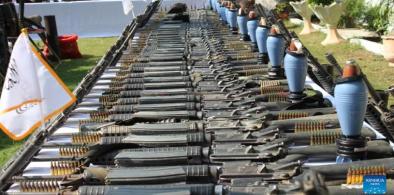
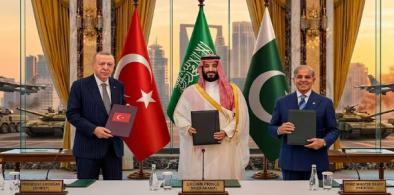
For India, Pakistan and Bangladesh's defence cooperation is reason for concern. The long, porous border between India and Bangladesh, along with New Delhi's historical position as a vital supporter of Dhaka, make any reconciliation between Islamabad and Dhaka a sensitive matter. The weapons agreement, in particular, has fuelled suspicion in India about a potential shift in Bangladesh's outlook, particularly in light of the anti-India rhetoric that surrounded the protests that led to Hasina's removal.
India’s superpower ambitions require a comprehensive strategy to use the Indian education sector, both private and government, towards advancing India's strategic aims and objectives. A starting point to experiment such knowledge/education diplomacy lies in its neighbourhood.
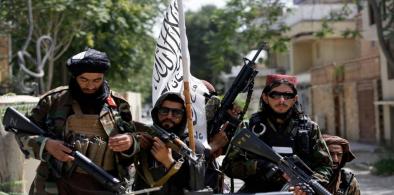
However, religion, domestic compulsions and failure to improve political conditions, with or without national elections, have embroiled Afghanistan, Pakistan and Bangladesh, all compounded by economic woes, in issues that impinge on their national identity.