
NATO Headquarters in Brussels (NATO photo)

Why the NATO summit in Ankara matters for South Asia

The NATO summit can indirectly transform India from a regional power into a West Asia stakeholder by integrating India into maritime security frameworks, supporting connectivity projects, strengthening intelligence ties, reinforcing India’s role as an alternative to China. The long-term outcome is that India could emerge as a pillar of stability linking Europe, the Gulf, and the Indo-Pacific

India–Japan Summit: Strategic Convergence in a Changing Indo-Pacific Order

Japan has also proposed developing a Bay of Bengal–Northeast India Industrial Value Chain aimed at transforming the region into an integrated industrial zone. As part of the Free and Open Indo-Pacific vision, this includes strengthening cross-border connectivity with Bangladesh, Myanmar, Nepal and Bhutan. 

China and the Emerging Scenario in the Bay of Bengal

China's expressed interest in modernising and upgrading both Chattogram and Mongla ports suggests the emergence of an interconnected infrastructure network linking the Bay of Bengal with southwestern China through Myanmar. If realised, such connectivity would enhance trade flows, improve regional logistics and deepen China's economic footprint across the Bay of Bengal littoral, while simultaneously increasing Bangladesh's importance as a regional transit and connectivity hub.

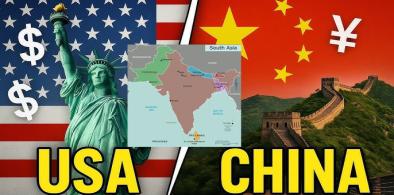
Colombo to Kathmandu, China Seeks to Counteract US Moves Across South Asia

While Washington and New Delhi seek to strengthen bilateral ties with Colombo, Beijing has strategically engaged with the political forces that control the government. By engaging directly with actors at the core of Sri Lanka’s governance, Beijing appears to be signalling its strategic intent—projecting influence and reinforcing ideological ties. 

More on Geopolitics and Strategic Affairs

Water, Trust, and Turmoil: Spectre of Water-Security Arms Race in South Asia

With Pakistan's legal challenge still underway and India building hydro-assets and fortifying its strategic position, a dangerous legal and diplomatic standoff is brewing. Simultaneously, China's upstream ambitions introduce a parallel set of water-power dynamics that could dictate the future of Himalayan water governance. 

When Storytelling Crosses Borders: Sultana Siddiqui on her TV series on ‘blasphemy’ violence in Pakistan

Sultana Siddiqui has always strongly favoured the inclusion of cross-border talent in Pakistani and Indian cultural productions. She has participated in various bilateral conferences and meetings, including those organised by Aman Ki Asha (Hope for Peace), a joint platform initiated in 2010 by the two biggest media groups of India and Pakistan respectively.

Andhra Pradesh and Karnataka can lead a new chapter in Indian para-diplomacy

The post-1991 era of economic liberalization catalyzed a paradigm shift in India's federal structure, empowering states like Andhra Pradesh and Karnataka to engage in para-diplomacy and craft their global economic narratives. Their early success in leveraging IT-led growth demonstrated the transformative potential of subnational diplomacy. 

Across South Asia Slum Dwellers Are Deprived Of Their Human Rights

Eviction of slum dwellers in South Asian nations cannot merely be dismissed as collateral damage of urban development and anti-encroachment drives. They reflect a larger, alarming trend of displacement of the urban poor and gross violations of their dignity and human rights.

South Asian Women To The Fore In Peacebuilding And Crisis Response

South Asian feminist voices are calling for a shift from tokenism to transformation. The path forward lies in institutionalising women’s participation across diplomatic, security, and environmental policymaking. Whether it’s building back peace in Sri Lanka, safeguarding water rights in the Indus basin, or protecting Rohingya women refugees in Bangladesh, South Asia’s feminist peacebuilders are not just responding to crises; they are redefining what peace means.

50 years of Emergency: Have any lessons been learnt?

The fateful March 1977 election vindicated Indian democratic traditions and proved the triumph of freedom over bread.  Ballot after regular ballot has shown that just because a man is poor and maybe cannot read does not mean he does not care for his liberty and human rights.

Israel and the 'Clash of Civilizations': The Case for a Muslim Nuclear Security Framework

The time has come to reject the mythology of civilizational war. It is time to reclaim the principles of sovereignty, multilateralism, and international cooperation. And it is time to imagine and construct a new security architecture for the Muslim world

Shifts And Realignments In India-Bangladesh Ties Post-Pahalgam

Had these events occurred during Sheikh Hasina’s tenure, Dhaka would likely have expressed solidarity with India and endorsed its right to self-defense. The current posture highlights a broader strategic shift under the interim leadership, raising questions about the future trajectory of India-Bangladesh security cooperation.

‘Himalayasia’: Reimagining South Asia beyond Mistrust and Division

The very name ‘Himalaya’ comes from two Sanskrit words Hima (snow) and Alaya (abode), a classical language of South Asia. The term 'Himalayasia'—comprising two names Himalaya and South Asia—does not privilege any one nation and is free from colonial discourse; it centers on a natural feature that has shaped the region’s ecology, mythology, and philosophy for millennia.

Global Carbon Tax Lessons for South Asia’s Green Transition

While carbon taxes are a key instrument in the climate policy toolkit, their limitations in the face of inelastic demand and global regulatory fragmentation suggest that complementary measures are essential. Subsidies for clean energy and research offer substantial emissions reductions while encouraging innovation and preserving economic competitiveness.

Bengaluru Cricket Stampede: A Mirror To Our Misplaced Priorities

Cricket—especially the IPL—is a multi-billion-rupee industry. In 2023 alone, IPL revenue touched Rs.11,770 crores, with the BCCI posting a surplus of Rs.5,120 crores. Over three years, its cumulative profits crossed ₹15,000 crores. And yet, the world’s richest sports body pays no tax—shielded by a “charitable” status. In stark contrast, research labs and educational institutions are taxed.

When Hate Overpowers Reason: Managing The Complex India-Pakistan Relationship

India’s Pakistan Conundrum is a comprehensive and somewhat concrete account of the dynamics of the power and politics in Pakistan. Though one can differ with various minor details, one must remember that the author is a diplomat, a civil servant from India, so the burden of resolving theoretical riddles is not his to carry. However, what he must be applauded for is acknowledging Pakistan's problems

Unprecedented Global Tensions in 2025: Credibility Of Global Order At Stake

The twin crises of South Asia and the Middle East in 2025 reflect a dangerous transformation of global order from a managed, rules-based system to an increasingly fragmented and militarized world. The absence of consistent international norms, selective diplomacy, and double standards by great powers are undermining peace efforts and pushing humanity closer to irreversible confrontation.

The Kananaskis Declaration That the G7 Will Never Write: A Summit of Ironies Amidst Burning Forests

But this declaration will never be signed. The actual G7 communiqué will likely promise "managed decline" disguised as "leadership"—words drafted in servitude to the oil beneath Alberta’s soil, not in the spirit of its majestic mountains.

Middle East On The Brink: What India Must Do to Shield Its Economy

The Middle East’s volatility is not an outlier—it’s a feature of the emerging global order. India’s challenge is to anticipate these tectonic shifts and act with strategic foresight, not just tactical response. Energy security, export competitiveness, and supply chain resilience must now be treated as interlinked pillars of national power. Failing to adapt could make India a casualty of distant wars.