
NATO Headquarters in Brussels (NATO photo)

Why the NATO summit in Ankara matters for South Asia

The NATO summit can indirectly transform India from a regional power into a West Asia stakeholder by integrating India into maritime security frameworks, supporting connectivity projects, strengthening intelligence ties, reinforcing India’s role as an alternative to China. The long-term outcome is that India could emerge as a pillar of stability linking Europe, the Gulf, and the Indo-Pacific

India–Japan Summit: Strategic Convergence in a Changing Indo-Pacific Order

Japan has also proposed developing a Bay of Bengal–Northeast India Industrial Value Chain aimed at transforming the region into an integrated industrial zone. As part of the Free and Open Indo-Pacific vision, this includes strengthening cross-border connectivity with Bangladesh, Myanmar, Nepal and Bhutan. 

China and the Emerging Scenario in the Bay of Bengal

China's expressed interest in modernising and upgrading both Chattogram and Mongla ports suggests the emergence of an interconnected infrastructure network linking the Bay of Bengal with southwestern China through Myanmar. If realised, such connectivity would enhance trade flows, improve regional logistics and deepen China's economic footprint across the Bay of Bengal littoral, while simultaneously increasing Bangladesh's importance as a regional transit and connectivity hub.

Colombo to Kathmandu, China Seeks to Counteract US Moves Across South Asia

While Washington and New Delhi seek to strengthen bilateral ties with Colombo, Beijing has strategically engaged with the political forces that control the government. By engaging directly with actors at the core of Sri Lanka’s governance, Beijing appears to be signalling its strategic intent—projecting influence and reinforcing ideological ties. 

More on Geopolitics and Strategic Affairs

Trade Wars Are Less About Tariffs, More About Power: India’s Strategic Autonomy in a Shifting World

Yet India’s response is neither impulsive nor reactionary—it is rooted in a long tradition of strategic autonomy. From Nehru’s Cold War non-alignment to today’s “multi-alignment,” successive governments have insisted on freedom of action, refusing to let outside powers dictate India’s role in the world. This ethos, born of colonial subjugation, now guides New Delhi’s diversified diplomacy

Is Digital Colonialism Changing South Asian Politics Through Youth?

Apart from these conspiracy theories, one fact is apparent: Digital platforms, particularly those owned by Facebook and Twitter (X), are playing a drastic role in launching, organizing and supporting socio-political movements and revolutions in South Asia where these developing countries, already marked by high-debt dependency, poverty, unemployment, poor governance, corruption, and illiteracy, are heavily reliant on international INGOs, NGOs, foreign aid, funds, and loans.

The Greenium Paradox: Can South Asia Align Climate Finance with Investor Demands?

In June 2025, Sri Lanka’s DFCC Bank broke new ground as the first foreign corporation to list a green bond on India’s NSE International Exchange in GIFT City. The $8 million bond financed solar energy projects aligned with Sri Lanka’s 2030 renewables target. By securing a dual listing in Luxembourg and aligning with ICMA’s Green Bond Principles, DFCC broadened its international investor appeal and demonstrated how green finance can support debt stressed economies.

Cricket Must Not Lose Its Soul: Competition Not At Cost Of The Game’s Spirit

The game must be allowed allowed to find a way to restore its dignity and balance on the ground.Not only is there a need to check the unregulated commercialization but there is a need for the introduction of regulations that give bowlers a fair chance, have sporting pitches, and fair future tour programs that preserve Test cricket’s relevance.

India-Pakistan: Breaking the Stalemate, Changing the Narrative

Changing this dynamic involves rebalancing domestic narratives. In India, presenting Pakistan less as an existential threat and more as a troubled neighbour could lessen the political costs of engagement. In Pakistan, reducing the military's dominance over India policy would open space for pragmatic dialogue.

From Dhaka to Kathmandu: An Islamist-globalist blueprint to destabilize South Asia?

The events in Nepal and Bangladesh serve as stark warnings: the US Deep State and its Islamist partners are actively destabilizing South Asia, targeting democracies and turning vulnerable nations into vassal states. Nepal narrowly avoided disaster thanks to the courage and foresight of its army, while Bangladesh remains trapped in a jihadist nightmare.

Why India and Pakistan Should Resume Cricket Ties

New Delhi should not view cricket ties as appeasement but as investment in peace. By embracing cricket diplomacy, India can show moral leadership, protect its strategic interests and give millions of fans across South Asia a reason to dream of friendship rather than enmity. The ongoing Asia Cup is a good start in that direction. A few handshakes could have made it an even better start. 

Nepal Crisis: Is India Being Boxed-In In A Destabilized South Asia?

For India, the situation will remain volatile, as it shares a thousand-mile open border with Nepal permitting free movement of people. The coup in Nepal came as a surprise to India and Indian intelligence agencies, just like the coups in Sri Lanka and Bangladesh

A Nation Adrift: Year After Hasina’s Ouster Bangladesh Remains In Political Limbo

Muhammad Yunus may bask in the applause of Western elites, but within Bangladesh his regime is a study in failure: illegitimate, incompetent, and dangerous. Nepal, with its army’s timely intervention and youth’s surprising maturity, showed that chaos need not consume a nation. Bangladesh, under Yunus, has shown the opposite: how a nation can betray its own future when it allows passion without perspective to rule the day.

World Ozone Day 2025: The Unfinished Lesson of Our Greatest Environmental Success

We are well on our way to sealing the ozone hole. But let us ensure that in doing so, we do not ignore the new fissures opening at our feet. The work of healing our planet is never complete—it simply evolves.Let our legacy be that we were wise enough to see the whole board, not just the move we just made. The ozone hole is being sealed, but the deal is not done. The lesson is not over. The action must continue—even in celebration.

Nepal At Crossroads: Coming Elections Will Decide The Country's Political Identity

For the Indian government, the interim Karki administration offers a valuable interlocutor who understands both the cultural and strategic sensitivities of bilateral relations. Supporting her government’s limited but crucial agenda aligns with New Delhi’s interest in maintaining regional stability, securing cross-border trade, and containing potential Chinese inroads into Nepal’s political and economic life.

Nepal Political Crisis and Lessons for South Asia

The Pokhara International Airport has become emblematic of systemic failure. A 2025 parliamentary investigation uncovered Rs14 billion (USD 105 million) in corruption and irregularities, including fake payments, unauthorized tax waivers for the Chinese contractor, and disbursements for incomplete infrastructure. Yet, senior officials remain largely untouchable—even ministers accused of human trafficking.

Reasons for Nepal’s crisis ran much deeper

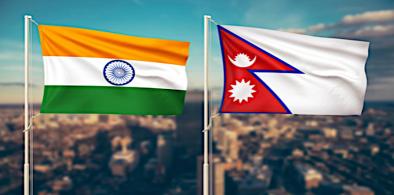
After the overthrow of governments in the South Asian countries of Sri Lanka and Bangladesh, the Nepalese crisis has consequences not just for the nation of 30 million people, but for the whole region,  rooted in the country’s own turbulent political history and its legacy of attempting to balance ties between India, China and Pakistan.

India at a Crossroads: Navigating Stability and Sovereignty in Neighbouring Nepal’s Crisis

Nepal, one of  the world’s poorest countries, struggles with the South Asian region’s lowest per capita income and an unemployment rate approaching 13 percent, according to official estimates.

US Tariffs, Remittances and Regional Ripples: India's External Balance Management Being Closely Watched

Many in the Global South as well as key South Asian allies—including Nepal and Sri Lanka—are closely observing India’s approach towards macroeconomic stability. How India moves forward in the months and years to come will signal whether it emerges as a resilient regional rule-shaper or a reactive follower in the evolving financial system.