The UNHRC Core Group on Sri Lanka has called upon the island nation’s government to address the harmful legacies of war and protect human rights, including those from religious minorities

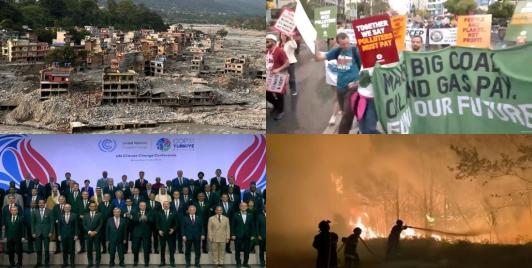
Nepal, along with Bhutan and Kyrgyzstan, has formally called for mountain and climate change to be added as an agenda item in the COP31 process. Bangladesh, India, and Pakistan are set to push for more climate grants, greater support for adaptation, and faster access to loss and damage funding.
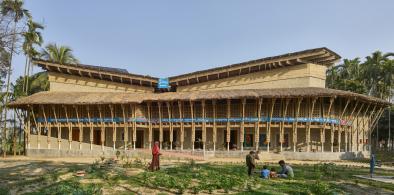
The global community is currently searching for viable ways to address the effects of climate change; the women of the Bengal delta have been engaged in a silent, yet persistent economic revolution that provides a proven, empirically supported model for other vulnerable countries around the world.
The September agreement by the Pakistan PMO gives these decisions a home: one partner leads research and evidence, the other brings delivery through its four pillars - education, employment, engagement and environment - and its Digital Youth Hub and nationwide Youth Development Centres, with private-sector partners expected to create internship and employment pathways.

Antalya's final decisions will matter. So will the credibility of finance, the protection of vulnerable communities and the direction of the energy transition. But the deepest test is whether COP31 leaves countries with more capacity to implement what they have promised.
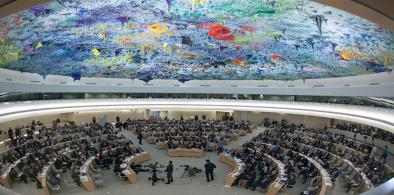
The UNHRC Core Group on Sri Lanka has called upon the island nation’s government to address the harmful legacies of war and protect human rights, including those from religious minorities
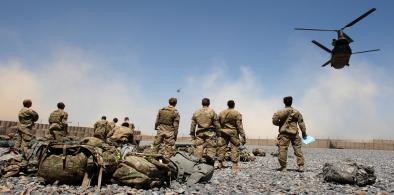
Deborah Lyons, the United Nations envoy in Afghanistan, has criticized the Taliban’s recent “intensive military campaign”, warning that it would lead to continued violence in the country
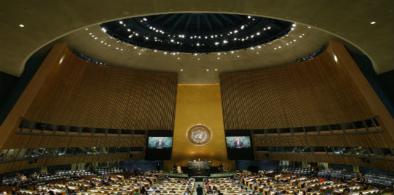
India and its G4 allies have forced General Assembly President Volkan Bozkir to accept an amendment to the decision on rolling Security Council reform negotiations to the next Assembly session during a meeting at which he and Germany's Permanent Representative Christoph Heusgen clashed openly, dropping the genteel style of diplomacy
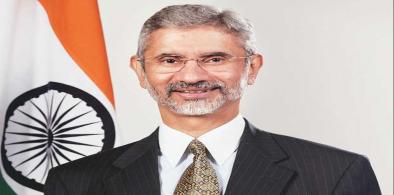
As Afghanistan prepares for the pullout of the US troops, peace there requires zero tolerance for terrorism and those supporting terrorists must be held accountable, according to India's External Affairs Minister S. Jaishankar
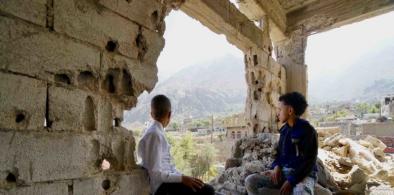
More than 19,300 boys and girls affected by war last year were victims of grave violations such as recruitment or rape, and the COVID-19 pandemic made it difficult for experts to reach them, the UN said in its annual report on Children and Armed Conflict (CAAC), published on Monday
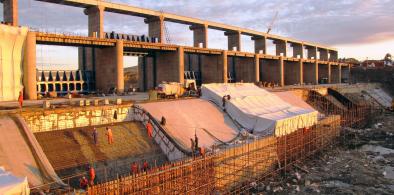
Financial assistance to the world’s 83 weakest economies fell by 15 per cent in 2020, to $35 billion as a direct result of the COVID-19 pandemic, UN trade and development experts UNCTAD said on Monday
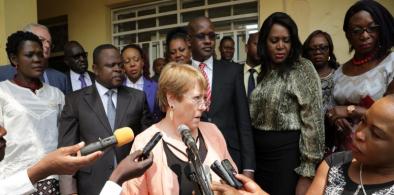
UN rights chief Michelle Bachelet on Monday urged UN Member States to promote a more inclusive post-pandemic recovery to help the world’s most vulnerable recover from the impact of COVID

Michelle Bachelet, the United Nations human rights chief, has expressed concern over the “sharp increase in violence” and harm to civilians in Afghanistan

Michelle Bachelet, the United Nations human rights chief, has expressed concern over the Sri Lankan government’s new measure which she says are “perceived” as targeting the country’s minority Muslim and Tamil population

India has described the concerns raised by a special branch of the United Nations Human Rights Council (UNHRC) as "misplaced, exaggerated and disingenuous"
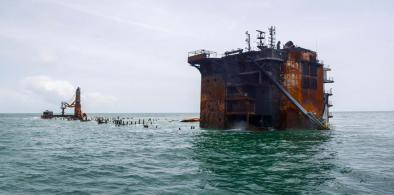
The sinking of a container ship that caught fire while transporting chemicals off capital Colombo has caused “significant damage to the planet” by releasing hazardous substances into the ecosystem, the UN representative in Sri Lanka said

United Nations Secretary-General Antonio Guterres has informed the Group of Seven (G7), a political forum comprising the world’s seven largest advanced economies, about Bangladesh’s ability to produce Covid-19 vaccines at their recent summit

India on Friday abstained from voting on the United Nations General Assembly's (UNGA's) resolution for an arms embargo against Myanmar, saying it did not correspond to its views

The number of people fleeing wars, violence, persecution, and human rights violations, rose last year to nearly 82.4 million people, a further four percent increase on top of the already record-high of 79.5 million, recorded at the end of 2019

The impact of conflicts old and new, climate shocks and COVID-19, in addition to a lack of funding, have left millions more on the verge of famine than six months ago, the World Food Programme (WFP) said on Friday