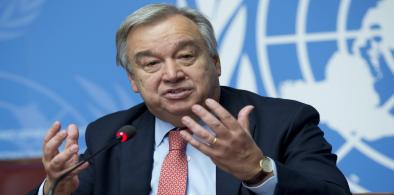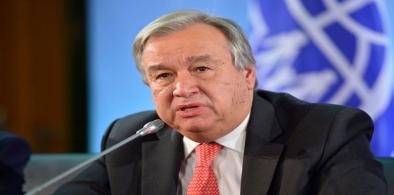

“And those hopes have been dashed. The edicts against women and girls have come one after the other”, he said of the Taliban fiats against education for girls and women working outside the home.
The reactor that has now gone critical at Kalpakkam, on the Bay of Bengal coastline in Tamil Nadu, is not the end of that journey. It is, more precisely, the end of the beginning. The real test is whether India can now scale fast breeder capacity rapidly enough to make a material difference to its energy-mix building on the Kalpakkam template, the industrial supply chains it has validated, and the engineering confidence it has earned.
The Indus and the Ganges are dying slowly, and with them disappear species that evolved over thousands of years within these waters. If current patterns continue, future generations may inherit rivers that exist geographically but are biologically empty. South Asia still has an opportunity to reverse this trajectory, but only if environmental protection becomes a shared regional priority rather than an afterthought.
Climate migration isn’t just about the loss of land. It is about the loss of memory, culture and home. When people are driven out of the places where they were born, few things that matter are merely economic. Over the next decades, the world will confront a fundamental dilemma. Can humankind handle the climate crisis in a surer way? Or will the future consist of millions searching for a new place to call home?
The constraint on India’s expansion is fissile inventory, particularly between 2035-2045. At present, the breeder program depends on plutonium from a limited set of eight unsafeguarded reactors. Meanwhile, India has accumulated spent fuel from uranium imported for its safeguarded reactors. This significant plutonium is lying idle because we lack safeguarded reprocessing facilities.
“And those hopes have been dashed. The edicts against women and girls have come one after the other”, he said of the Taliban fiats against education for girls and women working outside the home.
The UN said that Sen, who led mixed-gender engagement patrols and activities, became a role model for both men and women by fostering “a safe space for men and women to operate together under her command”.
“India has become an alternative investment source or destination for many Western companies” he said.
Kale joins the roster of more than 200 Indians who have died in the service of the UN.
Kale, who worked for the UN Department of Safety and Security (DSS) joins the roster of more than 200 Indians who have died in the service of the UN.
More than 24,000 people, most of them women and children, have been killed in Israel’s attacks on Gaza, from where Hamas launched the attack in which about 1,200 people were killed and about 240 were kidnapped.
“We advocate for the strengthening of policies that promote free, independent, and pluralistic media, thereby fostering a vibrant and robust public sphere, a pillar of peaceful, just, inclusive, sustainable, and prosperous societies”, they said.
Bangladesh is taking a bold step in joining the mission after the catastrophic end to the previous UN mission with military peacekeepers ended in 2017 amid accusations that Nepali troops introduced a strain of cholera from South Asia.
The report released on Tuesday said that in contrast to large swathes of the developing countries, “investment in South Asia, particularly in India, remains strong”.
The unanimity at the UN underscores the fears over AI’s potential to disrupt politics and society through deep fakes and spreading misinformation, and its more sinister capabilities in warfare, development of weapons and disrupting economies.
The Pakistani representative also introduced a strange element into the discussion, attacking the Council’s designation of international terrorists, claiming that the Council’s actions against terrorists are “arbitrary”.
China has repeatedly blocked the listing of Pakistan-linked terrorists as international terrorists subject to UN sanctions.
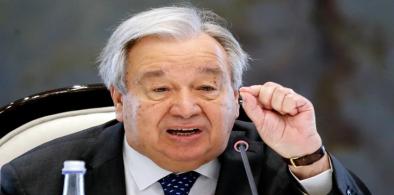
Mechanisms that were used to manage superpower relations during the Cold War are missing now, “and so our world is entering an age of chaos” creating “a dangerous and unpredictable ‘free-for-all’ with total impunity”, Guterres warned.
Although Myanmar is now effectively ruled by the military known as the Tatmadaw, the UN recognises only the representative of the overthrown democratically-elected government.
Thus, India’s assessment is only 1.044 per cent of the UN’s budget of $3.465 billion despite it being the world’s fifth largest economy. Thus, India’s share is less than that of even some developing countries like Brazil and Mexico.