An estimated 23 million people in Afghanistan, out of its over 37 million population, are facing a dire food crisis and the UN is working on developing mechanisms to help prevent a humanitarian catastrophe


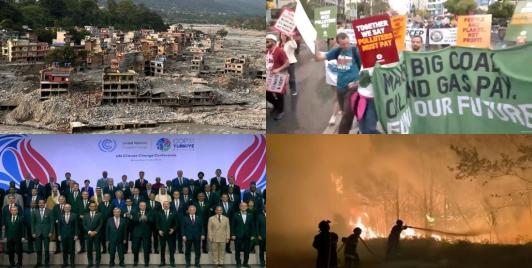
Nepal, along with Bhutan and Kyrgyzstan, has formally called for mountain and climate change to be added as an agenda item in the COP31 process. Bangladesh, India, and Pakistan are set to push for more climate grants, greater support for adaptation, and faster access to loss and damage funding.
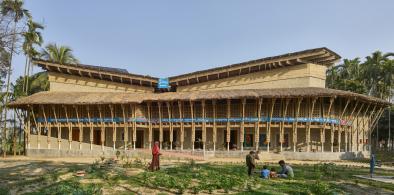
The global community is currently searching for viable ways to address the effects of climate change; the women of the Bengal delta have been engaged in a silent, yet persistent economic revolution that provides a proven, empirically supported model for other vulnerable countries around the world.
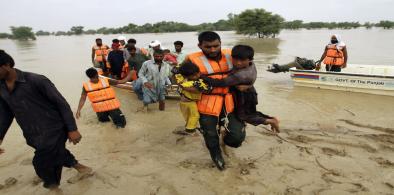
The September agreement by the Pakistan PMO gives these decisions a home: one partner leads research and evidence, the other brings delivery through its four pillars - education, employment, engagement and environment - and its Digital Youth Hub and nationwide Youth Development Centres, with private-sector partners expected to create internship and employment pathways.

Antalya's final decisions will matter. So will the credibility of finance, the protection of vulnerable communities and the direction of the energy transition. But the deepest test is whether COP31 leaves countries with more capacity to implement what they have promised.

An estimated 23 million people in Afghanistan, out of its over 37 million population, are facing a dire food crisis and the UN is working on developing mechanisms to help prevent a humanitarian catastrophe

While the developed countries are failing to meet their targets for fighting climate change, India is overachieving and has exceeded its targets, according to the country’s Environment and Climate Change Minister Bhupender Yadav

India denounced Pakistan's efforts to defend China's persecution of its Muslim minority by attacking India with “false and malicious propaganda.”

The United Nations urged the Bangladesh government to take measures to protect minorities amid widespread violence targeted at the country’s minority Hindu community

The Taliban, the new rulers of Afghanistan, has assured the UN that they will “very soon” allow older girls to resume studies in secondary schools in the country, which was banned after the Taliban's takeover in the country

India was re-elected to the Human Rights Council on Thursday for another three-year term starting next year with a pledge to “to bring its pluralistic, moderate and balanced perspective to straddle various divides or differences in the Council.”

India on Tuesday hit out at double standards in fighting religious phobias that ignores “anti-Hindu, anti-Buddhist and anti-Sikh phobias” and thus encourages those propagating those ideas

India on Tuesday said that terrorism will continue as the single most crucial threat for peace and security and one of the biggest obstacles to achieving the common agenda of the United Nations

Bangladesh has signed a deal with a UN refugee agency to help provide basic services to Rohingya refugees living in Bangladesh’s Bhasan Char, an isolated island currently housing around 19,000 Myanmar refugees

The UN's World Food Programme (WFP) is in talks with India for wheat donation to Taliban-controlled Afghanistan that is facing a food crisis, according to the WFP official in that country

Bangladesh, a country that has faced terrorism for several years, has reaffirmed its zero-tolerance policy against the menace in all its forms and manifestations, mentioning that terrorism cannot and should not be associated with any religion, race, faith, culture, ethnicity or society

India has called on the UN committee dealing with disarmament to condemn Pakistan for its “nefarious and vicious” attempts to disrupt its work

Abdulla Shahid, the Maldivian president of the UN General Assembly, has said he will appoint the leaders of the negotiating process for Security Council reforms before the Assembly debate next month on the topic to begin work early on the process

The 76th annual session of the United Nations General Assembly ended on Monday without a speech by the representative of Afghanistan as Ghulam Isaczai, the UN-recognized Afghan envoy, decided not to speak

Despite the strong exchanges between India and Pakistan at the high-level General Assembly session last week, UN Secretary-General Antonio Guterres is hopeful that a dialogue between them is possible