There is a strong case to develop MVI for all countries of South Asia based on climate and other vulnerability indicators so that these countries could access and channelise green finance to fulfil their SDG goals.



Abbottabad itself is symbolic. Just 30 miles north of Islamabad, along the historic Karakoram Highway, it is home to Pakistan’s premier military academy. For bin Laden to live there undetected is not simply a mystery—it is a reminder of the uncomfortable realities of counterterrorism

Amid strategic challenges from Beijing in Bangladesh, New Delhi cannot separate border management with foreign policy. New Delhi should hold high-level dialogue with Dhaka and develop a cooperative roadmap to facilitate the identification and repatriation of undocumented migrants from India.

The visit therefore should not be viewed simply as another bilateral defence engagement. It represents an attempt by New Delhi to institutionalise India's security relationship with Sri Lanka, while simultaneously reassuring Colombo that India's expanding security interests need not threaten Sri Lankan sovereignty.

Belgium views India as an opportunity to reduce its economic dependence on China and limit vulnerability to developments in the United States. India offers scale, growth, industrial capacity and ambition, while Belgium offers technology, specialised expertise, logistics and access to the European market.

There is a strong case to develop MVI for all countries of South Asia based on climate and other vulnerability indicators so that these countries could access and channelise green finance to fulfil their SDG goals.
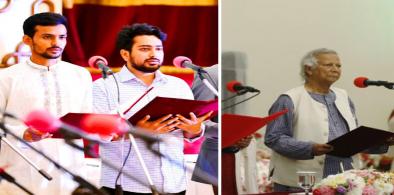
BNP’s push for early elections, Jamaat-e-Islami’s need for time to rebuild, the ambitions of smaller parties, and the rise of new political forces from the anti-discrimination movement all contribute to a highly volatile and unpredictable political environment.

The reign of the "hybrid government" in Pakistan has ended with Gen Munir's military wresting its socio-economic and political control. The arrest of the former ISI spymaster has been made into an example for those who dared act against the military.
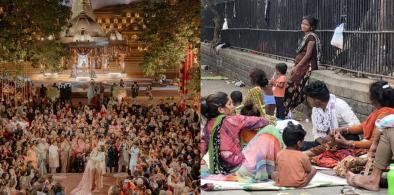
The contrast between the Ambani wedding and the lives of millions of Indians struggling to meet basic needs is a stark indictment of this inequality. While the former was a celebration of excess, the latter is a grim reality marked by poverty, hunger, and lack of access to essential services.

For South Asia, particularly Pakistan, this fragmentation poses challenges but also opportunities. Pakistan’s strategic investments in its digital infrastructure, supported by both Chinese and Western technologies, could position it as a bridge between these emerging digital spheres. By fostering regional connectivity and digital cooperation, Pakistan can mitigate the risks of fragmentation and ensure that its digital economy continues to thrive in a multipolar world.

India needs to have a robust competitive framework where political parties ideate, brainstorm and debate on how to give more teeth to the Ministry of Environment Forest and Climate Change(MoEFCC), create bodies like the USA's EPA and ensure all environmental laws, disaster management work in tandem under the Gaia’s hypothesis highlighting the “One-Health Approach”.
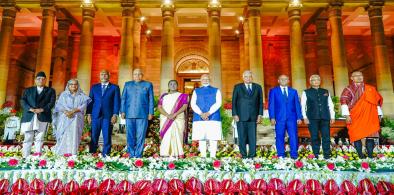
Apart from being the largest country in the region in terms of geography and economy, New Delhi’s responsibilities as an important player in South Asia also rest on its efforts to improve the region's social and economic parameters.
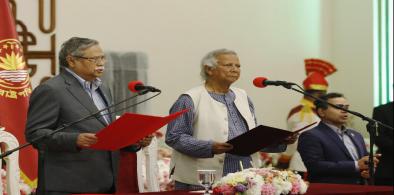
India offered unqualified support to Hasina over the last decade or so. For India, it will be a major challenge to see how it builds a relationship when a new democratic government emerges in Bangladesh. China had invested more in infrastructure in Bangladesh in the last decade or so; and the relationship was improving. But it did not interfere in domestic political issues.

M R Rangaswami, Silicon Vally entrepreneur, angel investor and philanthropist, and a community leader who founded Indiaspora, said: "I never thought in my wildest dreams that we would have an Indian American running for President of the United States but this is now a reality".
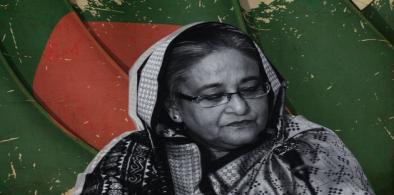
The considerable economic progress under Hasina's governance starkly contrasts with the stagnation in political reforms. Persistent issues such as limited press freedom, corruption, and inadequate improvements in democracy, rule of law, and human rights have marred her administration’s record
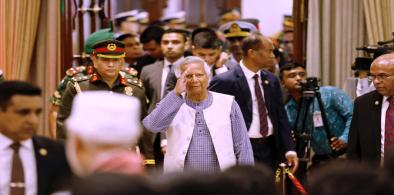
The interim government is led by civilian leadership. However, the extent of military control in this government remains unclear. According to some political observers, even if not officially present, the military will have a significant influence on this government.

At a time when unvarnished animus for one another is often the norm in India and Pakistan, not to mention Bangladesh now, the two simple women have offered a lesson in decency, dignity and civility.

Rural women have said that the physical and sexual security of women was strongly protected under the Taliban regime. The women in Afghanistan are caught in a conundrum. While they resent systemic social repression and denial of gender rights under the Taliban regime, the return of political instability in the country they fear can increase their physical and sexual insecurity.

Smuggling activities along the Afghan border are often linked with militant groups and organized crime. The illegal trade of arms has contributed to the proliferation of the "Kalashnikov culture" across the length and breadth of Pakistan.
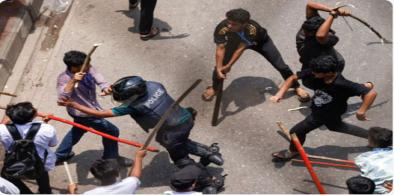
Given the nature of these 'student' demonstrations, it is apparent that Bangladesh faces serious danger from a network of underground political activists and extremists aiming to destabilise the country. These issues are putting Prime Minister Sheikh Hasina's leadership to the test