
Colombo Port City

China’s Criminal Footprint in Sri Lanka has Regional Security Implications

When a Chinese company won the contract to establish hybrid wind and solar energy projects on three islands off the northern Jaffna peninsula—just 45 km from Rameswaram in Tamil Nadu—the security implications extended far beyond economics. Against this backdrop, India’s concerns are entirely justifiable. Sri Lanka faces a pressing question: how will the nation confront the infiltration of Chinese global criminal networks? Since Mahinda Rajapaksa’s tenure, Chinese presence in Colombo has steadily increased, with Sri Lanka positioned as a partner state in Beijing’s Belt and Road Initiative.

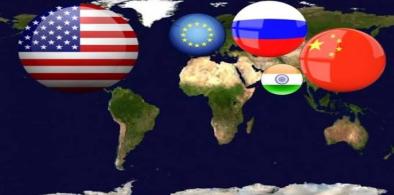
Wolf World or a Multipolar World? How Major Powers Exercise Power Will Determine Emerging International Order

The growing role of middle powers adds another layer of complexity. Yet the term itself remains imprecise. Not every country outside the United States and China qualifies as a middle power, and many reject the label altogether. India, for example, increasingly sees itself as a leading power pursuing strategic autonomy rather than as a middle power seeking alignment with one bloc or another.

Is Northeast India's Permit System Inhibiting India-Japan Paradiplomacy? Colonial-Era System may be Stumbling Block to Subnational Exchanges

If India and Japan genuinely envision Northeast India as the gateway connecting South Asia with the Bay of Bengal and the Indo-Pacific, then the next chapter of the partnership cannot remain confined to New Delhi and Tokyo. It must also be written in Guwahati, Shillong, Aizawl, Imphal, Agartala, Kohima, Gangtok and Itanagar 

Bangladesh's Strategic Balancing and India's Neighbourhood Challenge: China Will Consolidate Influence if New Delhi Fails to Deliver

In several neighbouring countries, including Bangladesh, Sri Lanka and Nepal, China has demonstrated an ability to move from agreements to implementation far more rapidly than many competitors. India, despite enjoying unmatched geographic and cultural advantages, has often struggled with delays 

More on Geopolitics, Security and Strategic Affairs

Afghan media working under constant threat

The militants and various violent groups want to suppress the 'voice of reason' and in doing so they target the media with utmost force and hatred. The factor of impunity is one of the main reasons for continued atrocity towards Afghan journalists and media, writes Dr. Sanchita Bhattacharya for South Asia Monitor

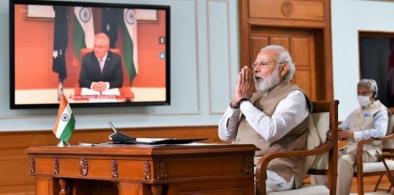
India–Australia summit: A meeting of minds

With shared concerns over Chinese hegemony, the time is right for a closer engagement between New Delhi and Canberra, writes Amit Dasgupta for South Asia Monitor

Is America’s middle class more sensitive than India’s?

What racism is in the world’s oldest democracy, communalism unfortunately is in its largest version in India. It is no secret that sizeable sections of India’s largest community, the Hindus, are communal,  writes Amulya Ganguli for South Asia Monitor

Aftermath of COVID-19: Rise of a new social class in Nepal

After the pandemic, migrant workers, including the semi-skilled and skilled labour and small-scale business people, and private job holders, who are returning from abroad, will form the neo-lower class - a new working class - that will constitute a significant population in Nepal, writes Roshan Chirag for South Asia Monitor 

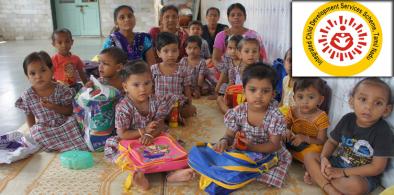
ICDS can become a model for South Asia to improve lives of children

South Asian countries can use ICDS as a blueprint and further formulate their respective policies following a tailored and local approach depending on the domestic factors pertaining to their region, writes Vishwajeet Singh Raghav for South Asia Monitor

Nepal needs a comprehensive pandemic law to battle coronavirus

It is advisable for the governments - of both Nepal and possibly India - to take a leaf from the UK Coronavirus Act, 2020 which was enacted for defeating COVID-19, writes Jivesh Jha  for South Asia Monitor

Why biodiversity conservation is necessary for dealing with the pandemic

On this Environment Day, let us commit ourselves to protect the biodiversity, for our own existence, writes Pradeep S. Mehta, George Cheriyan & Simi T. B.for South Asia Monitor

Are we observing World Environment Day or World Emergency Day on June 5?

State of the environment today is certainly in a state of emergency. Many would call June 5, 2020, as World Emergency Day. In reality, today environment and emergency have indeed become synonyms, writes Rajendra Shende for South Asia Monitor

Nations should not discriminate against refugees, migrants during pandemic

This outbreak and the requirements of precautionary measures have emerged as an extra health threat to migrants who work abroad to keep their families well and also to asylum seekers. These people play a crucial role both in the economy of the countries they live in and in their countries of origin too,  writes Abdul Alim for South Asia Monitor

India's COVID-19 stimulus package: Will it revive the economy?

There seems to be a strong argument that the singular focus of the stimulus package should have been a fiscal stimulus, which would have increased public spending in physical or human capital, raised money in the hands of residents by direct cash transfers and subsidies and provided safety nets like job guarantee and unemployment benefits, writes Partha Pratim Mitra for South Asia Monitor

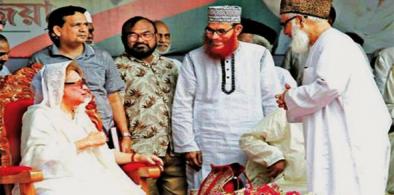
As corona rages in Bangladesh, opposition eyes opportunity

Leaders of the BNP and Jamat-E-Islami are thinking that the corona pandemic will totally change the political situation in the country and will help them seize power once again, writes Swadesh Roy for South Asia Monitor 

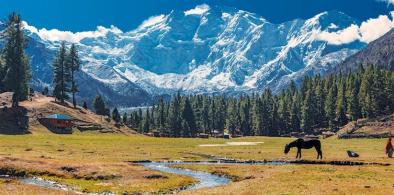
Will Gilgit-Baltistan become a new regional flashpoint?

With India–China military tensions already high in parts of eastern Ladakh, the construction of the Diamer-Bhasha dam will add to new security challenges for India, writes Nilova Roy Chaudhury for South Asia Monitor

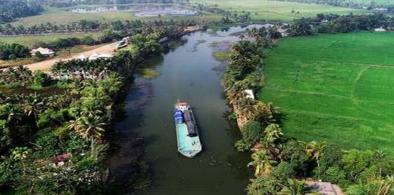
India-Bangladesh waterway project will herald a new chapter in bilateral cooperation

This inland waterway route looks all set to ensure efficient and effective cargo movement between the two neighbours and herald a new chapter in bilateral cooperation in South Asia, writes Sreeradha Datta for south Asia Monitor

With the world in turmoil can India seize the historic moment?

India has a pool of talented diplomats but their skills will be expended on putting lipstick on a pig if the government at home promotes narrow, sectarian ideologies that are at variance with accepted international norms, writes  E. D. Mathew for South Asia Monitor

Modi @ 6: Popular and committed but is there a need to review statecraft?

Modi may not be getting the kind of feedback and reality check that is vital for effective and empathetic governance and this is where, apart from Chanakya, the Canute principle acquires relevance, writes C Uday Bhaskar for South Asia Monitor