During the last 25 years both these so-called high constitutional offices have repeatedly come under judicial scrutiny and invited adverse comments from the Indian courts, writes Vinod Aggarwal for South Asia Monitor



When a Chinese company won the contract to establish hybrid wind and solar energy projects on three islands off the northern Jaffna peninsula—just 45 km from Rameswaram in Tamil Nadu—the security implications extended far beyond economics. Against this backdrop, India’s concerns are entirely justifiable. Sri Lanka faces a pressing question: how will the nation confront the infiltration of Chinese global criminal networks? Since Mahinda Rajapaksa’s tenure, Chinese presence in Colombo has steadily increased, with Sri Lanka positioned as a partner state in Beijing’s Belt and Road Initiative.
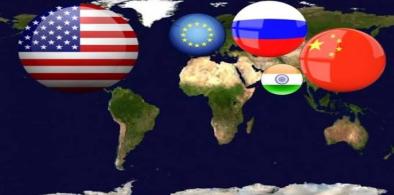
The growing role of middle powers adds another layer of complexity. Yet the term itself remains imprecise. Not every country outside the United States and China qualifies as a middle power, and many reject the label altogether. India, for example, increasingly sees itself as a leading power pursuing strategic autonomy rather than as a middle power seeking alignment with one bloc or another.
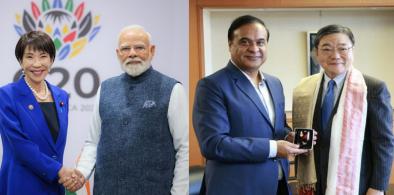
If India and Japan genuinely envision Northeast India as the gateway connecting South Asia with the Bay of Bengal and the Indo-Pacific, then the next chapter of the partnership cannot remain confined to New Delhi and Tokyo. It must also be written in Guwahati, Shillong, Aizawl, Imphal, Agartala, Kohima, Gangtok and Itanagar
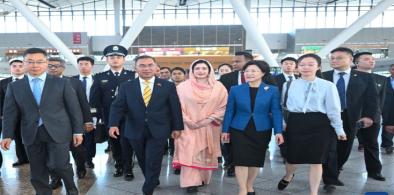
In several neighbouring countries, including Bangladesh, Sri Lanka and Nepal, China has demonstrated an ability to move from agreements to implementation far more rapidly than many competitors. India, despite enjoying unmatched geographic and cultural advantages, has often struggled with delays
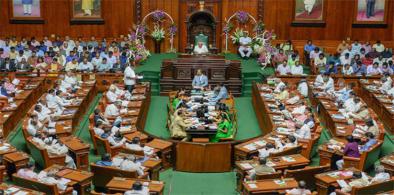
During the last 25 years both these so-called high constitutional offices have repeatedly come under judicial scrutiny and invited adverse comments from the Indian courts, writes Vinod Aggarwal for South Asia Monitor
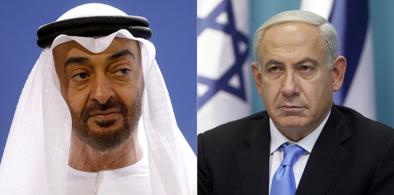
More Gulf States inking peace with Israel will upset Chinese plans to upstage Saudi Arabia’s position in the Organization of the Islamic Cooperation (OIC) and replace it with Turkey, using Pakistan as the handle, writes Lt Gen P. C. Katoch (retd) for South Asia Monitor
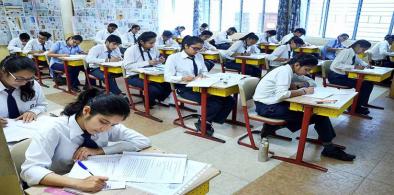
What the Indian government has put forward is a grand vision and policy framework. It reflects the government’s aspirations as to where it would like to see learning, education, teaching, and research, writes Amit Dasgupta for South Asia Monitor
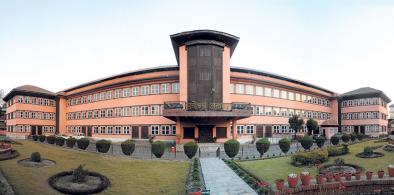
The non-compliance of court orders would not only lower the public confidence on the judiciary in Nepal, but it will also pose threats to judicial credibility and rule of law, writes Jivesh Jha for South Asia Monitor
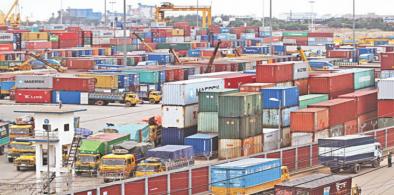
South Asian nations would see a bilateral advantage in establishing trade and economic relationships with each other and the formal association of economic cooperation - SAARC- which they have set up would gain strength by giving each other more trade access and tariff concessions to their goods and services, writes Partha Pratim Mitra for South Asia Monitor
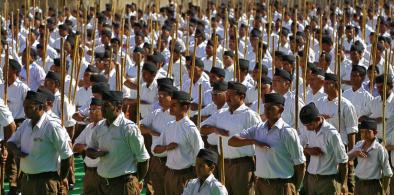
It is clear that in the subcontinent, colonialism is a convenient bogey for the anti-English lobby, writes Amulya Ganguli for South Asia Monitor

For the kind of person she has shown to be in the little time she has shot into prominence, Senator Harris will be a leader in her own right pushing for the national interests of America, not of any other country, writes Dr. Sridhar Krishnaswami for South Asia Monitor
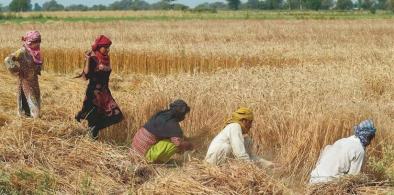
In the pandemic period while the Pakistan government is providing temporary relief to many sectors in the country why is this key area of agriculture being ignored, writes Muhammad Abbas Khaskheli for South Asia Monitor

While Pacific and South China Sea are important, the Indian Ocean remains fundamental for India, writes Lt. Gen (Dr) Yash Malhotra (retd) for South Asia Monitor
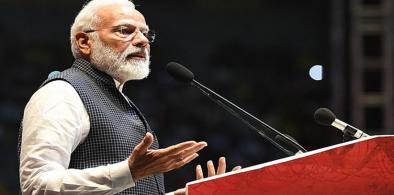
India has major power ambitions. A strong strategic culture must be developed to guide India to fulfill such ambitions, writes Aneek Chatterjee for South Asia Monitor

The Rajapaksas have entertained several projects with Chinese support and money, which is bound to cost Sri Lanka its sovereignty dearly in the coming years, if corrective steps are not taken, writes N.S.Venkataraman for South Asia Monitor
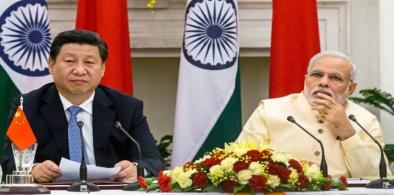
It is high time the Chinese political and military leadership are made to realise that chronic hegemonism and doggedness in constantly trying to crawl and clutch Indian territories are not going to work anymore and that the LAC must be clarified, writes Anil Bhat for South Asia Monitor
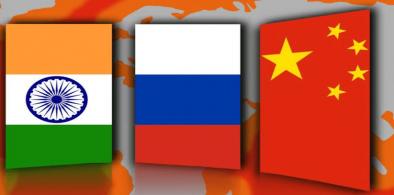
For India, however, questions arise whether the RIC fits New Delhi’s objectives as it increases its strategic engagement with the United States, Japan, and Australia which goes against the RIC’s objective to undermine a growing American presence in the Indo-Pacific, writes Shantanu Roy-Chaudhury for South Asia Monitor
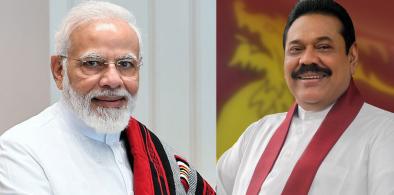
Given Sri Lanka’s strategic location in the Indian Ocean, India seeks to exert all its influence to rebalance the island nation away from the dragon’s embrace, writes N Chandra Mohan for South Asia Monitor

Changing our transport behaviour is therefore the need of the hour. It becomes imperative that cycling and pedestrian walking is fully integrated with our existing public transport systems, writes Pankaj M Munjal for South Asia Monitor