Covid-19 led to disconnected efforts of governments, severely damaging global supply chain linkages, now leading to Omicron strain, writes Akshat Singh for South Asia Monitor


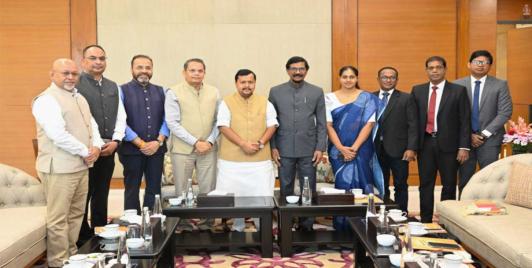
For Sri Lankan politics, this is more than diplomatic sightseeing. It raises a fundamental question whether the JVP is developing a sophisticated strategy of balancing relations with India and China or is it gradually adapting itself to the organisational models of powerful one-party or dominant-party systems in China and India respectively?

The ongoing civil war in Myanmar has caused an influx of armed cadres (Meitei, Naga and Kuki) into Manipur's border tracts like Kamjong district, further squeezing finite land resources and aggravating historical territorial disputes. What began as a localized dispute under the state's newly elected government in February 2026 has escalated into intense, multi-district armed warfare.
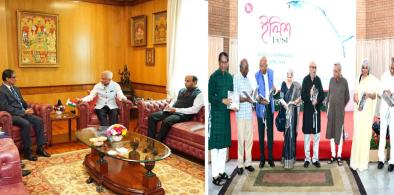
Hamidullah’s tenure has been marked by promotion of Bangladesh's soft power, with the envoy going around the country underlining the deep roots of people-to-people ties.
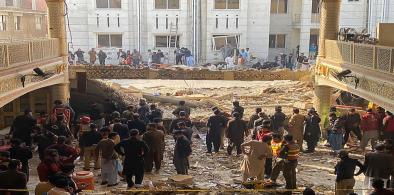
India must also recognise that Pakistan's internal security crisis has wider regional implications. Escalating Pakistan–Afghanistan tensions could create additional uncertainty along the western frontier, while attacks on Chinese projects could affect regional connectivity and investment.

Covid-19 led to disconnected efforts of governments, severely damaging global supply chain linkages, now leading to Omicron strain, writes Akshat Singh for South Asia Monitor
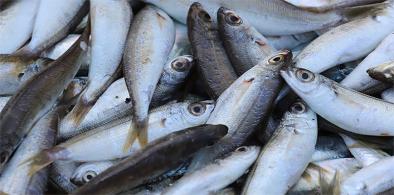
Overfishing by highly subsidized distant water fishing fleets threaten the low-income countries that depend on fish for food sovereignty, hurting livelihoods of fisherfolk of this region like India, Sri Lanka, Bangladesh and Pakistan, writes N. Chandra Mohan for South Asia Monitor
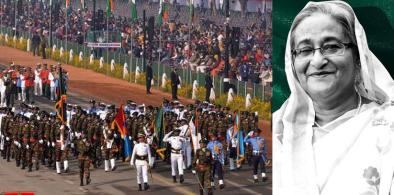
It remains unclear why no leader from India’s closest neighbour Bangladesh has ever been a chief guest at the Republic Day parade, writes Nilova Roy Chaudhury for South Asia Monitor
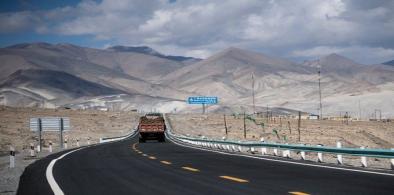
Pakistan seems headed to greater instability with Taliban cadres joining ISIS-K against China for genocide against Muslims in Xinjiang, writes Lt Gen P. C. Katoch (retd.) for South Asia Monitor
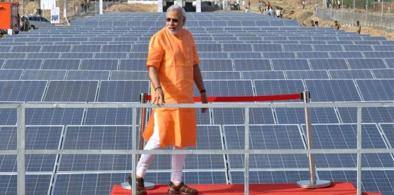
By becoming a leader in the green energy movement now, India can reap economic and climate change benefits for the nation and its citizens in the future, writes Frank F Islam for South Asia Monitor
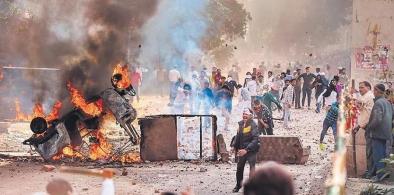
It is a sad picture of India of the 21st century that communal fires have erupted in states as far apart as Tripura and Maharashtra, writes Jagdish Rattanani for South Asia Monitor
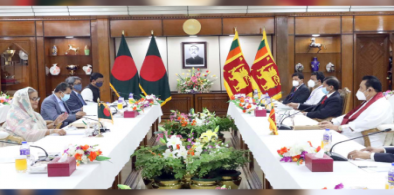
Sri Lanka and Bangladesh must sign a Free Trade Agreement (FTA) and, if needed, a Preferential Trade Agreement (PTA) to boost trade and connectivity, writes Pathik Hasan for South Asia Monitor
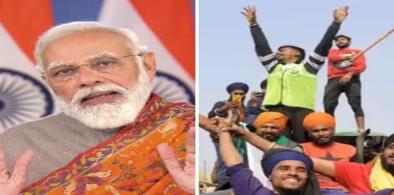
The Modi government in India has repealed farm laws as it does not want to pay a political price in coming state elections, writes Jagdish Rattanani for South Asia Monitor
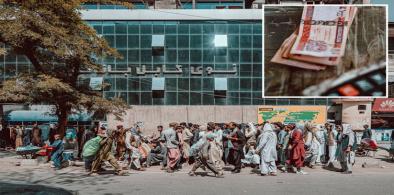
Extractive institutions ensured that the limited gains of growth in Afghanistan were cornered by political elites like warlords, writes N. Chandra Mohan for South Asia Monitor

With geopolitical rivalry in the Indian Ocean Region intensifying, China and Turkey are exploiting Pakistan’s troubled relations with India to push forward their own strategic interests, writes Niranjan Marjani for South Asia Monitor
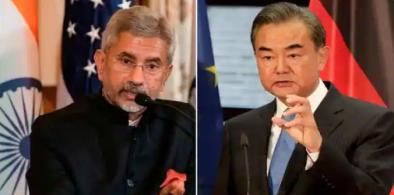
The Indian foreign minister’s statement still does not convey the strength that a bully like China would appreciate, writes Lt Gen Prakash Katoch (retd) for South Asia Monitor

Imran Khan’s move, like the Kartarpur Corridor, is bound to have the blessings of the powerful Pakistan Army, writes Mahendra Ved for South Asia Monitor
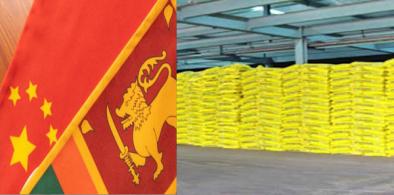
Colombo’s biggest source of China-dependence is to service its external debt; it already owes China over $5 billion in past loans, writes N. Chandra Mohan for South Asia Monitor
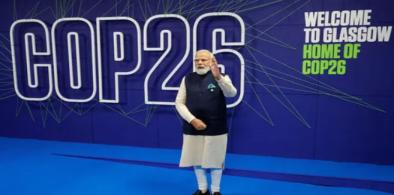
Becoming carbon-neutral by 2070 will not only help the world but will also make India a new industrial power, writes Anil K. Rajvanshi for South Aisa Monitor
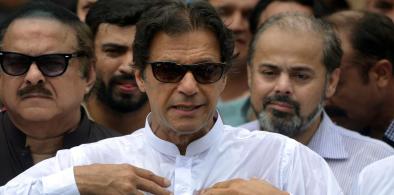
As Islamabad embraces hardline Islamists, life for minorities in Pakistan is becoming tough, writes Mahendra Ved for South Asia Monitor